

The link between cortisol, sugar cravings, and stubborn belly fat is a topic many people search when traditional weight loss efforts stop working. For many adults, especially high performers under chronic stress, the connection between hormones, cravings, and abdominal weight can feel frustrating and confusing.
At Eternal Vitality in Orlando, Florida, conversations about metabolism often reveal a deeper issue beneath the surface. Many patients eat well, exercise consistently, and still struggle with intense cravings and stubborn belly fat that refuses to change.
What often gets overlooked is cortisol. This stress hormone influences blood sugar balance, appetite regulation, sleep quality, and fat storage patterns. When cortisol stays elevated for long periods, the body may begin holding onto abdominal fat while increasing cravings for sugar and processed foods.
This article explores the physiology behind that cycle, why it happens, and what people can realistically do to support healthier hormone balance without extreme dieting or punishment-based wellness strategies.
Why Does Cortisol Affect Sugar Cravings and Belly Fat?
Cortisol is one of the body’s primary survival hormones. It helps regulate stress responses, blood sugar stability, inflammation, and energy availability. In short bursts, cortisol is helpful and protective. Problems usually begin when stress becomes chronic.
Modern life creates repeated cortisol spikes. Poor sleep, overtraining, emotional stress, excessive caffeine, restrictive dieting, and blood sugar instability can all increase cortisol production. Over time, the body may begin prioritizing survival over metabolic efficiency.
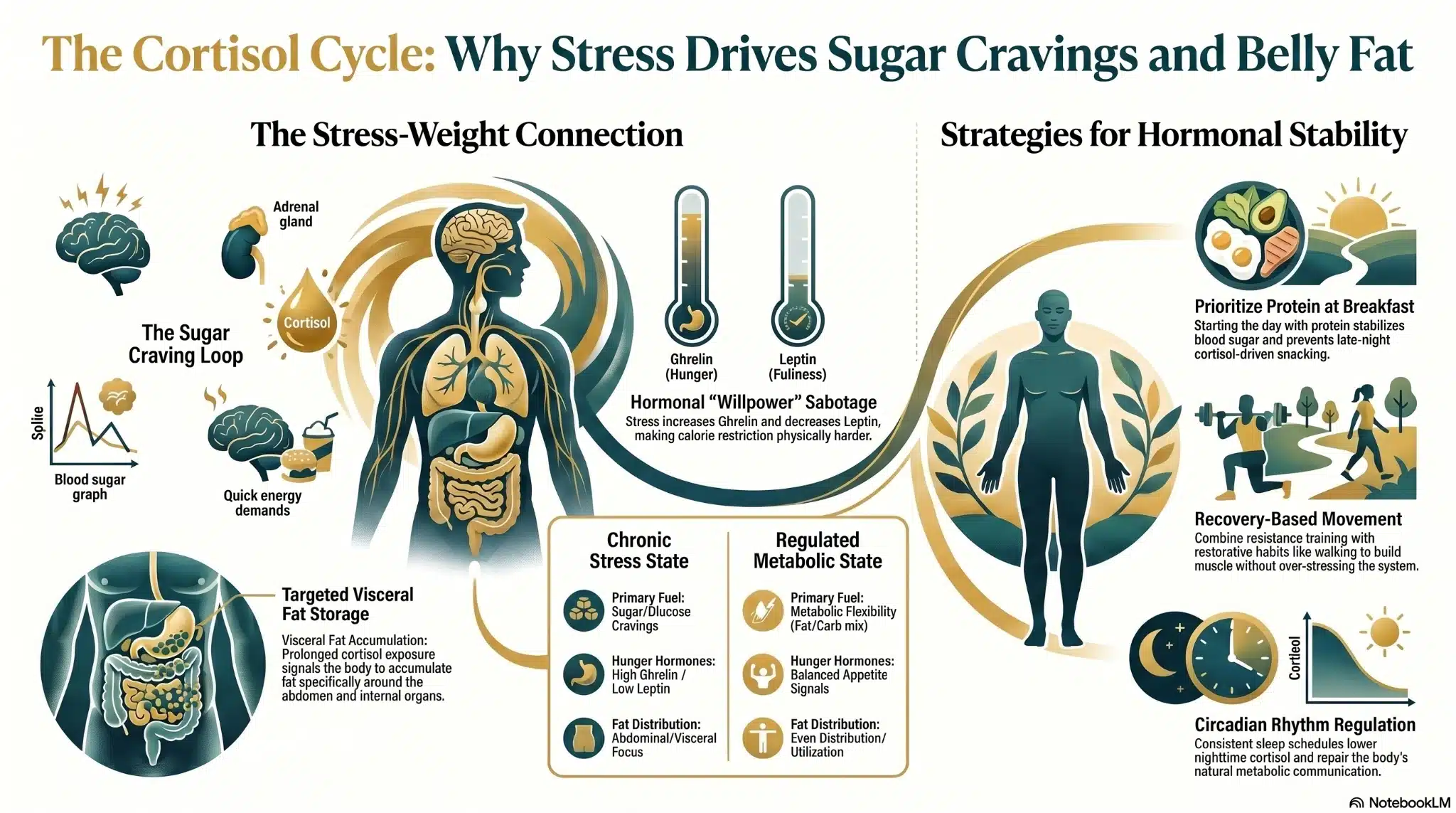
When cortisol rises, blood sugar often fluctuates more dramatically. The brain interprets this as a potential energy shortage. As a result, cravings for quick energy sources increase. This is one reason many people crave sweets late at night or after emotionally stressful days.
The body also responds to prolonged cortisol exposure by altering fat storage patterns. Research suggests elevated cortisol may encourage more visceral fat accumulation around the abdomen. Visceral fat behaves differently than fat stored elsewhere and is closely connected to metabolic health and inflammation.
Table of Contents
Chronic Stress Signals Can Reshape Metabolism
Persistent cortisol elevation does not simply increase appetite. It can also influence insulin sensitivity, hunger hormones, and recovery capacity. Over time, this may create a cycle where cravings intensify while fat loss becomes harder.
Many people assume the problem is a lack of discipline. In reality, stress physiology often plays a larger role than willpower alone. The body is attempting to protect itself during perceived stress.
Sleep disruption further complicates this process. Poor sleep may increase ghrelin, the hormone associated with hunger, while reducing leptin, which helps signal fullness. Combined with cortisol elevation, this can make sugar cravings feel overwhelming.
Many patients notice they crave sugar most during periods of burnout, emotional exhaustion, or inconsistent sleep. This pattern is not imagined. It reflects real hormonal communication between the brain, adrenal system, and metabolism.
Supporting cortisol balance may help reduce these patterns gradually. However, results vary depending on nutrition, sleep, gut health, movement habits, and overall stress load.
Can High Cortisol Make Healthy Weight Loss More Difficult?
Many people following structured nutrition plans still struggle with abdominal weight changes. In some cases, elevated cortisol may contribute to that resistance.
The body interprets chronic stress as a signal to conserve energy. This can slow metabolic flexibility and alter how calories are utilized. Some individuals begin feeling constantly hungry despite eating balanced meals.
Extreme calorie restriction may worsen the issue. Very low-calorie diets can place additional stress on the body, sometimes increasing cortisol even further. This may lead to rebound cravings, energy crashes, and inconsistent progress.
Another overlooked factor is muscle preservation. Chronic stress and poor recovery may increase muscle breakdown over time. Since muscle tissue supports metabolic health, this can indirectly affect long-term body composition.
Hormone balance is also connected to insulin regulation. When insulin sensitivity decreases, blood sugar swings become more pronounced. Those fluctuations often intensify cravings for fast-digesting carbohydrates and sweets.
Restoring Hormonal Stability Often Requires Multiple Systems
Improving cortisol regulation usually involves more than one intervention. Sustainable progress often comes from supporting the nervous system, improving recovery, and stabilizing blood sugar patterns consistently over time.
Protein-rich meals may help reduce dramatic blood sugar spikes. Balanced meals with fiber, healthy fats, and nutrient density can also support steadier energy throughout the day.
Resistance training may help improve insulin sensitivity and preserve lean muscle mass. However, excessive high-intensity exercise without recovery may elevate stress hormones in some individuals.
Gut health also matters. The gut and brain communicate constantly through the nervous system and inflammatory pathways. Digestive imbalance, inflammation, and poor nutrient absorption may contribute to fatigue and cravings in certain people.
At Eternal Vitality, many conversations around metabolism include broader discussions about sleep quality, stress physiology, hormone balance, and digestive health rather than focusing only on calories. This more comprehensive perspective may help patients better understand why their bodies respond differently under stress.
Most people do not notice overnight changes. Hormonal recalibration tends to occur gradually over weeks and months, especially when stress has been present for years.
What Helps Lower Cortisol and Reduce Stubborn Belly Fat Naturally?
The link between cortisol, sugar cravings, and stubborn belly fat becomes easier to address when people stop viewing the body as an enemy. Sustainable improvement usually starts with regulation rather than restriction.
One of the most effective strategies is improving sleep consistency. Cortisol follows a natural daily rhythm. Late-night screen exposure, irregular sleep schedules, and chronic sleep deprivation may disrupt that rhythm significantly.
Nutrition timing may also help. Long periods without food can increase stress signaling in some people, particularly when combined with caffeine and intense schedules. Stable meals with adequate protein may support steadier energy and fewer cravings.
Nervous system regulation matters more than many people realize. Activities like walking outdoors, breathwork, meditation, restorative movement, and adequate recovery can help shift the body away from a constant fight-or-flight state.
Alcohol intake is another overlooked contributor. While alcohol may feel relaxing initially, it can disrupt sleep architecture and blood sugar regulation later in the night.
Small Daily Habits Often Create the Biggest Shift
People often search for one perfect supplement or rapid fat-loss solution. In reality, cortisol regulation usually responds best to consistent foundational habits repeated daily.
Helpful strategies may include:
- Prioritizing protein at breakfast
- Limiting excessive caffeine intake
- Supporting sleep quality and circadian rhythm
- Building muscle gradually through resistance training
- Managing stress through restorative practices
- Addressing digestive health and inflammation
- Improving recovery after exercise
Some individuals also explore hormone optimization, peptide support, or targeted metabolic programs under medical supervision. These approaches are highly individualized and are not appropriate for everyone.
In Orlando, many adults balancing careers, parenting, and constant digital stimulation unknowingly operate in a prolonged stress state for years. The body often adapts to that stress quietly before symptoms become obvious.
The goal is not perfection. It is improving resilience, recovery, and metabolic communication over time.
Conclusion & Next Step
The link between cortisol, sugar cravings, and stubborn belly fat highlights how deeply stress physiology can influence metabolism, appetite, and body composition. For many people, stubborn belly fat is not simply about calories or motivation.
Cortisol affects blood sugar stability, cravings, sleep quality, inflammation, and fat storage patterns. When these systems stay dysregulated for long periods, sustainable weight management becomes much more difficult.
A more balanced approach often includes nervous system support, better sleep, stable nutrition, resistance training, gut health optimization, and realistic recovery practices. Small daily improvements may create meaningful long-term metabolic change.
Learn more about this service on our website.
Frequently Asked Questions
Does cortisol always cause weight gain?
Not always. Cortisol affects people differently. Some individuals experience increased cravings and abdominal fat storage, while others may notice fatigue or disrupted sleep first.
Why do I crave sugar more at night?
Evening cravings may be connected to stress, blood sugar fluctuations, poor sleep, or inadequate protein intake earlier in the day. Emotional exhaustion can also play a role.
Can exercise lower cortisol?
Moderate exercise often supports stress regulation. However, excessive high-intensity training without recovery may increase cortisol in some individuals.
Is belly fat always related to cortisol?
No. Genetics, nutrition, insulin resistance, sleep quality, hormones, and lifestyle factors also influence abdominal fat storage.
How long does it take to improve cortisol balance?
Results vary widely. Some people notice improved energy and cravings within weeks, while others require several months of consistent lifestyle changes.
Eternal Vitality
4361 Hunters Park Ln
Orlando, FL 32837
(407) 710-1840