
How gut health impacts hormones and weight gain is a question many people ask as unexplained weight changes become more common. At Eternal Vitality in Orlando, Florida, we often see patients who eat well and exercise, yet still struggle.
Hormones, digestion, and metabolism are deeply connected. When the gut is not working well, signals throughout the body can shift.
This matters for adults of all ages. Stress, medications, and modern diets can all influence gut balance over time.
Understanding this connection can help people make sense of stubborn weight gain without blame or extremes.
Can gut health really affect hormones and weight gain?
Many people wonder if gut health impacts hormones and weight gain, or if weight changes are purely about calories. The gut is more than a digestion tube. It is a signaling center.
Inside the gut live trillions of bacteria. These microbes help regulate inflammation, nutrient absorption, and hormone communication.
When gut balance is disrupted, the body may struggle to process hormones efficiently. This can influence appetite, fat storage, and energy use.
People often search this topic after dieting feels ineffective. The missing link is often internal balance, not effort.
The gut microbiome influences hormone signaling pathways
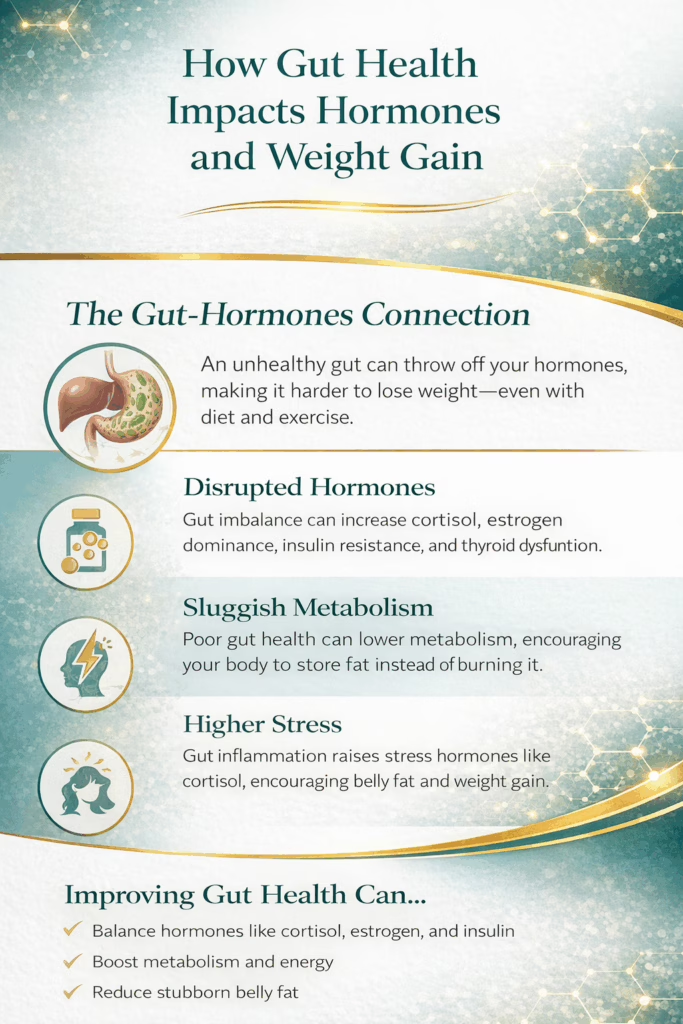
The gut microbiome plays a quiet but powerful role in hormone balance. Beneficial bacteria help process estrogen, cortisol, and insulin.
When gut diversity is low, estrogen may recirculate instead of clearing. This can contribute to bloating and fat storage.
Stress hormones also interact with the gut lining. Chronic stress may increase gut permeability and disrupt metabolism.
Gut health impacts hormones and weight gain through these daily signaling pathways. This process is gradual and often unnoticed.
How does gut inflammation relate to weight gain?
Another angle on how gut health impacts hormones and weight gain involves inflammation. Low-grade inflammation can alter how hormones act on tissues.
Inflamed gut tissue may reduce nutrient absorption. This can slow metabolism and increase cravings.
Inflammation also affects insulin sensitivity. When cells respond poorly to insulin, fat storage may increase.
People with digestive symptoms often notice fatigue or brain fog. These signs can reflect deeper metabolic strain.
Chronic gut inflammation alters metabolic hormone responses
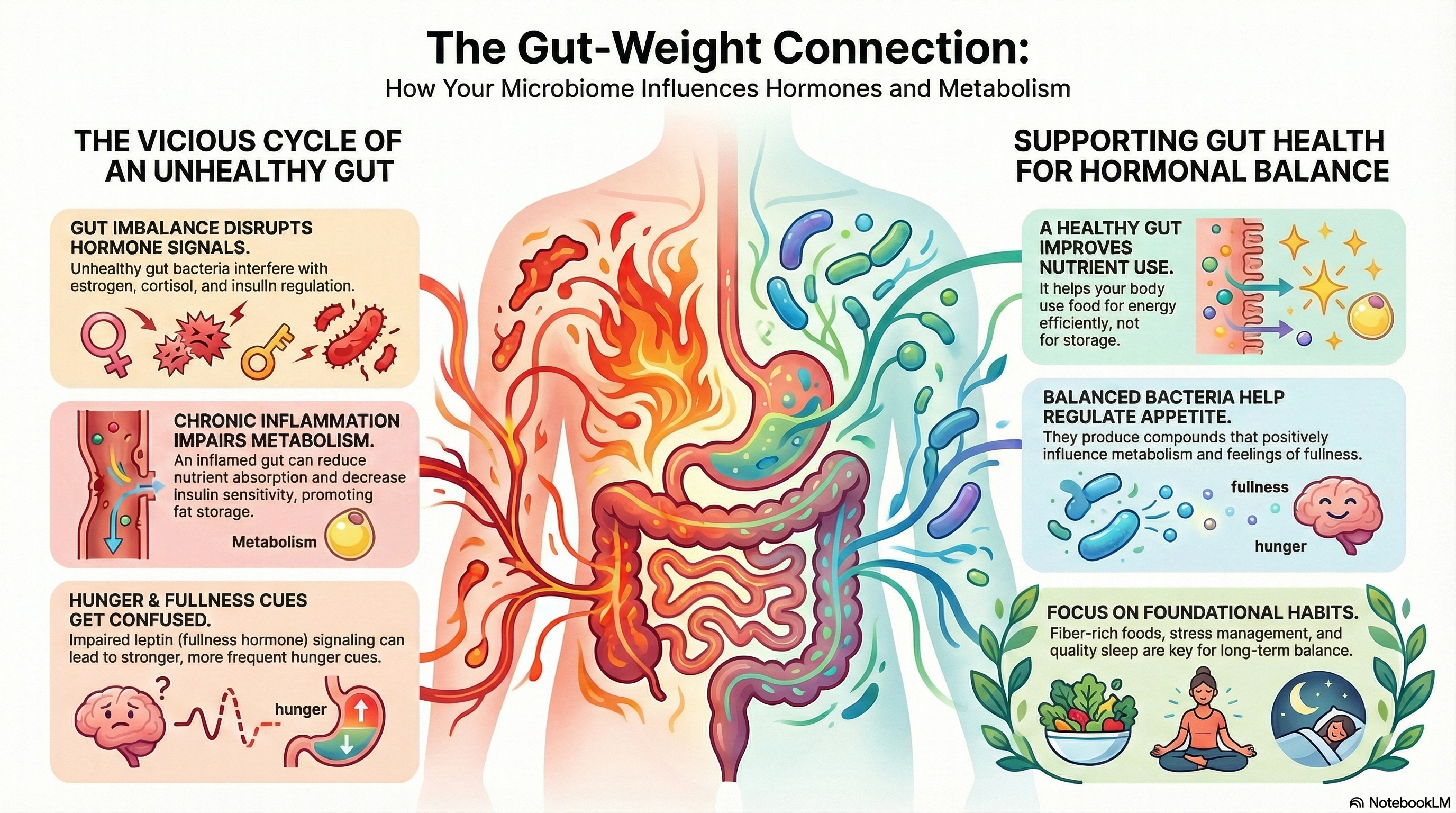
Ongoing gut inflammation can change how hormones communicate with cells. Insulin and leptin signals may become less effective.
Leptin helps regulate fullness. When signaling is impaired, hunger cues may feel stronger than needed.
Inflammation can also stress the adrenal system. This may affect cortisol rhythms tied to belly fat.
Addressing inflammation may support healthier hormone responses. Results vary, but many patients notice steadier energy over time.
What role does gut health play in supporting healthy weight management?
Gut health impacts hormones and weight gain, but it can also support balance when cared for properly. Weight management is not just about willpower.
A healthy gut supports nutrient absorption. This helps the body use food efficiently for energy, not storage.
Gut bacteria also influence short-chain fatty acids. These compounds help regulate metabolism and appetite.
Lifestyle habits matter here. Sleep, stress, and food quality all affect the gut environment.
Consistent gut support helps stabilize hormonal rhythms
Improving gut health often involves small, steady changes. Fiber-rich foods help nourish beneficial bacteria.
Stress management supports gut and hormone balance together. The gut and brain communicate constantly.
Some patients benefit from guided gut programs. At Eternal Vitality, this may integrate with hormone care, peptides, or metabolic support.
Gut health is not a quick fix. It is a foundation that supports long-term hormonal stability and weight trends.
Conclusion and next step
Gut health impacts hormones and weight gain in subtle but meaningful ways. The gut helps regulate inflammation, metabolism, and hormone signaling.
When gut balance is supported, hormones may communicate more clearly. This can influence energy, appetite, and body composition over time.
Weight challenges are often multifactorial. Gut health, stress physiology, sleep, and metabolism all work together.
If you are in the Orlando area and want a deeper understanding, you may consider learning more about this service on our website.
Frequently Asked Questions
Can poor gut health cause weight gain even with a healthy diet?
It may contribute. Poor absorption and inflammation can affect metabolism despite good food choices.
Does gut health affect both men and women’s hormones?
Yes. Gut bacteria interact with estrogen, cortisol, and insulin in all adults.
How long does it take to notice changes after improving gut health?
Some notice shifts in weeks, while others need several months. Responses vary.
Is gut health connected to stress and sleep?
Yes. Stress and poor sleep can disrupt gut balance and hormone rhythms.
Can gut support work alongside hormone optimization?
Often, yes. Many approaches work best when combined thoughtfully.
Eternal Vitality
4361 Hunters Park Ln
Orlando, FL 32837
(407) 710-1840