
How testosterone resistance leads to muscle loss and fat gain in men is a growing concern in modern hormone medicine, especially as more men struggle with low energy, rising body fat, and declining strength despite “normal” lab levels. At Eternal Vitality in Orlando, Florida, we often meet high-performing men who feel confused by this pattern. Their blood work may not look alarming, yet their bodies are clearly changing.
Many men assume testosterone deficiency is the only issue. But there is another layer that often goes unnoticed. It is called testosterone resistance.
This concept helps explain why some men lose muscle mass and gain abdominal fat even when total testosterone appears adequate. Understanding it may help men take earlier, smarter action to protect metabolism, hormone balance, and long-term vitality.
Let us explore how this works and why it matters.
What is testosterone resistance and how does it impact muscle loss and fat gain in men?
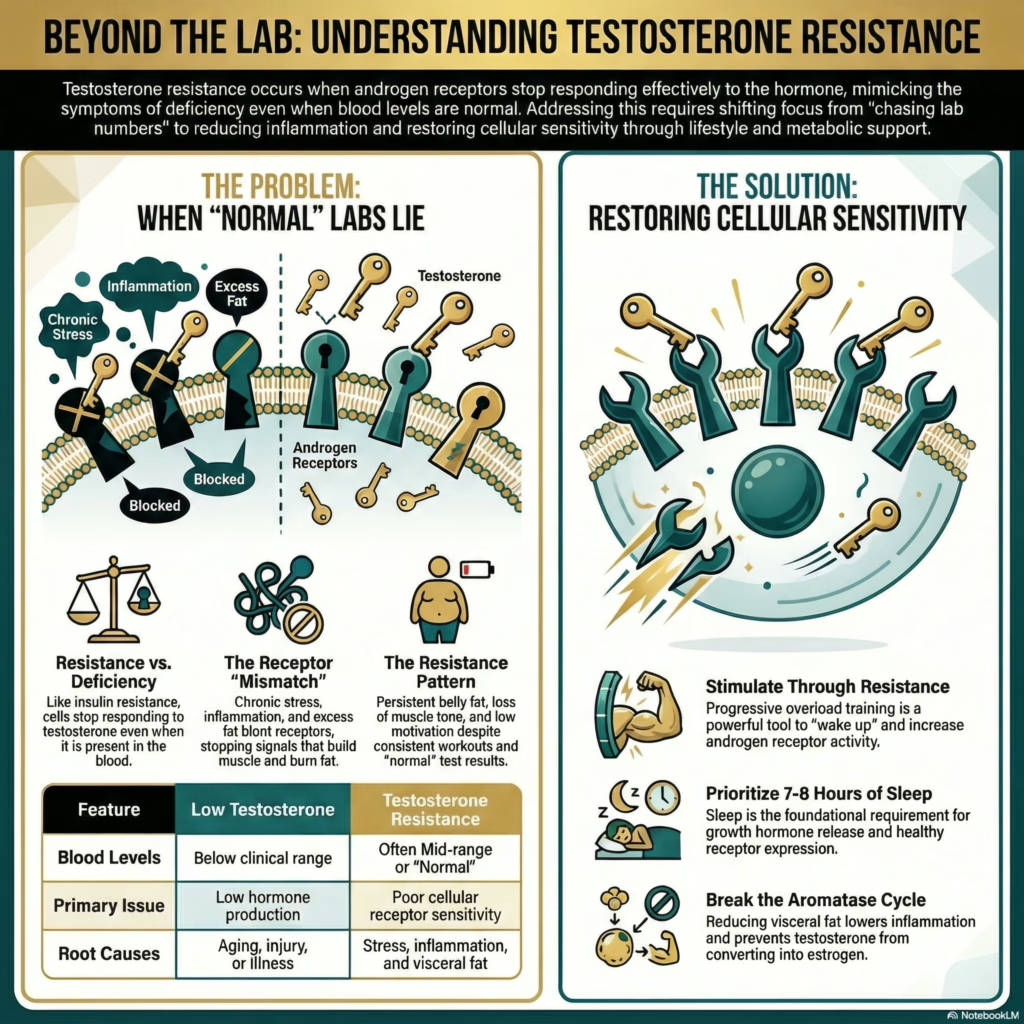
Testosterone resistance describes a state where the body does not respond properly to circulating testosterone. It is similar to insulin resistance, where blood sugar is present but cells do not respond efficiently.
Testosterone works by binding to androgen receptors inside muscle, fat, and brain tissue. Once attached, it signals the cell to build protein, burn fat, and support energy production. When receptor sensitivity declines, those signals weaken.
This can lead to symptoms that mirror low testosterone, even when blood levels appear within range. Men may notice stubborn belly fat, reduced muscle tone, slower recovery, low motivation, and decreased libido.
Because this issue is not always obvious on basic labs, many men search for answers when lifestyle efforts stop working.
Cellular signaling dysfunction reduces anabolic response
Testosterone resistance begins at the receptor level inside the cell. Hormones function like keys, but receptors must be able to recognize and respond to them.
Chronic stress physiology, inflammation, poor sleep, and excess body fat can impair androgen receptor sensitivity. Over time, muscle cells receive weaker growth signals.
When this happens, protein synthesis slows. Muscle tissue becomes harder to maintain, especially after age 35. Strength declines more easily during periods of stress or inactivity.
At the same time, fat cells may store energy more readily. This creates the common pattern of muscle loss and fat gain in men despite steady workouts.
Testosterone resistance may also interact with metabolic syndrome and insulin resistance. When insulin signaling is impaired, inflammation rises. That inflammation can further blunt androgen receptor function.
This cycle reinforces itself. More fat tissue increases aromatase activity, converting testosterone into estrogen. That shift may worsen hormone imbalance and body composition changes.
Addressing testosterone resistance often requires more than simply increasing hormone levels. It requires restoring cellular sensitivity and metabolic health.
Can normal testosterone levels still cause muscle loss and fat gain in men due to testosterone resistance?
Many men are surprised to learn that total testosterone numbers do not always reflect true tissue activity. A lab range is not the same as optimal cellular response.
Free testosterone, sex hormone binding globulin, inflammation markers, and body composition all influence how hormones behave. If receptors are not responding, adding more testosterone may not fully solve the issue.
Men with testosterone resistance may report fatigue, slower recovery, and difficulty building lean mass. Yet their total testosterone sits in the mid range. This disconnect can be frustrating.
In Orlando and across the country, we see more men navigating this gray zone between deficiency and dysfunction.
Hormone levels alone do not guarantee results
Blood values represent circulation, not cellular action. Testosterone must bind effectively at the receptor site to stimulate muscle protein synthesis and fat metabolism.
If a man increases testosterone without improving receptor sensitivity, progress may feel limited. Some patients notice partial improvements but still struggle with abdominal fat or low drive.
Lifestyle factors matter deeply here. Chronic sleep restriction lowers androgen receptor expression. High stress increases cortisol, which can compete with anabolic signaling.
Excess visceral fat increases inflammatory cytokines. These chemical messengers interfere with both insulin and testosterone pathways.
Results also vary by timeline. Some men feel improved energy within weeks of hormone optimization. Changes in body composition may take 8 to 16 weeks depending on nutrition, movement, and metabolic status.
This is why a comprehensive approach matters. Hormone balance should align with gut health, stress recovery, resistance training, and targeted metabolic support.
At Eternal Vitality, this philosophy is reflected in the VITAL Reclamation™ Method , which emphasizes root-cause evaluation rather than symptom chasing.
How can men improve testosterone resistance and protect muscle mass?
Improving testosterone resistance requires addressing the environment around the hormone. The goal is to help the body respond more efficiently to its own signals.
This means supporting metabolic health, reducing inflammation, and improving recovery. It also means looking beyond quick fixes.
Men who feel their body composition shifting often benefit from a structured plan. Muscle is not just aesthetic. It protects metabolism, insulin sensitivity, and long-term resilience.
Protecting lean mass becomes especially important after age 40, when natural anabolic signaling gradually declines.
Strategic restoration enhances hormonal sensitivity
The first step is accurate diagnostics. This may include comprehensive hormone panels, inflammatory markers, metabolic testing, and body composition analysis.
Resistance training remains one of the most powerful tools. Progressive overload stimulates androgen receptor activity and promotes muscle protein synthesis.
Nutrition also plays a key role. Adequate protein intake supports muscle repair. Balanced carbohydrates help regulate insulin resistance and cortisol levels.
Sleep is foundational. Seven to eight hours per night supports growth hormone release and receptor expression. Even small improvements in sleep quality may influence results.
Targeted therapies may also be considered. Some men benefit from peptide support to enhance recovery and mitochondrial function. Others may need gut health optimization to reduce systemic inflammation.
The Vital Gut Rebuild™ framework highlights how digestive balance affects nutrient absorption and inflammatory load. When gut health improves, hormone signaling may become more efficient.
Hormone therapy, when appropriate, should be personalized and monitored. The goal is not simply higher numbers. It is improved function, strength, clarity, and metabolic stability.
Men who combine resistance training, stress management, hormone optimization, and metabolic support often notice gradual improvements in body composition over several months. Results vary, but consistency matters more than intensity.
If you live in Orlando or surrounding areas, working with a clinician who understands testosterone resistance can provide clarity and structure.
Conclusion and Next Steps
Testosterone resistance may help explain muscle loss and fat gain in men who appear to have normal hormone levels. When androgen receptors become less responsive, the body struggles to maintain lean mass and metabolic balance.
Addressing testosterone resistance requires more than chasing lab numbers. It involves restoring receptor sensitivity, reducing inflammation, improving insulin resistance, and protecting muscle through strategic training and recovery.
At Eternal Vitality in Orlando, Florida, we focus on discovery, diagnostics, design, and data. Our approach reflects our core belief that health transformation begins with empowerment and precision .
If you are noticing declining strength, increasing abdominal fat, or persistent fatigue, you do not have to navigate it alone.
Book a Vitality Discovery Session
https://myeternalvitality.com
Frequently Asked Questions
Is testosterone resistance the same as low testosterone?
No. Testosterone resistance means the body is not responding well to available testosterone. Levels may appear normal, yet symptoms persist.
Can weight gain cause testosterone resistance?
Excess visceral fat can increase inflammation and estrogen conversion. This may impair androgen receptor sensitivity over time.
How long does it take to improve muscle mass once resistance is addressed?
Many men notice early energy changes within weeks. Visible body composition shifts often require several months of consistent effort.
Do all men with muscle loss need hormone therapy?
Not necessarily. Some men improve with lifestyle, sleep, resistance training, and metabolic support alone.
Is testosterone resistance reversible?
In many cases, improving inflammation, insulin resistance, stress load, and recovery may enhance receptor responsiveness. Individual results vary.
Key Point Summary
1. Testosterone Resistance Is Different From Low Testosterone
- Testosterone resistance occurs when the body does not respond properly to available testosterone.
- Blood levels may appear “normal,” yet muscle loss and fat gain still occur.
- The issue lies in reduced androgen receptor sensitivity inside cells.
2. Muscle Loss Happens When Cellular Signaling Weakens
- Testosterone must bind to androgen receptors to stimulate muscle protein synthesis.
- Chronic stress, inflammation, poor sleep, and excess body fat reduce receptor responsiveness.
- When signaling weakens, muscle becomes harder to build and easier to lose, especially after age 35.
3. Fat Gain Is Driven by Hormonal and Metabolic Disruption
- Impaired testosterone signaling reduces fat-burning efficiency.
- Increased visceral fat raises inflammation and aromatase activity.
- More aromatase converts testosterone into estrogen, which may further worsen body composition.
- Insulin resistance often overlaps with testosterone resistance, creating a self-reinforcing cycle.
4. Normal Lab Values Do Not Guarantee Optimal Function
- Total testosterone levels do not always reflect cellular activity.
- Free testosterone, inflammation markers, body composition, and metabolic health matter.
- Simply increasing testosterone may not fully resolve symptoms if receptor sensitivity is impaired.
5. Lifestyle Factors Strongly Influence Testosterone Sensitivity
Improving receptor function often requires:
- Progressive resistance training
- Adequate protein intake
- Balanced metabolic support
- Sleep optimization
- Stress management
- Reducing systemic inflammation
- Supporting gut health
6. Muscle Mass Protects Long-Term Health
- Lean muscle supports metabolism, insulin sensitivity, and resilience.
- Loss of muscle increases risk for metabolic syndrome and accelerated aging.
- Preserving muscle becomes more important after age 40.
7. A Comprehensive Approach Works Best
Effective strategies may include:
- Advanced hormone and metabolic testing
- Personalized hormone optimization when appropriate
- Peptide support for recovery and mitochondrial function
- Gut health restoration
- Ongoing monitoring and recalibration
8. Results Take Time
- Energy improvements may appear within weeks.
- Body composition changes often require 8 to 16 weeks or longer.
- Consistency is more important than intensity.
Eternal Vitality
4361 Hunters Park Ln
Orlando, FL 32837
(407) 710-1840