


Why do my hormones look normal but I still feel terrible? If you’ve ever asked yourself this question, you’re far from alone.
At Eternal Vitality in Orlando, Florida, we regularly meet people who have been told their hormones are normal, their blood work looks fine, and there is nothing obvious to explain their symptoms. Yet they continue to struggle with fatigue, brain fog, poor sleep, weight gain, low motivation, reduced libido, and a growing sense that something simply is not right.
The frustration is understandable. You know how you feel. Your body is sending signals that something has changed. Yet every appointment seems to end with the same response: “Your labs are normal.”
What if normal laboratory values are not the whole story?
One of the biggest misconceptions in healthcare is the belief that feeling healthy and testing normal are the same thing. In reality, those are often very different conversations.
At Eternal Vitality, we believe the goal is not simply to identify disease. The goal is to understand why you feel the way you do and uncover the hidden factors influencing your energy, metabolism, recovery, and hormone balance.
Table of Contents
Why Do My Hormones Look Normal But I Still Feel Terrible?
Most people think hormones work like an on-and-off switch.
If hormones are low, symptoms appear.
If hormones are normal, symptoms disappear.
The human body is far more complex.
Hormones operate within a sophisticated communication network involving metabolism, sleep quality, stress physiology, gut health, inflammation, body composition, and cellular energy production.
When one part of that network becomes dysfunctional, symptoms may appear even when hormone levels fall within standard laboratory ranges.
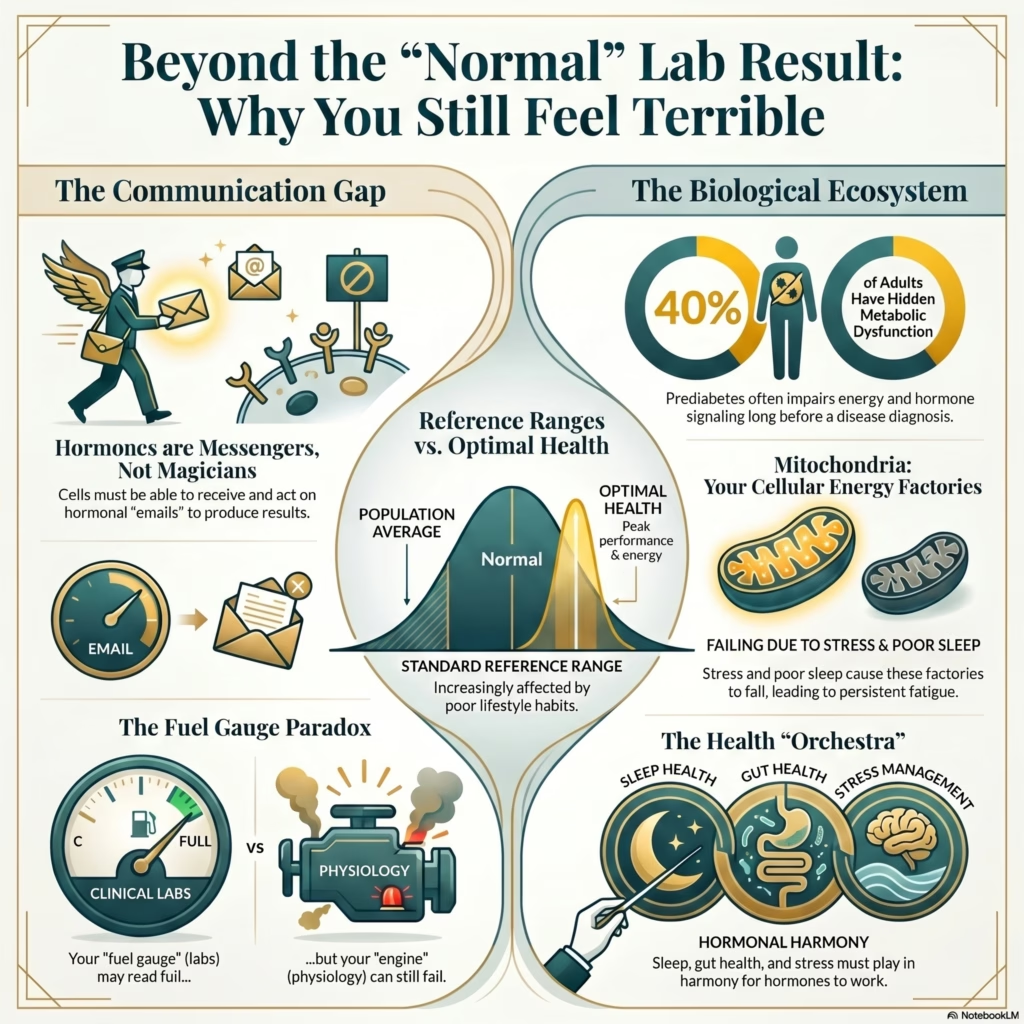
A useful way to think about this is through the analogy of a car.
Most clinics evaluate hormones like checking the fuel gauge.
But what if the fuel pump is failing?
What if the battery is weak?
What if the engine is overheating?
What if the spark plugs are not firing correctly?
The fuel gauge may still read full.
The car still will not perform properly.
Hormone levels often represent the fuel gauge. They provide valuable information, but they rarely tell the entire story.
This helps explain why two people with nearly identical hormone levels can feel completely different. One feels energetic, focused, and resilient. The other feels exhausted, overwhelmed, and frustrated.
The difference often lies in how effectively the rest of the body’s systems are functioning.
Hormones Are Messengers, Not Magicians
Many people assume hormones directly create results.
In reality, hormones create messages.
Your cells must receive and respond to those messages appropriately.
Think of hormones like emails.
Sending an email does not guarantee the recipient opens it, reads it, or acts on it.
The same concept applies inside the body.
A hormone can be present in the bloodstream, but if cellular communication is impaired, the intended message may not be fully received.
This is one reason someone can have hormone levels within a reference range and still experience symptoms commonly associated with hormone imbalance.
Sleep deprivation, chronic inflammation, insulin resistance, nutrient deficiencies, elevated stress hormones, and excess visceral fat may all influence how effectively cells respond to hormonal signals.
What if your lab values look normal, but your cells are not responding appropriately?
That question often leads to more meaningful answers than simply asking whether a hormone is high or low.
Could Metabolic Health Be Affecting Your Hormones More Than You Realize?
One of the most overlooked causes of persistent symptoms is metabolic dysfunction.
Many patients assume fatigue, brain fog, and weight gain must be caused by hormone deficiencies. In reality, metabolism often plays an equally important role.
Research suggests that nearly 40% of American adults have prediabetes, and many do not know it. Long before diabetes develops, metabolic dysfunction may influence energy production, body composition, hormone signaling, and recovery.
What if the problem is not low testosterone at all?
What if your metabolism is struggling to create and utilize energy efficiently?
Your body relies on healthy metabolic function to convert food into usable cellular energy. When that process becomes impaired, symptoms often appear long before traditional disease is diagnosed. Many people feel stuck because they focus exclusively on hormone levels while overlooking the metabolic environment that allows hormones to function properly.
Cellular Energy Drives How You Feel Every Day
Inside every cell are structures called mitochondria.
You can think of them as tiny energy factories.
Their job is to convert nutrients into energy that powers every system in the body.
When sleep quality declines, chronic stress remains elevated, inflammation increases, or blood sugar becomes unstable, mitochondrial performance may suffer.
The result can be fatigue, poor exercise recovery, reduced mental clarity, and difficulty maintaining a healthy body composition.
This is why many people describe feeling “tired all the time” despite having normal blood work.
The problem is not always the amount of hormones present.
Sometimes the problem is the body’s ability to create and utilize energy efficiently.
Why Do Sleep, Stress, and Gut Health Influence Hormone Balance?
Many people view hormones as a separate system.
In reality, hormones are deeply connected to nearly every aspect of physiology.
Poor sleep can increase cortisol levels and reduce insulin sensitivity.
Reduced insulin sensitivity may contribute to weight gain and metabolic dysfunction.
Increased body fat may influence hormone production and hormone signaling.
Chronic stress can alter recovery patterns and affect mood, motivation, and resilience.
Gut dysfunction may contribute to inflammation and nutrient deficiencies that affect hormone production and cellular function.
These systems do not operate independently.
They function as an ecosystem.
When one area struggles, other systems often feel the effects.
The Body Functions as an Ecosystem
Imagine an orchestra.
Hormones are important instruments, but they are not the entire performance.
Sleep is an instrument.
Metabolism is an instrument.
Gut health is an instrument.
Recovery is an instrument.
Stress physiology is an instrument.
When every section works together, the music sounds balanced and powerful.
When one section falls out of rhythm, the entire performance changes.
This is why simply correcting a single laboratory value does not always produce the improvements someone expects.
Optimal health often requires improving communication across multiple systems rather than focusing on one hormone in isolation.
A Clinical Perspective
One of the most common mistakes we see is treating laboratory reference ranges as if they define health.
They do not.
Reference ranges simply tell us where most people fall.
They do not tell us where you function best.
This distinction matters because modern populations are increasingly affected by poor sleep, chronic stress, insulin resistance, sedentary lifestyles, and systemic inflammation.
If the average population is becoming less healthy, should the average laboratory range automatically define optimal health?
Many patients arrive believing they need a hormone prescription because they are exhausted.
Sometimes they do.
Often, there is more to the story.
One patient came to our clinic convinced testosterone was the missing piece.
His testosterone level fell within a standard laboratory range.
His thyroid markers appeared normal.
His routine blood work looked acceptable.
Yet he was exhausted by mid-afternoon, struggled to build muscle despite consistent exercise, and felt mentally drained.
A deeper evaluation revealed poor sleep quality, early metabolic dysfunction, elevated stress burden, and increasing visceral fat.
His hormones were not the entire problem.
His physiology had lost coordination.
By addressing sleep quality, metabolic health, recovery habits, body composition, and hormone optimization together, he began noticing meaningful improvements in energy, focus, and resilience over time.
This pattern is remarkably common.
The body functions as an integrated system, not a collection of isolated laboratory values.
What Should You Do If Your Hormones Look Normal But You Still Feel Terrible?
The first step is recognizing that symptoms matter.
Laboratory testing provides valuable information, but symptoms provide valuable information as well.
Fatigue is data.
Brain fog is data.
Poor recovery is data.
Low motivation is data.
Declining performance is data.
Instead of asking only whether your hormones are normal, consider asking deeper questions:
- How is my sleep quality?
- How is my metabolic health?
- Am I recovering adequately from stress?
- Could inflammation be affecting my energy?
- Is my gut health influencing nutrient absorption?
- How has my body composition changed over time?
These questions often reveal insights that traditional evaluations may miss.
A comprehensive approach may help identify opportunities for improvement across multiple systems rather than focusing on a single laboratory marker.
Conclusion & Next Step
The difference between normal labs and optimal health is one of the most misunderstood concepts in wellness and functional medicine.
Hormone balance is important, but hormones do not operate in isolation.
Metabolism, sleep, stress physiology, gut health, recovery, and body composition all influence how you feel and how effectively your hormones function.
If your hormone levels appear normal but you still feel terrible, your body may be telling you there is a deeper story worth exploring.
Many patients discover that the missing piece is not a single hormone. It is understanding how their entire physiology works together.
At Eternal Vitality, we focus on uncovering those connections and helping individuals better understand the factors influencing their energy, resilience, and long-term vitality.
If you are ready to gain a deeper understanding of your health, learn more about this service on our website.
Frequently Asked Questions
Can I have hormone symptoms even if my hormone levels are normal?
Yes. Symptoms may be influenced by sleep quality, metabolic health, stress physiology, inflammation, body composition, and cellular responsiveness in addition to hormone levels.
What does a normal hormone range actually mean?
A reference range represents values commonly found within a population. It does not necessarily indicate what is optimal for every individual.
Why do I feel tired if my testosterone is normal?
Fatigue may be influenced by sleep quality, insulin resistance, chronic stress, inflammation, poor recovery, nutrient deficiencies, or other physiological factors.
Can gut health affect hormone balance?
Yes. Gut health may influence inflammation, nutrient absorption, metabolism, and hormone regulation, all of which can affect how you feel.
Is hormone therapy the answer for everyone with fatigue?
Not necessarily. Some individuals may benefit from hormone optimization, while others may need to address sleep, metabolism, stress physiology, body composition, or gut health first.
Eternal Vitality
4361 Hunters Park Ln
Orlando, FL 32837
(407) 710-1840