


Can Stress Destroy Your Sex Drive? If you are researching stress and sex drive, the answer is more complex than simply blaming cortisol.
Stress may lower sexual desire, but libido does not come from one hormone. Your brain, nervous system, sex hormones, medications, sleep, metabolism, relationships, and overall health all contribute.
At Eternal Vitality in Orlando, Florida, we often see people assume low libido means low testosterone or estrogen. Sometimes hormones matter. However, treating one number can miss the reason desire changed.
One of the most overlooked questions is simple: What else changed when your sex drive changed?
How Are Stress and Sex Drive Connected Through Cortisol?
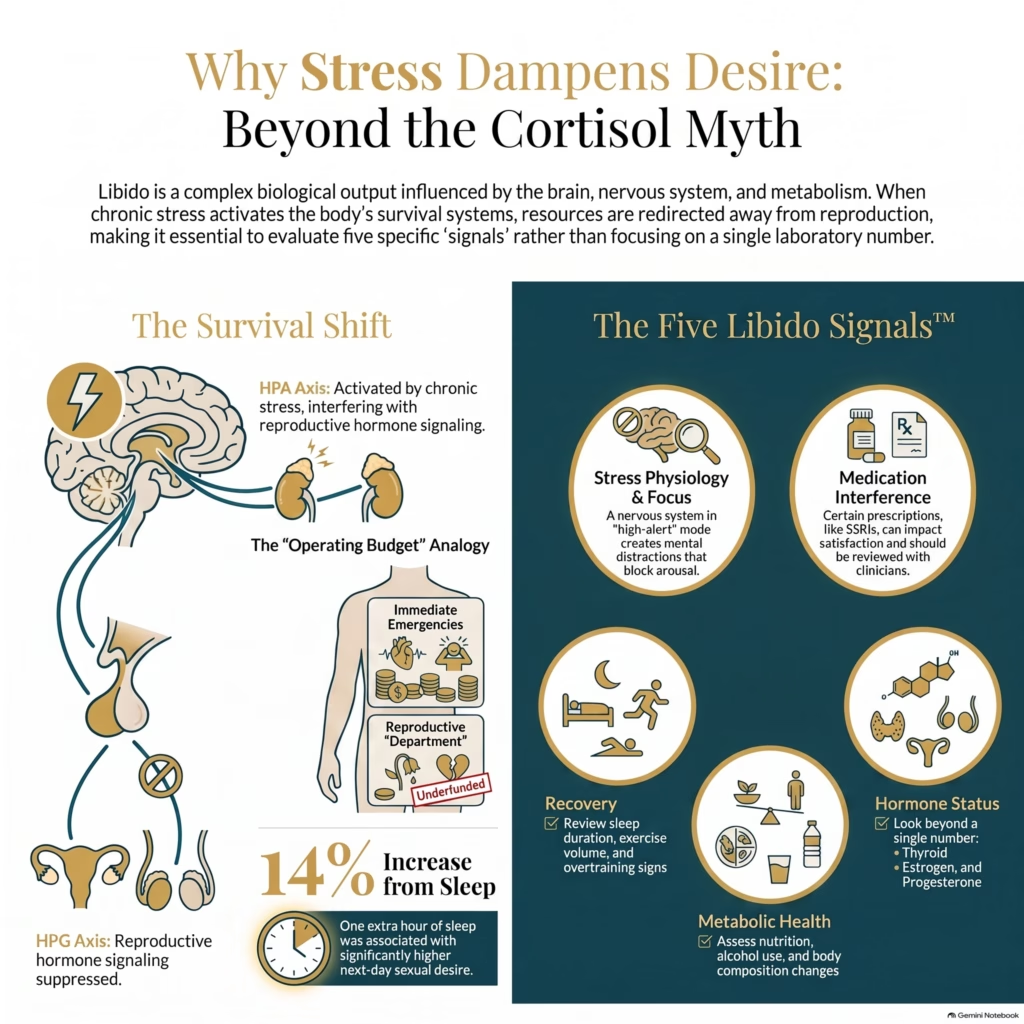
Stress activates your body’s built-in survival system. Your brain signals the adrenal glands through the hypothalamic-pituitary-adrenal axis, often called the HPA axis.
Cortisol is an important part of this system. You need cortisol to wake up, maintain blood pressure, regulate energy, and respond to challenges.
The concern is not that cortisol is “bad.” The issue is repeated stress without enough recovery.
Research supports this distinction. A 2025 daily-life study found that higher perceived stress was associated with lower sexual desire and arousal. Cortisol also showed a stronger relationship with lower desire in women than men.
Chronic stress can shift reproductive priorities
Your stress system and reproductive system constantly communicate. They are not separate departments inside your body.
The reproductive system includes the hypothalamic-pituitary-gonadal axis, or HPG axis. This pathway helps regulate testosterone, estrogen, ovulation, sperm production, and other reproductive functions.
Research shows that repeated stress signaling can interfere with this reproductive pathway. Chronic stress may affect brain signaling and the production of sex hormones.
Think of your body like a company with a limited operating budget. During a short emergency, resources are redirected toward the immediate problem.
When the emergency never seems to end, other departments may receive less attention.
Sexual desire can be one of those departments.
This does not mean every stressed person develops abnormal hormones. It means stress may change the biological environment in which desire, arousal, and hormone signaling occur.
A 2026 review found that chronic psychological stress may affect male testosterone and sexual function through several pathways. Metabolic changes appear to be one important connection.
Stress does not simply make you “too tired for sex.” It can influence the biological systems that help create sexual desire.
Table of Contents
What Else Should Be Checked When Stress and Sex Drive Change?
Cortisol can become an easy explanation for every symptom. That can be just as misleading as assuming testosterone explains everything.
Low libido deserves a wider investigation.
One pattern we commonly observe is that patients may have one hormone measured without a complete review of medications, lifestyle, sleep, stress, and overall hormone status.
What if the problem is not one hormone at all?
The Five Libido Signals™ reveal the bigger picture
A useful way to understand libido is through five connected signals.
- Stress physiology: Is your nervous system spending too much time in a high-alert state?
- Hormone status: Are testosterone, estrogen, progesterone, thyroid, or other relevant signals contributing?
- Medications: Did desire change after starting or changing a prescription?
- Sleep and recovery: Is your body receiving enough restorative sleep and recovery?
- Metabolic and lifestyle health: Are nutrition, body composition, alcohol, overtraining, or metabolic changes adding stress?
These signals can overlap.
For example, imagine someone working twelve-hour days while sleeping five hours nightly. They begin intense training and significantly reduce calories to lose weight.
Their libido falls.
It would be tempting to blame testosterone or cortisol alone. Yet their body is receiving several signals that resources and recovery are limited.
That distinction changes the questions worth asking.
Medication review is especially important. Antidepressants are one example. A recent meta-analysis found SSRIs were associated with increased orgasm difficulties and reduced sexual satisfaction compared with placebo.
This does not mean patients should stop prescribed medication. Medication changes should always be discussed with the prescribing clinician.
A libido problem can begin outside the reproductive system and still show up in your sex life.
Can Improving Stress and Sex Drive Require More Than Hormone Treatment?
Yes. Hormone optimization may be appropriate for some patients, but sexual desire should not automatically become a hormone prescription.
Sleep offers a useful example.
One study followed 171 women for 14 days. An extra hour of sleep was associated with a 14 percent increase in the odds of partnered sexual activity the following day. Longer sleep was also associated with greater next-day desire.
That does not prove sleeping longer will restore everyone’s libido. It shows why sleep deserves attention during a sexual health evaluation.
Stress also affects concentration. A small study comparing women with high and average chronic stress found greater cortisol levels and lower genital arousal in the high-stress group.
Interestingly, distraction was the strongest predictor of reduced genital arousal after other factors were considered.
That finding teaches an important lesson.
Sexual function involves both biology and attention. A body that remains mentally occupied with deadlines, financial worries, family demands, or unfinished tasks may struggle to shift into sexual responsiveness.
A complete assessment finds the strongest barriers first
Start with a timeline rather than a supplement.
Ask when your libido began changing. Then look several months backward.
Consider medication additions or dose changes. Review sleep duration, snoring, nighttime waking, alcohol use, dieting, exercise volume, and major life stressors.
Hormone status may also deserve evaluation based on age, symptoms, health history, and biological sex. Testosterone should not automatically be evaluated in isolation.
Metabolism matters too. Chronic stress, inadequate recovery, changing body composition, and metabolic dysfunction can interact with hormone signaling.
Eternal Vitality’s educational philosophy views hormones, metabolism, sleep, stress physiology, gut health, recovery, and body composition as connected systems.
Peptide support or other therapies may have a role for selected patients, but they should not replace identifying underlying contributors.
A Clinical Perspective
Many patients know that stress feels unpleasant. Far fewer understand how stress physiology can interact with reproductive hormones.
We also commonly find that medication history and lifestyle deserve more attention during a libido evaluation.
A testosterone result may be useful. An estrogen result may be useful. Neither tells the entire story.
Sexual desire is better viewed as an output signal. It reflects information coming from your brain, hormones, nervous system, metabolism, sleep, medications, and personal circumstances.
That is why simply trying to “raise libido” can miss the point.
The better clinical question is: What is preventing this person’s sexual system from receiving the signals it needs?
Improvement also varies. Someone whose main barrier is temporary sleep loss may experience changes differently from someone managing medication effects, menopause, low testosterone, metabolic dysfunction, or prolonged psychological stress.
There is no universal timeline.
Eternal Vitality Takeaway: Your sex drive is not controlled by a single hormone. Persistent changes in desire can be a clue that stress, recovery, medications, hormones, or metabolic health deserve a closer look.
Can Stress Destroy Your Sex Drive? Conclusion & Next Step
Understanding stress and sex drive requires looking beyond cortisol alone. Chronic stress may influence reproductive signaling, but libido reflects many connected systems.
The biggest mistake is reducing sexual desire to one laboratory number.
A more useful evaluation reviews stress physiology, medications, sleep, lifestyle, metabolism, relationships, and overall hormone status. That approach helps identify which barriers actually deserve attention.
For people in Orlando seeking a more comprehensive understanding of changing energy, hormones, and sexual wellness, Book a Vitality Discovery Session.
Frequently Asked Questions
Can high cortisol lower your sex drive?
Stress and cortisol may influence pathways involved in sexual desire and reproductive signaling. However, cortisol levels alone cannot explain every case of low libido.
Can stress lower testosterone?
Research suggests chronic psychological stress may influence testosterone directly and indirectly, including through metabolic changes. The effect varies between individuals.
Can stress affect estrogen and female libido?
Repeated activation of stress pathways may influence reproductive hormone signaling. Research also shows associations between higher stress and lower sexual desire in women.
Can normal hormone levels exist with low libido?
Yes. Desire also depends on sleep, medications, relationships, mood, nervous-system activity, metabolic health, and other factors. “Normal” laboratory values do not automatically explain symptoms.
How do I know whether stress or hormones are causing low libido?
There may be more than one contributor. A useful evaluation reviews symptom timing, medications, sleep, lifestyle, stress exposure, metabolic health, and appropriate hormone testing.
Eternal Vitality
4361 Hunters Park Ln
Orlando, FL 32837
(407) 710-1840