
What your food sensitivities reveal about your hormone balance is often a deeper story about gut health, inflammation, and metabolic function that many people miss. At Eternal Vitality in Orlando, Florida, we regularly see patients who feel like they are doing everything right, yet their body is not responding the way it should.
You may be eating clean, avoiding processed foods, and still dealing with bloating, weight gain, or low energy. It can feel confusing and discouraging. Many begin to believe food is the enemy, when in reality, the body is sending signals.
Food sensitivities are not just about what you eat. They may reflect how your gut, immune system, and hormones are interacting beneath the surface. When these systems fall out of alignment, symptoms begin to appear in ways that seem unrelated.
Understanding this connection can shift your approach entirely. Instead of restricting more, you begin to restore what the body actually needs.
How do food sensitivities affect hormone balance and why does this matter?
Many people think food sensitivities are limited to digestion. In reality, they often influence multiple systems in the body, including hormone regulation and metabolism.
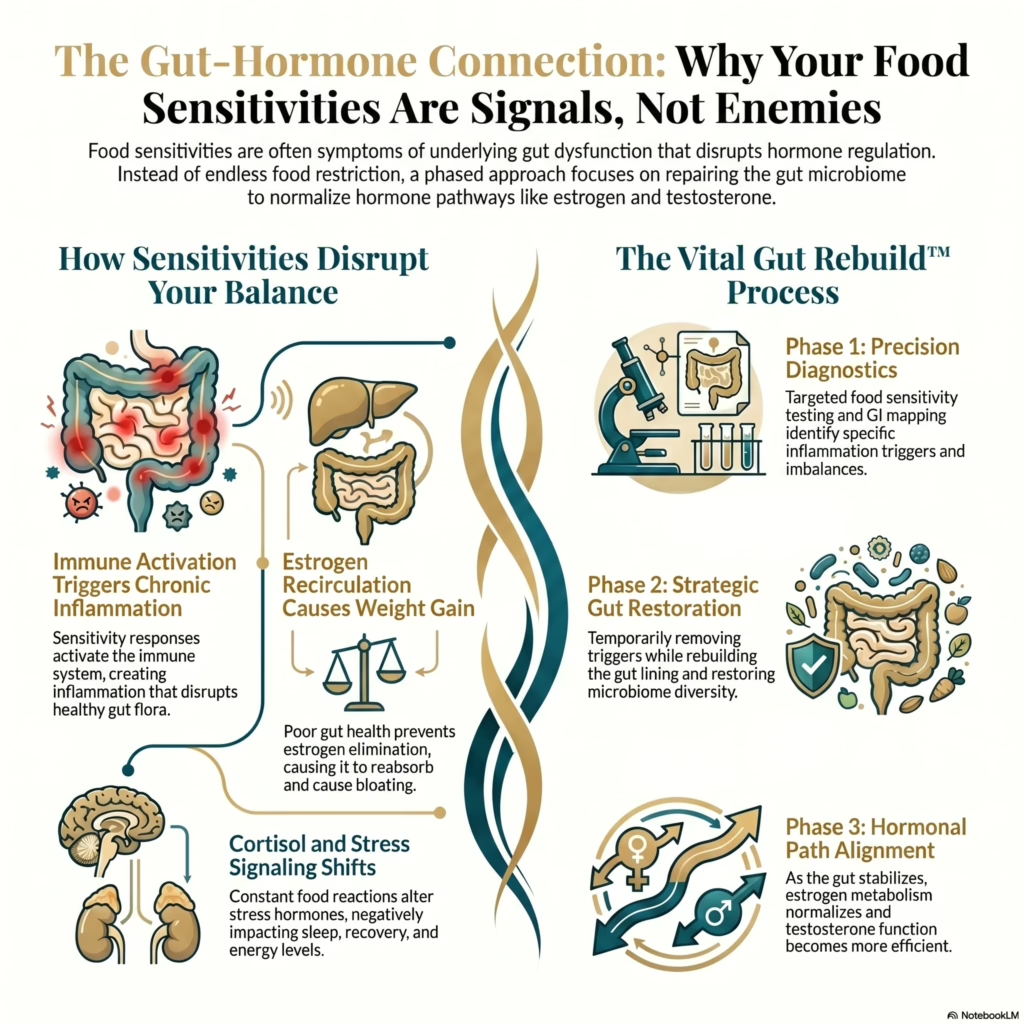
When certain foods trigger a sensitivity response, the immune system becomes activated. This ongoing activation may create low-grade inflammation that disrupts the gut environment. Over time, this can affect the balance of beneficial bacteria.
This matters because your gut microbiome plays a direct role in how hormones are processed and cleared. If the gut is not functioning well, hormones may not be regulated efficiently.
People often search this topic because they feel stuck. They may notice patterns like bloating after meals, frequent infections, or weight gain that does not respond to diet or exercise.
Table of Contents
Food sensitivities can disrupt hormone metabolism through the gut
Food sensitivities can suppress healthy gut flora, which are essential for proper hormone metabolism. When this happens, the body may struggle to regulate key hormones like estrogen and testosterone.
One common pattern is estrogen recirculation. Instead of being properly eliminated, estrogen is reabsorbed in the gut. This may contribute to fluid retention, stubborn weight gain, and hormonal imbalance.
At the same time, chronic inflammation may affect testosterone levels and signaling. Many patients experiencing sensitivities also show signs of low testosterone or reduced metabolic efficiency.
There is also a connection to stress physiology. When the body is constantly reacting to foods, cortisol patterns may shift. This can influence sleep, recovery, and overall energy levels.
At Eternal Vitality, we often explain this simply. Food sensitivities are not just reactions. They are signals that your gut may no longer be supporting your hormones the way it should.
Who should consider evaluating food sensitivities and hormone balance together?
Not everyone needs advanced testing, but certain patterns suggest a deeper evaluation may be helpful. The key is recognizing when symptoms are not resolving with surface-level changes.
If you feel like your body is reacting to more foods over time, this is important. Many patients describe a growing list of sensitivities despite trying to eat healthier.
Other common signs include persistent bloating, recurrent infections, and unexplained weight gain. These symptoms may indicate both gut disruption and hormonal imbalance.
Some individuals also notice changes in energy, mood, or body composition. Even with consistent effort, progress feels limited. This often reflects deeper metabolic and hormonal signaling.
Recognizing patterns allows for more precise intervention
A structured approach often begins with targeted food sensitivity testing and GI mapping. This helps identify inflammation triggers, microbiome imbalances, and digestive inefficiencies.
From there, patterns begin to emerge. Some patients show clear signs of estrogen recirculation. Others demonstrate markers associated with immune activation or poor nutrient absorption.
It is important to approach testing with intention. Over-testing is common in this space and may not always provide additional value. In many cases, the right tests at the right time offer the most clarity.
The same applies to supplementation. While probiotics can be helpful in certain phases, long-term use is not always necessary. The goal is to restore the body’s natural balance, not create dependence.
At Eternal Vitality, this process is guided by both data and clinical insight. We are not looking to label more problems. We are looking to understand the pattern and correct it with precision.
What is the most effective way to correct food sensitivities and restore hormone balance?
Once food sensitivities are identified, the next step is not simply removing foods. While elimination may reduce symptoms, it does not address the root cause.
The goal is to rebuild the gut so it can properly support digestion, immune function, and hormone metabolism. Without this step, many patients remain in a cycle of restriction and frustration.
At the same time, supporting hormone balance during this process may enhance outcomes. These systems are interconnected, and improving one often supports the other.
This is where a structured, phased approach becomes essential. It provides a clear path forward rather than guesswork.
A strategic rebuild creates long-term stability and resilience
The most effective approach typically begins with identifying triggers through testing and symptom patterns. Once identified, inflammatory foods are removed temporarily to reduce stress on the system.
From there, the focus shifts to rebuilding. This includes supporting the gut lining, restoring microbiome diversity, and improving nutrient absorption.
At Eternal Vitality, this process aligns with our Vital Gut Rebuild™ framework , which is designed to restore digestive strength and systemic balance through a structured, personalized process.
As the gut begins to stabilize, hormone pathways often improve as well. Estrogen metabolism may normalize, and testosterone function may become more efficient.
Patients may begin to notice less bloating, more stable energy, and improved body composition over time. These changes vary, but they often reflect deeper internal alignment.
To further support results, lifestyle factors such as sleep, stress, and metabolism are addressed. In some cases, additional support through hormone optimization or peptide therapy may be considered.
This reflects our broader philosophy at Eternal Vitality. Through discovery, diagnostics, design, and data, we guide each patient toward a more complete and sustainable version of health.
Conclusion
Food sensitivities and hormone balance are closely connected, and understanding this relationship may change how you approach your health. When the gut is supported, hormone pathways often begin to function more efficiently.
Rather than continuing to eliminate foods or guess what your body needs, a more structured and personalized approach may provide clarity. Results vary, but many patients notice meaningful improvements in how they feel and function.
At Eternal Vitality, we take a precision-based approach to uncovering these patterns and guiding the next steps. If you are in the Orlando area and feel like your body is not responding the way it should, there may be more to explore.
Learn more about this service on our website: https://myeternalvitality.com/peptide-therapy-orlando/
Frequently Asked Questions
Can food sensitivities affect weight loss?
They may contribute to inflammation and hormone imbalance, which can influence metabolism and make weight changes more difficult.
Why do I develop more sensitivities over time?
This may reflect changes in gut health, immune activity, or stress levels that affect how your body responds to foods.
Is eliminating foods enough to fix the issue?
Elimination may reduce symptoms, but rebuilding the gut is often needed for long-term improvement.
Do hormones need to be treated at the same time?
In some cases, yes. Supporting both gut health and hormone balance may improve overall outcomes.
How do I know if I need testing?
If symptoms are persistent or not improving with basic changes, testing may provide helpful insight.
Eternal Vitality
4361 Hunters Park Ln
Orlando, FL 32837
(407) 710-1840