


A Complete Guide to Understanding Chronic Bloating, Digestive Function, and Why Treating the Food Isn’t Always the Answer
If you’ve searched “Why am I bloated after every meal?”, chances are you’ve already blamed something in your diet.
Maybe it was gluten.
Maybe dairy.
Maybe vegetables.
Maybe you started paying attention to carbohydrates, seed oils, or processed foods. The internet offers no shortage of opinions about which foods are “good” and which foods are supposedly destroying your gut.
The problem is that this way of thinking assumes the food is always the problem.
Sometimes it is.
Often, it isn’t.
One of the most surprising observations I see in clinical practice is that many patients don’t schedule an appointment because they’re bloated. They schedule an appointment because they’re tired, gaining weight, struggling with brain fog, or simply don’t feel like themselves anymore.
Only after I ask about digestion do they casually mention something like,
“Oh…I’ve been bloated after almost every meal for years. I figured that was normal.”
It isn’t.
Occasional bloating can happen after eating a particularly large meal or foods that naturally produce more intestinal gas. That is part of normal physiology.
Feeling bloated after nearly every meal is different.
Your body is repeating the same message every time your digestive system is asked to perform its most basic job.
That pattern deserves attention.
The question most people ask is:
“What food is causing this?”
The question I believe is far more useful is:
“Why has my digestive system stopped handling food the way it used to?”
That single shift changes the entire conversation.
Instead of searching for another food to eliminate, we begin asking why digestion has become less efficient.
Instead of treating the symptom, we begin investigating the system producing the symptom.
Table of Contents
Your Digestive System Is Sending a Signal, Not Failing
One of the biggest misconceptions about bloating is that it represents a failure of the digestive system.
Bloating is often evidence that the digestive system is doing exactly what physiology predicts it would do when one part of the process becomes inefficient.
Think about what has to happen every time you eat.
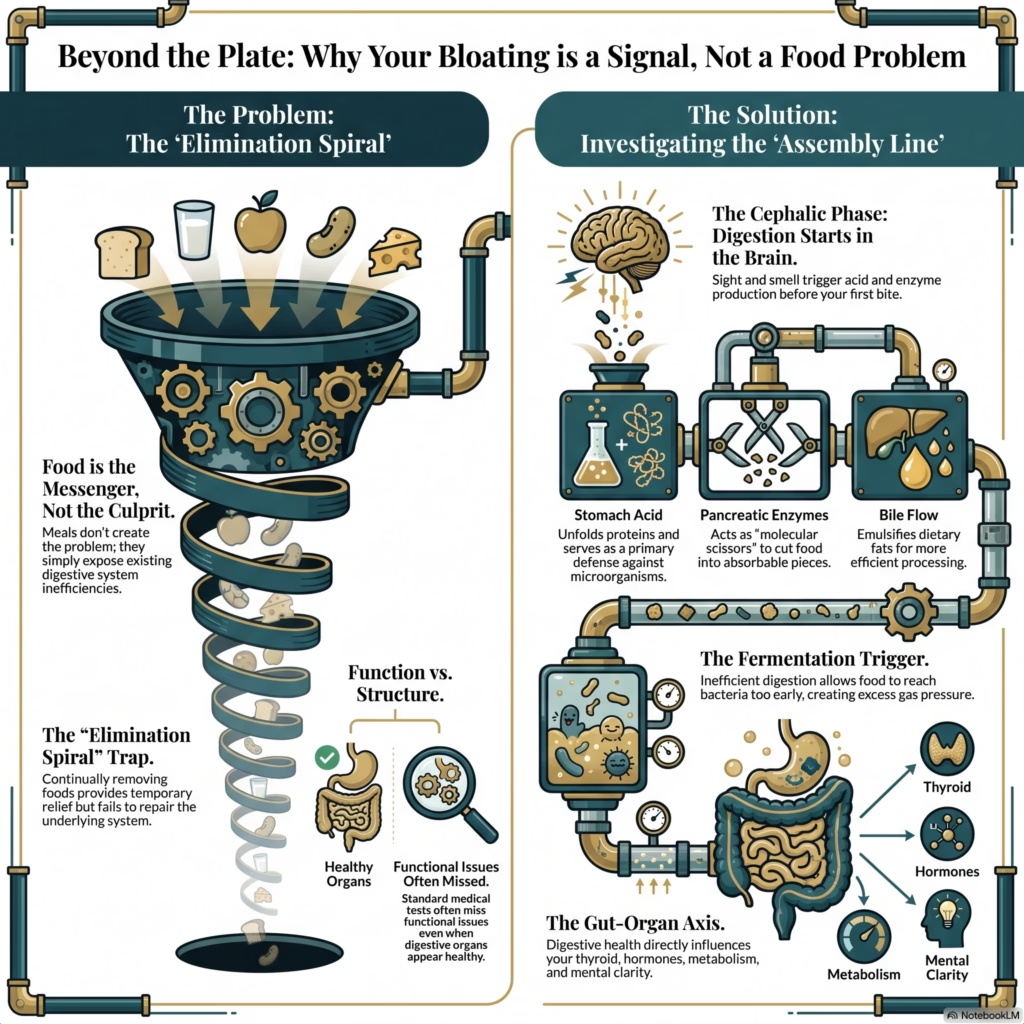
Before your first bite even reaches your stomach, your brain has already begun preparing your digestive tract. The sight, smell, and anticipation of food activate what physiologists call the cephalic phase of digestion. During this phase, the brain signals the stomach to produce acid, the pancreas to prepare digestive enzymes, and the gallbladder to get ready to release bile.
Digestion literally begins before you swallow your first bite.
From there, food moves through an extraordinarily coordinated system.
Stomach acid unfolds proteins and helps destroy potentially harmful microorganisms.
Digestive enzymes break proteins, carbohydrates, and fats into molecules small enough to absorb.
Bile emulsifies dietary fats, making them easier to digest.
Rhythmic muscle contractions move food steadily through the gastrointestinal tract.
Meanwhile, trillions of microorganisms within the colon ferment fibers that your own digestive enzymes cannot break down, producing compounds that nourish the cells lining your intestine.
Every meal depends on this sequence occurring in the proper order.
If one step becomes less efficient, the rest of the system must compensate.
Imagine an assembly line where every worker depends on the person before them.
If the first station begins moving more slowly, every station behind it becomes less efficient.
The digestive system works much the same way.
Food may remain in the stomach longer than expected.
Carbohydrates may reach intestinal bacteria before they have been completely digested.
Those bacteria begin fermenting the remaining carbohydrates, producing gases such as hydrogen, methane, and carbon dioxide.
As gas accumulates, the intestines stretch.
That stretching activates specialized nerve receptors within the intestinal wall, and your brain interprets those signals as fullness, pressure, tightness, or bloating.
Notice what caused the symptom.
The food didn’t suddenly become harmful.
The food simply revealed that one or more parts of the digestive process were no longer working as efficiently as they once did.
That is why I often tell patients:
Food is often the messenger, not the culprit.
The meal didn’t necessarily create the problem.
It simply exposed it.
Understanding that difference is the first step toward understanding why chronic bloating develops in the first place.
Can Bloating Mean My Digestive System Isn’t Working Properly?
Once people realize that food may not be the problem, the next question is usually, “Does this mean something is wrong with my digestive system?”
The answer is more nuanced than a simple yes or no.
Bloating by itself does not diagnose a disease. Many people with chronic bloating have normal blood work, normal imaging studies, and even normal endoscopies. At the same time, persistent bloating should never be dismissed simply because those tests are normal.
One of the biggest limitations in digestive health is that many routine medical tests are designed to identify structural disease. They are excellent at finding ulcers, tumors, inflammatory bowel disease, or significant anatomical abnormalities. They are much less effective at evaluating how well the digestive system is actually functioning.
Function and structure are not the same thing.
A car can look perfectly normal from the outside while running poorly because of a problem under the hood. In much the same way, your digestive tract can appear structurally healthy while still struggling to digest, absorb, and move food efficiently.
This distinction is important because chronic bloating often reflects changes in digestive function long before structural disease develops.
Digestion Depends on More Than the Food You Eat
Every meal triggers one of the most sophisticated physiological processes in the human body.
Your digestive system isn’t simply a tube that food passes through. It is an integrated network of organs, glands, nerves, hormones, muscles, and microorganisms that must work together in a precise sequence. If one part of that sequence becomes less efficient, the entire process can be affected.
Take stomach acid, for example.
Most people associate stomach acid with heartburn and assume that less acid must always be better. In reality, stomach acid performs several essential functions that extend far beyond preventing reflux.
Hydrochloric acid unfolds proteins so digestive enzymes can access them more effectively. It activates pepsin, one of the primary enzymes responsible for protein digestion. It also improves the absorption of important nutrients, including vitamin B12, iron, calcium, and magnesium, while serving as one of the body’s first defenses against potentially harmful microorganisms consumed with food.
If stomach acid production becomes inadequate, digestion doesn’t simply become slower. It becomes less efficient from the very beginning.
The pancreas represents the next major step.
Every time you eat, the pancreas releases enzymes specifically designed to digest carbohydrates, proteins, and fats. Think of these enzymes as highly specialized molecular scissors. Their job is to cut large food molecules into tiny pieces that can pass through the intestinal wall and enter the bloodstream.
Without adequate enzyme activity, those larger food particles continue traveling through the digestive tract only partially digested.
Eventually they encounter trillions of bacteria living within your intestines.
Unlike your digestive enzymes, these bacteria are capable of fermenting many of the carbohydrates your body cannot fully process. Fermentation is a completely normal process and an essential part of a healthy microbiome.
The problem isn’t fermentation itself.
The problem is where and how much fermentation occurs.
If larger amounts of undigested food reach intestinal bacteria than they were designed to handle, fermentation increases. As bacteria break down those carbohydrates, they naturally produce gases such as hydrogen, methane, and carbon dioxide.
Those gases have to go somewhere.
As they accumulate, pressure builds within the intestines. Stretch receptors embedded in the intestinal wall detect that expansion and send signals to the brain. Your brain interprets those signals as bloating, fullness, tightness, or abdominal pressure.
This is why bloating isn’t simply “gas.”
It is your nervous system responding to changes occurring inside your digestive tract.
Another often overlooked component is gastrointestinal motility.
Digestion isn’t only about breaking food down. It’s also about moving food forward.
After a meal, coordinated waves of muscular contractions move food from the stomach into the small intestine and eventually into the colon. If that movement slows, food remains in contact with intestinal bacteria longer than intended, increasing fermentation and gas production.
Finally, there is the gut microbiome itself.
Your digestive tract contains trillions of bacteria representing hundreds of different species. These microorganisms help digest dietary fiber, produce vitamins, regulate immune function, maintain the intestinal barrier, and communicate with your nervous system.
Scientists now recognize the microbiome as one of the most metabolically active ecosystems in the human body.
When that ecosystem changes, digestion changes with it.
This explains why someone may suddenly become sensitive to foods they tolerated for decades. The broccoli, apple, or bowl of oatmeal may not have changed. The digestive environment responsible for processing those foods has.
Understanding digestion in this way shifts the focus away from blaming individual foods and toward understanding the remarkable system responsible for processing every meal you eat.
How Are Gut Health, Hormones, and Metabolism Connected?
At first glance, bloating and hormone imbalance don’t seem related.
One affects your digestive system. The other affects things like energy, mood, weight, libido, and sleep. Most people naturally assume they are separate problems requiring separate treatments.
Modern physiology tells a different story.
Your digestive system is not an isolated organ. It functions as one of the body’s primary communication centers, constantly exchanging signals with your endocrine system, immune system, brain, and metabolism. Researchers often refer to this as the gut-organ axis, because the health of your digestive tract influences nearly every major physiological system.
This helps explain why someone who initially seeks help for bloating often discovers they are also experiencing fatigue, brain fog, stubborn weight gain, poor sleep, low libido, or mood changes. These symptoms don’t always have the same cause, but they frequently share common biological pathways.
Understanding these relationships is one of the biggest advances in modern functional medicine. Rather than viewing digestion as a separate system, we now recognize that the gut helps regulate many of the processes that determine how the rest of the body functions.
Your Gut Is One of the Body’s Most Powerful Communication Centers
Every time you eat, your digestive system does much more than break food into smaller pieces.
It absorbs the raw materials your body needs to manufacture hormones, repair tissues, build neurotransmitters, support your immune system, and produce energy. If digestion becomes less efficient, every system that depends on those nutrients may eventually be affected.
Consider your thyroid.
Thyroid hormones help regulate metabolic rate, body temperature, energy production, and many aspects of cellular function. Producing these hormones requires nutrients such as iodine, selenium, zinc, iron, and the amino acid tyrosine. Those nutrients must first be digested and absorbed before they can be used.
This doesn’t mean every digestive problem causes thyroid disease. It does illustrate why digestive health and metabolic health cannot be viewed independently.
The relationship with estrogen is equally fascinating.
Many people assume estrogen is simply produced, used, and eliminated. The process is actually much more complex.
After estrogen has completed its job, the liver prepares it for elimination through bile into the digestive tract. Once it reaches the intestines, certain bacteria within the gut microbiome help determine whether that estrogen leaves the body in the stool or is recycled back into circulation.
Researchers now refer to this collection of bacteria as the estrobolome.
An imbalance within the microbiome may influence how efficiently estrogen is metabolized, an area of research that continues to expand. While the estrobolome is only one piece of hormone regulation, it highlights how closely digestive health and endocrine function are connected.
The gut also plays an important role in blood sugar regulation.
Every meal stimulates hormones that determine how nutrients are absorbed and how glucose enters the bloodstream. Digestion influences not only what nutrients are absorbed, but how quickly they become available to your cells.
When digestion is functioning efficiently, blood sugar tends to rise and fall in a more controlled manner. When digestive function is disrupted by inflammation, altered motility, or changes in the microbiome, those normal metabolic responses may also be affected.
This helps explain why digestive symptoms and weight management challenges often appear together.
Calories matter.
Physical activity matters.
But metabolism is influenced by much more than mathematics. Hormones, inflammation, sleep quality, stress physiology, body composition, and digestive health all contribute to how efficiently your body produces and uses energy.
The connection between the gut and the brain may be the most remarkable of all.
Your digestive tract contains its own intricate network of more than 100 million nerve cells, often referred to as the enteric nervous system. Because of its complexity, it is sometimes called the body’s “second brain.”
This network communicates continuously with your brain through the vagus nerve, immune signaling molecules, hormones, and compounds produced by the gut microbiome.
Have you ever noticed that anxiety can cause stomach discomfort?
Or that chronic digestive problems can leave you feeling mentally exhausted?
Those experiences reflect real physiological communication occurring along what scientists call the gut-brain axis.
Stress illustrates this relationship particularly well.
When your brain perceives danger, it activates the sympathetic nervous system, commonly known as the “fight or flight” response. Blood flow shifts away from digestion and toward the muscles. Digestive secretions decrease. Motility changes. Even the composition of the gut microbiome may begin to shift if this stress response becomes chronic.
From an evolutionary perspective, this makes perfect sense. Thousands of years ago, escaping danger was more important than digesting lunch.
The challenge is that today’s stress is often chronic rather than temporary.
Work deadlines.
Financial pressure.
Poor sleep.
Relationship stress.
These ongoing stressors may repeatedly activate the same physiological response, influencing digestion meal after meal, day after day.
This is one reason digestive health should never be viewed in isolation. The gut is constantly communicating with the rest of the body, and the rest of the body is constantly communicating back.
When one system changes, the others frequently respond.
Why Don’t Elimination Diets, Fasting, and Antacids Fix Chronic Bloating?
By the time many people seek professional help for bloating, they’ve already spent months or even years trying to solve the problem on their own.
The process usually starts with good intentions.
A friend suggests eliminating gluten.
A social media post blames dairy.
An influencer recommends intermittent fasting.
Someone else swears by a probiotic they bought online.
When those don’t work, another supplement is added, another food is eliminated, or another diet begins.
Eventually, many people find themselves eating fewer foods than ever before, yet they still feel bloated after nearly every meal.
This trial-and-error approach is understandable. If eating causes the symptom, it seems logical that changing what you eat should solve the problem.
Sometimes it does.
If someone has celiac disease, lactose intolerance, or a true food allergy, identifying and removing the offending food is essential.
The problem is assuming that every case of chronic bloating is caused by a food intolerance.
For many people, the food is simply exposing a digestive system that is no longer functioning optimally.
Removing Foods Doesn’t Always Remove the Cause
Several years ago, I met a patient who had become genuinely afraid of eating.
Her symptoms began with occasional bloating after dinner. She assumed gluten was responsible, so she stopped eating bread, pasta, and anything containing wheat. When the bloating continued, she eliminated dairy. Then beans. Then cruciferous vegetables. Eventually fruit became suspect because apples and pears seemed to make her symptoms worse.
Every time another food disappeared from her plate, she expected to feel better.
Instead, her list of “problem foods” continued to grow.
She eventually began skipping breakfast because fasting felt more comfortable than eating. Lunch became smaller. Dinner became stressful. Going out to restaurants with family became something she tried to avoid.
Like many people, she also began taking over-the-counter antacids almost every day. Sometimes they seemed to help temporarily. Most of the time they didn’t.
By the time we met, her diet was more restricted than ever, yet she still felt bloated after nearly every meal.
Her story illustrates one of the biggest misconceptions surrounding digestive health.
She wasn’t necessarily reacting to more foods.
Her digestive system had become less capable of processing those foods.
Imagine owning a fireplace with a clogged chimney.
The problem isn’t the wood.
Adding different wood, smaller pieces of wood, or less wood doesn’t repair the chimney.
The fire simply exposes the problem that’s already there.
Digestion works in much the same way.
Eating is the demand placed on the system.
Bloating is the system’s response when one or more parts of digestion aren’t working efficiently.
The same principle applies to fasting.
Many people say they feel better when they don’t eat.
Of course they do.
If digestion is uncomfortable, temporarily resting the digestive system often reduces symptoms.
But avoiding meals doesn’t necessarily improve digestion any more than avoiding exercise strengthens weak muscles.
The next meal simply recreates the same physiological challenge.
Random probiotics present another common misunderstanding.
The human microbiome contains hundreds of bacterial species, each performing different functions. Choosing a probiotic without understanding what is happening within the gut is a bit like trying to repair a watch by randomly replacing gears.
Sometimes you get lucky.
More often, you’re guessing.
Antacids can also be misunderstood.
There are situations where acid-suppressing medications are medically necessary and extremely effective. Conditions such as gastroesophageal reflux disease, peptic ulcers, and certain esophageal disorders often require treatment under the guidance of a healthcare professional.
However, taking antacids every time bloating occurs assumes excess stomach acid is the problem.
As we discussed earlier, stomach acid is essential for normal digestion.
If the symptom is actually being driven by poor digestive function, altered motility, an imbalanced microbiome, digestive enzyme insufficiency, or another underlying issue, suppressing stomach acid may not address the reason bloating developed.
This is why identifying the cause matters far more than chasing the symptom.
Rather than asking, “What should I eliminate next?”
A more productive question is:
“What part of my digestive system is no longer doing its job as efficiently as it once did?”
That question shifts the focus from restriction to understanding.
And understanding is almost always the first step toward finding a lasting solution.
What Hidden Problems Can Cause Chronic Bloating?
Once people understand that food is often revealing a problem rather than causing it, the next question becomes obvious:
“So what is actually causing my bloating?”
Unfortunately, there isn’t one answer.
Bloating is a symptom, not a diagnosis. It can develop for many different reasons, and several factors may exist at the same time. This is one reason chronic bloating can be frustrating to evaluate. Two people may describe identical symptoms while having completely different underlying causes.
Rather than looking for a single explanation, it’s often more helpful to think about the different physiological processes that must work together for healthy digestion. If one or more of those processes becomes disrupted, bloating may develop.
Understanding these possibilities doesn’t mean trying to diagnose yourself. It does help explain why chronic bloating deserves more than a one-size-fits-all solution.
Several Overlooked Conditions May Be Contributing
One of the most common contributors is an imbalance in the gut microbiome, often referred to as dysbiosis.
Your digestive tract contains trillions of microorganisms that help digest dietary fiber, produce vitamins, regulate immune function, and maintain the integrity of the intestinal lining. In many ways, the microbiome functions like its own ecosystem.
A healthy ecosystem contains diversity and balance.
When that balance changes because of repeated antibiotic use, illness, chronic stress, poor diet, certain medications, or other factors, digestion may change as well. Foods that were once tolerated without difficulty may suddenly produce excessive gas, bloating, or discomfort.
Another possibility is small intestinal bacterial overgrowth, commonly called SIBO.
Normally, most intestinal bacteria live in the colon. In SIBO, excessive bacteria occupy portions of the small intestine where relatively few bacteria should be present.
This changes where fermentation occurs.
Instead of waiting until food reaches the colon, bacteria begin fermenting carbohydrates much earlier in the digestive process. As a result, people often notice bloating within 30 minutes to two hours after eating, especially after meals containing fermentable carbohydrates.
Another frequently overlooked contributor is constipation.
Many people define constipation simply as not having a daily bowel movement. Clinically, it is more complicated than that.
Some people have bowel movements every day but never completely empty their colon. Others have slow intestinal transit, allowing stool and gas to remain in the digestive tract longer than intended.
Imagine continually adding traffic to a highway where vehicles aren’t exiting efficiently.
Congestion develops.
The same principle applies inside the digestive tract. Slower movement allows more fermentation, greater gas accumulation, and increasing abdominal pressure.
Digestive enzyme insufficiency can produce similar symptoms.
As we discussed earlier, enzymes are responsible for breaking food into absorbable nutrients. When enzyme production is reduced, larger food particles continue traveling through the intestines where bacteria ferment them instead.
This doesn’t necessarily mean someone lacks all digestive enzymes. Even subtle reductions in digestive efficiency may contribute to symptoms in susceptible individuals.
Bile production and bile flow are also important.
Many people associate bile with gallbladder disease, but its primary job is to help digest dietary fats.
Without adequate bile, fats become more difficult to process efficiently. Some individuals notice bloating primarily after meals containing healthy fats such as avocado, olive oil, nuts, or salmon. Rather than indicating those foods are unhealthy, the symptoms may reflect how fats are being digested.
Food intolerances deserve consideration as well, but they should be approached thoughtfully.
Conditions such as lactose intolerance and celiac disease are well established and should never be overlooked. However, it is equally important not to assume that every digestive symptom represents a food intolerance.
Eliminating foods without understanding why they produce symptoms may unnecessarily restrict nutrition while allowing the underlying digestive problem to persist.
Finally, medications and lifestyle factors deserve attention.
Certain medications may alter stomach acid production, digestive motility, or the gut microbiome. Chronic sleep deprivation, prolonged psychological stress, low physical activity, and inadequate hydration can also influence digestive function over time.
Perhaps the most important point is this:
The digestive system is remarkably complex.
Chronic bloating rarely develops because of one isolated event.
More often, it reflects the combined effects of digestive physiology, the microbiome, stress, hormones, nutrition, sleep, medications, and lifestyle gradually influencing one another over time.
Understanding those interactions is often far more valuable than searching for one “bad” food to blame.
What Should I Do If I’m Bloated After Nearly Every Meal?
If you’ve been living with bloating for months or years, it’s easy to become discouraged. Many people begin to believe that feeling uncomfortable after eating is simply their “new normal.” Others continue searching for the perfect diet, convinced they just haven’t found the right combination of foods.
Neither approach gets to the heart of the problem.
The goal should not be to simply reduce bloating after today’s meals. The goal should be to understand why your digestive system is producing bloating in the first place. Once you understand the underlying physiology, your decisions become much more targeted and much less frustrating.
This is also where it’s important to recognize the limitations of self-diagnosis. While online articles can provide education, they cannot determine whether your symptoms are related to digestive function, food intolerance, inflammatory conditions, medication side effects, hormone changes, or another underlying issue. Chronic bloating deserves a thoughtful evaluation rather than continued guesswork.
Understanding the Root Cause Creates Better Solutions
The first step is to become curious about your symptoms instead of simply trying to eliminate them.
Pay attention to patterns.
Does bloating begin immediately after eating, or several hours later?
Does it occur after every meal or only certain meals?
Is it accompanied by constipation, diarrhea, reflux, nausea, excessive belching, or abdominal pain?
Have your bowel habits changed?
Did the symptoms begin after taking antibiotics, starting a new medication, experiencing a significant illness, or going through a particularly stressful period?
These details may seem small, but together they begin telling the story of how your digestive system is functioning.
Equally important is looking beyond digestion itself.
How are you sleeping?
Are your energy levels declining?
Has losing weight become more difficult despite healthy habits?
Do you feel chronically stressed?
Have you noticed changes in mood, concentration, or hormonal health?
Because the digestive system communicates continuously with the rest of the body, these seemingly unrelated symptoms often provide valuable clinical clues.
For people experiencing persistent bloating, further evaluation may be appropriate depending on the overall clinical picture. This may include laboratory testing, screening for celiac disease when indicated, breath testing for conditions such as SIBO, stool analysis, or other diagnostic studies based on an individual’s symptoms and medical history.
The goal of testing is not to order as many studies as possible.
The goal is to answer the right questions.
For example:
- Is digestion occurring efficiently?
- Is nutrient absorption being affected?
- Is the gut microbiome balanced?
- Are inflammatory processes contributing to symptoms?
- Could hormonal changes be influencing digestive function?
- Are lifestyle factors such as chronic stress or poor sleep amplifying the problem?
The answers to those questions create a roadmap that is far more useful than another elimination diet.
Most importantly, remember that digestive health is not simply about avoiding discomfort after meals.
Healthy digestion allows your body to absorb the nutrients needed to produce energy, regulate hormones, maintain muscle, support the immune system, repair tissues, and fuel every organ in your body.
When digestion improves, many people notice benefits that extend well beyond reduced bloating. They often report better energy, clearer thinking, improved bowel regularity, greater confidence around food, and an overall sense that their body is functioning the way it was designed to.
Those improvements don’t happen because one food was removed.
They happen because the digestive system is working more efficiently again.
A Clinical Perspective
One of the questions I ask every new patient is surprisingly simple:
“Do you ever feel bloated after you eat?”
The answer is almost always immediate.
“Yes, but I didn’t think that was important.”
That response has always stood out to me because it reveals how normalized digestive symptoms have become. Many people have lived with bloating for so long that they no longer recognize it as a sign that something deserves attention.
Instead, they focus on the symptoms they believe are more significant.
They’re frustrated that they’re gaining weight despite eating well.
They’re tired in the middle of the afternoon.
Their sleep isn’t as restorative as it once was.
Their mood feels different.
Their workouts don’t produce the same results.
Only after we begin discussing digestion do they mention that they haven’t eaten a comfortable meal in years.
Another pattern I see repeatedly is what I call “the elimination spiral.”
It usually begins with one food.
A patient removes gluten.
The bloating improves slightly, but not completely.
Next comes dairy.
Then sugar.
Then beans.
Then cruciferous vegetables.
Then fruit.
Eventually they’re left eating a surprisingly limited diet, yet they’re still bloated after nearly every meal.
At that point they often believe their body has become “sensitive to everything.”
I don’t believe that’s what happened.
More often, I believe their digestive system gradually became less efficient, making otherwise healthy foods more difficult to process.
The foods became the messengers.
Not the cause.
That distinction matters because it changes the question we’re trying to answer.
Instead of asking:
“Which food should I eliminate next?”
I encourage patients to ask:
“What changed in my digestive system that made these foods difficult to tolerate?”
That question opens the door to a much more productive conversation.
We begin looking at digestive physiology instead of food lists.
We consider stomach acid, digestive enzymes, bile production, intestinal motility, the gut microbiome, sleep quality, stress physiology, hormone balance, medications, previous illnesses, and lifestyle patterns.
Sometimes the answer is straightforward.
Sometimes several small factors have gradually accumulated over many years.
Either way, the objective is the same.
Understand why the symptom exists before deciding how to treat it.
One of the reasons I’m so passionate about educating patients on digestive health is because bloating is rarely just about bloating.
It is often one of the earliest signals that the body is asking for help.
When those signals are understood instead of ignored, they frequently provide valuable insight into the health of the digestive system and, by extension, many other systems that depend on it.
The body is constantly communicating.
Our responsibility is to learn its language.
Key Takeaways
If there’s one idea I hope you remember from this article, it’s this:
Food is often the messenger, not the culprit.
A meal simply challenges your digestive system to perform the work it was designed to do. If that process has become less efficient, bloating may be one of the first signals your body sends.
Here are the most important lessons to remember:
- Feeling bloated after nearly every meal is common, but it is not necessarily normal.
- Chronic bloating is a symptom, not a diagnosis. It can have many different underlying causes.
- Digestion depends on much more than the food you eat. Stomach acid, digestive enzymes, bile production, intestinal motility, the gut microbiome, and the nervous system all play essential roles.
- Restrictive diets, fasting, probiotics, and antacids may be appropriate in certain situations, but they are not universal solutions.
- Your digestive system influences far more than digestion. It helps regulate nutrient absorption, hormone metabolism, immune function, energy production, and communication with the brain.
- Lasting improvement begins with understanding why bloating developed rather than simply trying to make it disappear.
What’s the Next Step?
If bloating occurs only occasionally after an unusually large meal, it may simply reflect normal digestion.
However, if you experience bloating after most meals, notice that your symptoms are becoming more frequent, or find yourself continually eliminating foods without lasting improvement, it may be time to take a more systematic approach.
Rather than asking which food to avoid next, ask better questions.
Is digestion occurring efficiently?
Is food moving through the digestive tract as it should?
Could the gut microbiome have changed?
Are stress, sleep, hormones, medications, or other health conditions influencing digestion?
Those questions often lead to much more meaningful answers than another elimination diet.
At Eternal Vitality, our philosophy is simple:
We don’t treat bloating. We identify why the digestive system is producing bloating in the first place.
Through our Vital Gut Rebuild™ program, we focus on understanding digestive function through a personalized, data-informed approach. Depending on an individual’s needs, this may include advanced testing, nutritional guidance, lifestyle optimization, and targeted strategies designed to support the digestive system as a whole rather than simply masking symptoms.
If you’ve been living with chronic bloating and are ready to better understand what your body may be trying to tell you, we invite you to Book a Vitality Discovery Session and begin building your personalized roadmap toward better digestive health.
Frequently Asked Questions
Is it normal to feel bloated after every meal?
No. Occasional bloating can occur after large meals or certain foods, but bloating after nearly every meal is not considered a normal part of healthy digestion. Persistent symptoms deserve further evaluation.
Can low stomach acid cause bloating?
Yes. Although excess stomach acid receives more attention, inadequate stomach acid may also contribute to bloating by reducing protein digestion, slowing stomach emptying, and altering the digestive process.
What’s the difference between food intolerance and poor digestion?
A food intolerance is difficulty digesting or reacting to a specific food or food component. Poor digestion refers to the digestive process itself becoming less efficient. Both can produce similar symptoms, which is why a thorough evaluation is important.
Can hormone imbalance make you feel bloated?
Yes. Hormones such as estrogen, progesterone, thyroid hormones, and cortisol all influence digestive motility and gastrointestinal function. Changes in these hormones may contribute to bloating in some individuals.
Should I take probiotics if I’m bloated?
Not necessarily. Different probiotic strains serve different purposes, and not every cause of bloating benefits from probiotic supplementation. Choosing a probiotic should be based on your individual health history and clinical findings rather than marketing claims.
When should I seek medical evaluation for bloating?
You should seek medical evaluation if bloating occurs after most meals, becomes progressively worse, is accompanied by unexplained weight loss, blood in the stool, persistent vomiting, severe abdominal pain, difficulty swallowing, or any other concerning symptoms.
4361 Hunters Park Ln
Orlando, FL 32837
(407) 710-1840