
I am commonly asked “why am i losing muscle despite working out regularly?” You may not be losing muscle because you’re exercising too little. You may be losing muscle because your body no longer has what it needs to respond to the exercise you’re already doing.
That surprises many people.
We are often taught that if we simply work harder, lift heavier, or spend more time in the gym, muscle will naturally follow. While exercise is essential, it is only one part of a much larger picture. Your body still needs the right internal environment to repair muscle, recover from training, and become stronger.
At Eternal Vitality in Orlando, Florida, one of the most common frustrations we hear is, “I’m doing everything I used to do, but my body isn’t responding the same way.” Many of these individuals are disciplined, motivated, and consistent. The problem is rarely a lack of effort. More often, it’s that something inside the body has changed.
If you’ve been wondering why you’re losing muscle despite working out regularly, this article will explain what may be happening, why so many people misunderstand muscle growth, and what practical steps may help you move forward.
Table of Contents
Why Am I Losing Muscle Despite Working Out Regularly?
Most people believe exercise builds muscle.
It doesn’t.
Exercise creates the stimulus for muscle growth.
Your body decides whether to build muscle afterward.
That decision depends on several factors working together.
The Eternal Vitality Principle
The gym provides the stimulus. Your biology determines the response.
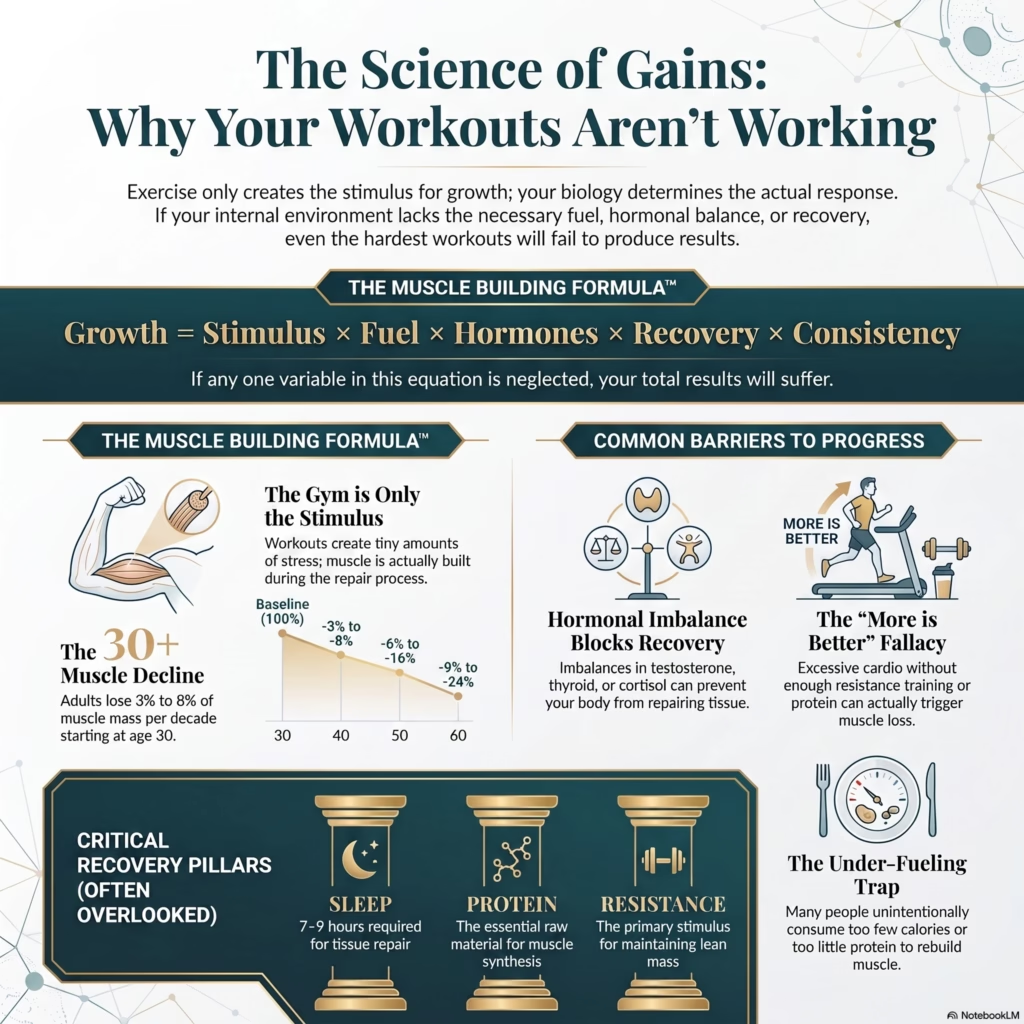
Every workout creates tiny amounts of stress within your muscles. During recovery, your body repairs those muscle fibers so they can become stronger and more resilient.
If your body lacks the nutrients, hormones, hydration, sleep, or recovery needed for that repair process, you may work incredibly hard without seeing the results you expect.
This is why two people can follow the exact same workout program and achieve very different outcomes.
The Muscle Building Formula™
At Eternal Vitality, we think about muscle growth as a complete biological system.
Muscle Growth = Stimulus × Fuel × Hormones × Recovery × Consistency
Each part matters.
Stimulus comes from progressive resistance training that challenges your muscles.
Fuel comes from adequate protein, balanced nutrition, and enough calories to support repair.
Hormones help regulate muscle protein synthesis, recovery, metabolism, and body composition.
Recovery includes sleep, hydration, stress management, and allowing muscles time to rebuild.
Consistency allows these small improvements to compound over weeks and months.
Notice the multiplication signs.
If one part of the equation becomes very small, the entire result becomes smaller.
That’s why no single supplement, workout, or hormone can replace the others.
What Most People Get Wrong About Building Muscle
One of the biggest misconceptions is believing that more exercise automatically produces more muscle.
Sometimes the opposite happens.
Excessive cardio without enough resistance training may increase calorie expenditure while limiting your body’s ability to maintain lean muscle, especially if protein intake is inadequate.
Another common mistake is eating too little.
Many people trying to lose weight unintentionally consume too few calories or not enough protein. Their body lacks the raw materials needed to rebuild muscle after training.
Others become frustrated because they compare themselves to how they looked ten or twenty years ago.
Beginning around age 30, adults naturally lose approximately 3% to 8% of their muscle mass each decade if they do not actively work to preserve it. While aging plays a role, lifestyle and underlying physiology often influence how quickly that decline occurs.
The encouraging news is that muscle remains remarkably adaptable throughout life when the body receives the support it needs.
Can Hormonal Imbalance Cause Muscle Loss?
Yes, it can.
Hormones do far more than influence energy or libido.
They help regulate how your body repairs tissue, responds to exercise, builds lean muscle, burns fat, and recovers from physical stress.
Testosterone is one of the best-known hormones involved in muscle maintenance, particularly in men. However, it is only one piece of a much larger system.
Growth hormone, insulin, thyroid hormones, cortisol, estrogen, and even vitamin D all influence muscle health in different ways.
When these systems become imbalanced, your workouts may no longer produce the same results.
That doesn’t necessarily mean you need to exercise harder.
It may mean your body needs better support.
A Clinical Perspective
One pattern we frequently observe is that patients assume they need a better workout.
Often, they already have one.
Instead, we discover barriers that exist outside the gym.
Some are sleeping only five or six hours each night.
Others eat far less protein than they realize.
Some perform long sessions of cardio but very little resistance training.
Others have underlying hormone deficiencies that reduce their ability to recover from exercise.
Perhaps the biggest misconception we encounter is the belief that testosterone alone will solve every problem.
It won’t.
Hormone optimization is one important piece of the puzzle, but it works best alongside quality nutrition, resistance training, hydration, recovery, and consistent healthy habits.
Your body performs best when these systems work together.
A Story We See Often
A gentleman in his early fifties came to our clinic frustrated because he felt like his workouts had stopped working.
He lifted weights four days each week.
His routine had not changed in years.
Yet he was steadily losing strength and lean muscle.
He assumed he needed a new training program.
Instead, we discovered several barriers that had nothing to do with his workouts.
His testosterone levels had declined.
He was eating far less protein than his body required.
His sleep averaged barely six hours each night.
Rather than changing his workouts, we focused on restoring hormone balance, improving nutrition, and helping him build healthier recovery habits.
Over the following months, he began gaining lean muscle while continuing the same resistance training program.
His body finally had the resources it needed to respond to the work he was already doing.
That story is more common than many people realize.
What Should You Do If You’re Losing Muscle?
The first step is to stop blaming yourself.
Working harder is not always the answer.
Instead, evaluate the factors that influence muscle growth as a whole.
Ask yourself:
- Am I performing enough resistance training?
- Am I relying too heavily on cardio?
- Am I eating enough protein each day?
- Am I sleeping seven to nine hours most nights?
- Am I staying well hydrated?
- Have I noticed symptoms that could suggest a hormonal imbalance, such as lower energy, decreased libido, slower recovery, or reduced strength?
- Have I remained consistent long enough to expect meaningful changes?
Sometimes one small adjustment creates momentum.
Sometimes several barriers need to be addressed together.
Either way, understanding the cause is far more effective than simply increasing the intensity of your workouts.
The Eternal Vitality Takeaway
Muscle loss is not always a sign that you’re getting older or that you’re not working hard enough.
More often, it is your body’s way of telling you that something in the muscle-building process needs attention.
Remember The Muscle Building Formula™:
Muscle Growth = Stimulus × Fuel × Hormones × Recovery × Consistency
If even one part of that equation is neglected, your results may suffer.
When you understand the barriers, you can begin making informed decisions that support strength, energy, metabolism, and long-term vitality.
Frequently Asked Questions
Can I lose muscle even if I exercise every week?
Yes. Poor nutrition, inadequate protein, hormonal changes, insufficient recovery, chronic stress, illness, or excessive cardio may all contribute to muscle loss despite regular exercise.
Does low testosterone always cause muscle loss?
Not always. Testosterone is one factor among many. Sleep, nutrition, metabolism, recovery, and overall health also influence muscle maintenance and growth.
How much protein do I need to build muscle?
Protein needs vary based on age, body size, activity level, and health goals. Many active adults benefit from discussing their individual needs with a qualified healthcare professional or registered dietitian.
Should I do more cardio if I’m losing muscle?
Cardio supports heart health and overall fitness, but resistance training is generally the primary stimulus for maintaining and building lean muscle. A balanced exercise program is often most effective.
When should I consider a medical evaluation?
If you are consistently losing muscle despite regular exercise, eating well, and following a structured training program, it may be appropriate to discuss your symptoms with a healthcare professional. Evaluating hormone balance, nutrition, recovery, and overall health may help identify contributing factors.
If you’ve been working hard but aren’t seeing the progress you expect, it may be time to look beyond your workout routine. At Eternal Vitality, we believe understanding why your body is responding the way it is comes before recommending solutions. Through personalized evaluations and a comprehensive approach that considers hormones, metabolism, nutrition, recovery, and body composition, our goal is to help you identify barriers that exercise alone cannot overcome. If you’re in the Orlando area and want to learn more, Book a Vitality Discovery Session
4361 Hunters Park Ln
Orlando, FL 32837
(407) 710-1840