


Why am I tired but can’t sleep? If you’ve ever asked yourself this question while staring at the ceiling at 2 a.m., you’re not alone. Millions of people feel completely exhausted during the day, only to find themselves wide awake when it’s finally time to sleep. It can feel confusing, frustrating, and even lonely.
At Eternal Vitality in Orlando, Florida, we often tell patients something that surprises them:
Feeling tired and feeling sleepy are not the same thing.
Most people use those words interchangeably, but your body does not.
Understanding that difference may completely change the way you think about insomnia.
Many articles blame stress, poor sleep hygiene, or too much caffeine. While those factors certainly matter, they rarely tell the whole story. In our clinical experience, people who feel “wired but tired” are often dealing with a combination of factors involving the nervous system, hormones, metabolism, gut health, inflammation, and daily habits. Sleep problems are frequently the last symptom to appear, not the first.
That is why simply trying to force yourself to sleep often doesn’t work. Your brain isn’t refusing to sleep because it is stubborn. It may be responding to biological signals telling it that the body is not ready to power down.
By the end of this guide, you’ll understand why that happens, why so many people misunderstand it, and what you can do to begin addressing the root causes rather than simply masking the symptoms.
Table of Contents
Why Am I Tired But Can’t Sleep?
The answer begins with one of the biggest misconceptions in sleep medicine.
Fatigue and Sleepiness Are Not the Same Thing
Imagine driving a car whose fuel gauge is sitting on empty while the accelerator is pressed to the floor.
The engine is struggling.
The fuel tank is nearly empty.
Yet the engine is still racing.
That is remarkably similar to what happens in many people who describe themselves as feeling exhausted but unable to sleep.
Fatigue is your body’s perception that it has limited energy.
Sleepiness is your brain’s biological drive to sleep.
Although they often occur together, they are controlled by different systems inside the body.
Someone recovering from a marathon may feel profoundly fatigued yet have no trouble sleeping. On the other hand, someone living with chronic stress, hormonal imbalance, digestive dysfunction, or blood sugar instability may feel completely drained while their brain remains stuck in a state of alertness.
That distinction matters because treating fatigue is not always the same as treating insomnia.
One study estimates that nearly one in three adults experiences symptoms of insomnia, making it one of the most common health concerns worldwide. Yet many people spend years treating the symptom instead of asking why their body has stopped transitioning naturally into restorative sleep.
What if the problem isn’t that your body lacks energy?
What if your brain simply hasn’t received the message that it is safe enough to sleep?
Your Brain Needs Permission to Sleep
Most people think sleep begins when they climb into bed.
Physiology tells a different story.
Your brain spends the entire day preparing for sleep.
As morning turns into afternoon and afternoon becomes evening, an intricate series of biological events begins unfolding behind the scenes. Cortisol should gradually decline. Melatonin begins to rise. Core body temperature slowly drops. Your nervous system starts shifting away from the alert, fast-paced “fight or flight” state and toward the restorative “rest and digest” mode that supports healing, memory, hormone production, and deep sleep.
This transition is incredibly sophisticated.
Think of it like landing an airplane.
A pilot cannot simply decide to land whenever they want. The runway must be clear. The weather has to cooperate. Air traffic control must provide clearance. The landing gear needs to deploy. The engines gradually reduce power until the aircraft can descend safely.
Your brain follows a similar process every night.
If stress hormones remain elevated…
If blood sugar becomes unstable…
If gut inflammation continues sending distress signals…
If hormones become imbalanced…
Or if your nervous system still believes it needs to stay alert…
Your brain may delay the landing.
You feel exhausted.
But you never fully arrive at restorative sleep.
This is one reason why sleeping medications sometimes help people become unconscious without necessarily restoring the quality of sleep their body truly needs. Sleep is not simply the absence of wakefulness. It is an active biological process involving communication between nearly every major system in the body.
Understanding that shift in perspective changes everything.
Instead of asking, “How do I force myself to fall asleep?”
You begin asking a much more useful question.
“What is preventing my body from feeling safe enough to sleep naturally?”
A Patient Story: When Sleep Wasn’t the Real Problem
Consider Sarah, a patient whose experience reflects a pattern we see frequently in clinical practice.
Sarah was 46 years old, owned a successful business, exercised several times each week, and seemed healthy to everyone around her.
Yet she felt exhausted.
Every afternoon she reached for another cup of coffee just to stay focused.
By evening, she was too tired to enjoy time with her family.
Then something strange happened.
The moment she climbed into bed, her brain woke up.
She scrolled on her phone for an hour because she “wasn’t sleepy yet.” She woke feeling bloated most mornings, struggled with constipation several days each week, and noticed that her sleep became even worse as her menstrual cycles became more irregular.
Over the next two years, she tried melatonin, magnesium, herbal teas, white noise, blackout curtains, and eventually prescription sleep medication.
Some strategies helped temporarily.
None explained why the problem had developed in the first place.
When we stepped back and looked at the whole picture, the story became much clearer.
Poor sleep hygiene kept her brain stimulated late into the evening.
Digestive dysfunction suggested ongoing gut inflammation.
Hormonal changes associated with perimenopause likely reduced progesterone’s calming influence on her nervous system.
Years of inconsistent eating patterns contributed to nighttime blood sugar fluctuations.
Individually, none of these issues fully explained her insomnia.
Together, they created the perfect environment for feeling wired but tired.
Sleep wasn’t the diagnosis.
It was the consequence.
That is one of the most important ideas in this article.
For many people, chronic insomnia is not an isolated condition. It is the visible result of several biological systems gradually falling out of balance.
The good news is that once you begin understanding those connections, you can start looking beyond the symptom of poor sleep and toward the physiology that may be driving it.
If I’m so exhausted, why can’t my brain just shut off?
The answer lies in how your brain prioritizes survival.
Your brain has one primary job: keep you alive.
Long before it worries about productivity, tomorrow’s meeting, or whether you feel rested, it constantly scans your body for signs of danger. If it detects stress, inflammation, unstable blood sugar, hormonal changes, or ongoing nervous system activation, it may decide that staying alert is safer than falling asleep.
This is what many people describe as feeling “wired but tired.”
Your body desperately needs rest.
Your brain is reluctant to allow it.
What “Wired But Tired” Really Means
Imagine your body’s energy system as a thermostat.
During the day, it should gradually cool down as evening approaches. Heart rate slows. Cortisol decreases. Muscles relax. Breathing becomes calmer. Your brain prepares for sleep.
But what happens if someone keeps turning the thermostat back up?
That is essentially what occurs in many people with chronic insomnia.
Instead of transitioning into recovery mode, the nervous system continues receiving signals that something still requires attention.
Those signals can come from many places.
A stressful workday.
An inflammatory meal.
Chronic digestive issues.
Hormonal changes.
Poor sleep habits.
Blood sugar swings.
Or sometimes several of these occurring together.
Eventually, your brain learns a new normal.
Being alert becomes the default setting.
Why Stress Isn’t the Whole Story
Stress is often blamed for insomnia.
While that is partially true, the word “stress” is far too broad.
Your body cannot distinguish between emotional stress and physiological stress.
An argument with your spouse.
Skipping meals all day.
Chronic gut inflammation.
Hormonal imbalance.
A blood sugar crash at 2 a.m.
A demanding workout without adequate recovery.
Your brain interprets all of these as information.
Some of that information tells your nervous system it is safe to rest.
Some of it tells your nervous system to remain vigilant.
That is why two people with the same amount of emotional stress can sleep completely differently.
One person’s physiology supports recovery.
The other’s physiology keeps activating survival pathways.
This is also why simply telling someone to “reduce stress” rarely solves chronic insomnia.
The better question is:
What type of stress is your body experiencing, and why?
How Cortisol, Adrenaline, and Orexin Keep You Awake
Most people have heard of cortisol.
Fewer have heard of orexin, also called hypocretin, one of the brain’s most important wakefulness chemicals.
Think of orexin as your brain’s daytime coach.
Its job is to keep you alert, focused, motivated, and awake.
Without enough orexin, people can develop profound daytime sleepiness, as seen in disorders like narcolepsy.
But problems can also occur when the wakefulness system stays active longer than it should.
If cortisol remains elevated late into the evening, adrenaline continues circulating, or other alertness pathways stay activated, orexin-producing neurons continue encouraging wakefulness instead of allowing the brain to fully transition into sleep.
It is almost as if someone forgot to turn off the lights inside your brain.
This helps explain why some people describe feeling physically exhausted while simultaneously feeling mentally alert.
Their body is asking for rest. Their wakefulness network is still receiving signals to stay online.
Why You Feel More Awake at Night Than During the Day
Many people experience something that seems completely backwards.
They spend the afternoon struggling to keep their eyes open.
Then around 9 or 10 p.m., they suddenly feel more productive than they did all day.
This isn’t laziness.
It isn’t a lack of discipline.
It often reflects changes in your body’s internal rhythm.
When someone has been relying on caffeine, pushing through fatigue, eating irregularly, experiencing chronic stress, or living with hormonal or metabolic dysfunction, the normal daily pattern of cortisol may become disrupted.
Instead of gradually declining throughout the evening, cortisol may remain elevated or even rise unexpectedly at night.
Blood sugar fluctuations can create a similar effect.
If glucose begins dropping while you sleep, your brain responds by releasing stress hormones, including cortisol and adrenaline, to restore adequate fuel. Unfortunately, those same hormones also increase alertness.
The result?
You wake up wide awake.
Many people mistakenly assume they are no longer tired.
In reality, they have experienced a biological alarm clock.
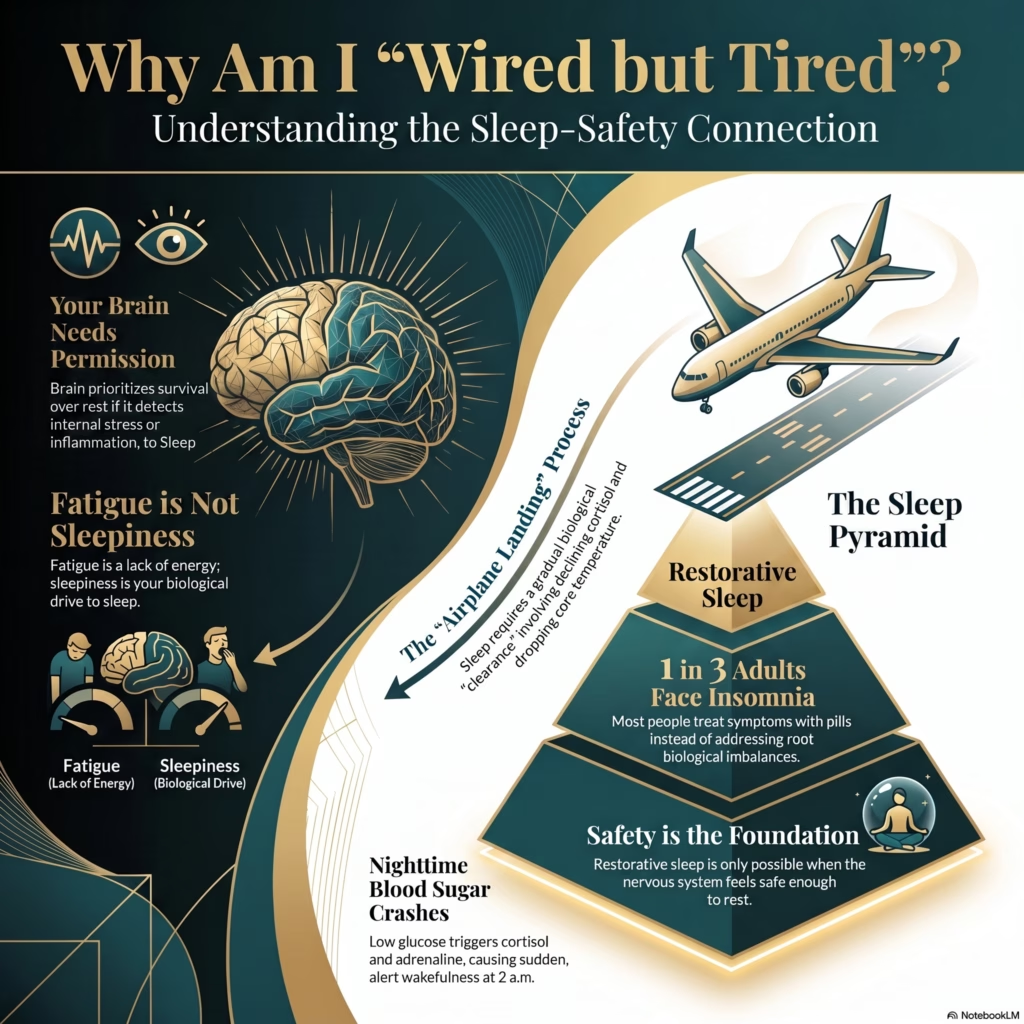
The Sleep Pyramid
One of the biggest reasons people struggle to improve their sleep is that they start at the wrong place.
Most people begin at the very top of the pyramid.
They buy a new mattress.
They purchase blackout curtains.
They try another sleep supplement.
They download another meditation app.
Those tools can certainly help, but they may not address the foundation.
At Eternal Vitality, we encourage patients to think about sleep as a pyramid.
At the base is nervous system safety
Your brain must believe it is safe enough to rest.
Above that sits metabolism and blood sugar regulation.
Next comes hormone balance and gut health.
Then healthy brain chemistry.
Finally, at the very top, sits restorative sleep.
When the foundation becomes unstable, everything built above it becomes more difficult.
Instead of asking, “What supplement will make me sleep?”
A more productive question becomes:
“Which part of my sleep pyramid is no longer supporting the rest?”
That shift in thinking often changes the entire conversation.
Instead of chasing another quick fix, you begin identifying the biological systems that may have quietly contributed to poor sleep long before insomnia became obvious.
The Hidden Body Systems That Disrupt Sleep
If you’ve made it this far, you’ve probably realized something important.
Sleep is not controlled by one hormone.
One organ.
Or one supplement.
Sleep is the result of dozens of biological systems working together. When those systems are communicating well, falling asleep often feels effortless. When they become disconnected, your brain may remain alert even when every part of your body is begging for rest.
Think of your body as an orchestra.
Each instrument has a different role. The hormones keep rhythm. Your metabolism provides energy. The gut microbiome influences communication. The nervous system acts as the conductor.
If one violin misses a note, the audience may never notice.
If the entire orchestra falls out of sync, everyone notices.
That is exactly what happens with chronic sleep problems.
For many people, insomnia is simply the first symptom they recognize.
Hormones and Sleep Quality
Hormones do far more than regulate reproduction.
They influence body temperature, mood, recovery, metabolism, immune function, and the quality of every stage of sleep.
For women, declining progesterone during perimenopause and menopause may reduce one of the body’s natural calming influences on the brain. Many women describe feeling emotionally “on edge” while simultaneously becoming more sensitive to stress, nighttime awakenings, or changes in body temperature.
Estrogen also plays an important role.
Healthy estrogen supports serotonin activity, helps regulate body temperature, and contributes to healthy sleep architecture. As estrogen fluctuates, many women notice more frequent night sweats, lighter sleep, and waking long before their alarm.
Men experience hormonal changes as well.
Gradual reductions in testosterone may contribute to lower energy, decreased recovery, reduced muscle mass, and poorer overall sleep quality. While testosterone is not a sleep hormone, healthy hormone balance supports many of the biological systems that influence restorative sleep.
The important takeaway is this:
Hormones rarely act alone.
Instead, they amplify or weaken many of the body’s existing sleep signals.
Blood Sugar, Insulin Resistance, and Nighttime Wakefulness
One of the most overlooked reasons people wake up in the middle of the night has nothing to do with their bedroom.
It begins with blood sugar.
Your brain depends on a continuous supply of glucose, even while you sleep.
If blood sugar drops too quickly during the night, your brain interprets it as a potential threat.
Within minutes, it releases cortisol and adrenaline to raise blood glucose back into a safe range.
The problem?
Those same hormones also increase alertness.
Suddenly, you’re staring at the ceiling wondering why you woke up for no apparent reason.
Many people assume they have insomnia.
Sometimes, their body is simply trying to protect itself.
Research has also shown that even a single night of restricted sleep can significantly reduce insulin sensitivity the following day. That makes it harder for the body to regulate blood sugar, creating a cycle where poor sleep contributes to metabolic dysfunction, and metabolic dysfunction contributes to even poorer sleep.
This helps explain why some people feel trapped.
The cycle begins feeding itself.
The Gut-Brain Axis and Why Your Gut May Be Keeping You Awake
If there is one system that deserves far more attention in sleep medicine, it is the digestive tract.
Most people think of the gut as a place where food is digested.
In reality, it is one of the body’s busiest communication centers.
The gut and brain exchange information every second through the vagus nerve, immune messengers, hormones, and metabolites produced by trillions of bacteria that make up the gut microbiome.
Approximately 90% of the body’s serotonin is produced within the gastrointestinal tract. Although this serotonin does not directly enter the brain, it plays an important role in gut function and reflects the remarkable connection between digestion and the nervous system.
When the gut becomes inflamed or the microbiome loses balance, that conversation changes.
Inflammatory chemicals increase.
Stress signaling rises.
The nervous system becomes more reactive.
One area receiving growing scientific interest is the relationship between chronic gut irritation and increased sympathetic nervous system activity, including norepinephrine signaling.
Norepinephrine is one of the brain’s primary alertness neurotransmitters.
During the day, that is beneficial.
At midnight, it can become a problem.
While researchers are still learning exactly how these pathways interact, many clinicians observe that patients often sleep better after improving digestive health, even when sleep was never the primary focus of treatment.
Perhaps the gut isn’t simply influencing digestion.
Perhaps it is constantly informing the brain whether the body feels safe enough to rest.
Chronic Inflammation and an Overactive Nervous System
Inflammation is often discussed in relation to joint pain or chronic disease.
Few people realize it can also influence sleep.
Whenever the immune system detects injury, infection, poor diet, chronic stress, or digestive dysfunction, it releases chemical messengers called cytokines.
These molecules help coordinate healing.
However, persistent low-grade inflammation may also alter communication between the immune system and the brain.
Some people become excessively sleepy.
Others experience restless, fragmented sleep.
Still others develop the frustrating pattern of feeling physically exhausted while remaining mentally alert.
Inflammation doesn’t simply affect one organ.
It changes how multiple systems communicate.
Thyroid Function and Energy Regulation
The thyroid is often described as the body’s metabolic thermostat.
Its hormones influence how quickly your cells produce energy, how efficiently your body regulates temperature, and even how sensitive your brain becomes to stress hormones.
When thyroid function becomes impaired, people often notice fatigue, brain fog, weight changes, constipation, and difficulty recovering from exercise.
Sleep may also change.
Some individuals with reduced thyroid function feel sleepy throughout the day yet never achieve restorative sleep at night.
Others with excess thyroid hormone experience racing thoughts, increased heart rate, and difficulty falling asleep.
Although thyroid dysfunction is only one possible contributor to insomnia, it illustrates an important principle.
Energy and sleep are deeply connected.
Feeling tired does not automatically mean your body is prepared for restorative sleep.
Circadian Rhythm and Your Internal Clock
Imagine trying to conduct an orchestra without a clock.
Every musician might be talented.
But without timing, the performance quickly falls apart.
Your circadian rhythm serves as that clock.
It coordinates thousands of biological processes over a 24-hour cycle.
Hormone production.
Body temperature.
Digestion.
Metabolism.
Immune activity.
Even the timing of cellular repair.
Modern life constantly challenges this rhythm.
Artificial lighting after sunset.
Late-night scrolling.
Shift work.
Travel across time zones.
Irregular meal schedules.
All of these send conflicting messages to your brain.
Over time, your internal clock becomes less predictable.
This is why improving sleep often involves much more than simply spending more time in bed.
It means rebuilding the signals that tell your brain when it is time to be alert and when it is finally safe to rest.
When hormones, metabolism, gut health, inflammation, thyroid function, and circadian rhythm begin working together again, many people discover that sleep becomes less of a battle and more of a natural biological process.
A Clinical Perspective
After evaluating hundreds of patients with fatigue, insomnia, hormone imbalances, and digestive concerns, one pattern appears repeatedly.
People rarely come to the clinic because they have one isolated problem.
They come because several seemingly unrelated symptoms have slowly woven themselves together.
Poor sleep.
Low energy.
Brain fog.
Weight gain.
Digestive discomfort.
Reduced exercise recovery.
Mood changes.
At first glance, these symptoms appear unrelated.
From a physiological perspective, they often tell the same story.
The Biggest Mistake We See
One of the most common misconceptions is believing that insomnia begins in the bedroom.
Many sleep problems begin hours before someone climbs into bed.
A stressful workday elevates stress hormones.
Meals are skipped because life gets busy.
Blood sugar becomes less stable.
The gut becomes irritated after months or years of inflammation.
Hormonal changes gradually alter the brain’s ability to transition into restorative sleep.
Then evening arrives.
Most people blame the moment they cannot fall asleep.
But the biological events leading to that moment may have started twelve hours earlier.
This is one reason why sleep hygiene alone does not always solve chronic insomnia.
A dark room, a comfortable mattress, and avoiding caffeine are all valuable habits.
They simply may not be enough if the underlying physiology remains unchanged.
Why Sleeping Pills Often Miss the Root Cause
Sleep medications have an important role in certain situations and may provide meaningful short-term relief for some individuals.
However, it is also important to understand what these medications are designed to do.
Most are intended to help initiate or maintain sleep.
They are not designed to identify why sleep became disrupted in the first place.
Imagine seeing a warning light appear on your car’s dashboard.
Covering the light with a piece of tape might reduce your frustration, but it would not repair the engine.
Similarly, improving sleep without understanding why the brain remains alert may leave the underlying physiology unchanged.
That distinction matters.
Some people need temporary symptom relief while the root causes are being addressed.
Others may benefit from evaluating factors that commonly influence sleep, including hormone balance, metabolism, digestive health, inflammation, circadian rhythm, medication effects, and lifestyle habits.
The goal is not simply to become unconscious.
The goal is to help restore healthy, restorative sleep whenever possible.
Looking Beyond One Symptom to the Whole Person
One of the most valuable lessons clinical practice teaches is that the human body does not recognize medical specialties.
The digestive system constantly communicates with the brain.
Hormones influence metabolism.
Blood sugar affects stress hormones.
Inflammation alters nervous system activity.
Sleep changes immune function.
Every system influences the next.
Yet healthcare often separates these systems into different appointments, different specialists, and different treatment plans.
While that approach is sometimes necessary, it can also make it difficult to recognize how closely these systems interact.
This is why a comprehensive evaluation often reveals patterns that were not obvious when each symptom was viewed independently.
Instead of asking,
“Why can’t I sleep?”
A clinician begins asking a series of deeper questions.
Why is the nervous system remaining activated?
Why is cortisol elevated at night?
Why is digestion creating inflammatory signals?
Why has hormone balance changed?
Why is blood sugar becoming unstable?
Each answer provides another piece of the puzzle.
Eventually, the symptoms begin making sense.
What Most People Never Think to Ask Their Doctor
One question can completely change the direction of a conversation about insomnia.
Instead of asking,
“What can I take to help me sleep?”
Try asking,
“What might be preventing my body from feeling safe enough to sleep?”
That subtle shift changes the focus from suppressing symptoms to understanding physiology.
It encourages a broader discussion about stress physiology, hormone balance, gut health, metabolism, nutrition, inflammation, medications, and lifestyle habits that may all influence sleep quality.
It also helps explain why two people with the same diagnosis of insomnia may require very different approaches.
One person’s primary challenge may involve perimenopausal hormone changes.
Another may have untreated sleep apnea.
Someone else may be experiencing blood sugar fluctuations, chronic digestive inflammation, or excessive evening stimulation from work and technology.
The symptom looks the same.
The physiology may be completely different.
That is why personalized care matters.
The objective is not simply to help someone sleep tonight.
It is to understand why sleep became difficult in the first place and identify the factors that may be preventing the body from returning to its natural rhythm.
Fortunately, there are practical, evidence-informed strategies that can help support this process. In the next section, we’ll explore realistic steps you can begin taking to improve the biological signals that prepare your brain and body for restorative sleep.
What Should You Do If You Feel Wired but Tired?
By now, you’ve probably noticed a common theme throughout this article.
There is rarely one reason someone develops chronic sleep problems.
Likewise, there is rarely one solution.
Restoring healthy sleep often means helping several body systems work together again. Small improvements across multiple areas frequently produce better long-term results than searching for one supplement, one medication, or one perfect bedtime routine.
Think back to the Sleep Pyramid™.
Rather than beginning at the very top, successful sleep strategies usually start by rebuilding the foundation.
Improve Your Sleep Signals Before Bed
Your brain loves consistency.
Every evening, it looks for environmental cues that tell it the day is ending. The more predictable those cues become, the easier it is for your circadian rhythm to prepare for sleep.
Many people unknowingly send the opposite message.
Bright overhead lights.
Checking work emails.
Scrolling social media.
Watching stimulating television.
Eating large meals immediately before bed.
These activities tell your brain to remain engaged rather than begin shutting down.
Instead, consider creating an intentional evening routine.
Dim the lights one to two hours before bedtime.
Keep your bedroom cool, dark, and quiet.
Read a book instead of scrolling on your phone.
Listen to calming music or gentle nature sounds.
Even small changes, repeated consistently, help reinforce the biological rhythm your brain depends on.
Calm an Overactive Nervous System
If you’ve been living in a constant state of stress for months or years, your nervous system may need help remembering how to relax.
This is why simply telling someone to “reduce stress” is rarely helpful.
The nervous system responds much better to repeated experiences of safety than to vague instructions.
Slow diaphragmatic breathing.
Gentle stretching.
Meditation.
Progressive muscle relaxation.
Spending time outdoors during daylight hours.
These activities activate the parasympathetic nervous system, often called the “rest and digest” state.
Another tool receiving increasing scientific attention is binaural beat audio.
Binaural beats present slightly different sound frequencies to each ear, creating the perception of a rhythmic tone inside the brain. Some research suggests they may promote relaxation and reduce pre-sleep anxiety in certain individuals.
They are not a cure for insomnia.
However, when combined with good sleep habits and a comprehensive treatment plan, many people find them to be a helpful addition to their evening routine.
Support Gut Health for Better Sleep
One of the most overlooked ways to improve sleep may begin with improving digestive health.
If bloating, constipation, diarrhea, reflux, or abdominal discomfort have become your normal, your gut may be sending signals that extend far beyond digestion.
Supporting gut health often includes:
- Eating a variety of fiber-rich whole foods.
- Including fermented foods when appropriate.
- Staying well hydrated.
- Identifying foods that consistently trigger digestive symptoms.
- Addressing persistent gastrointestinal concerns with your healthcare provider instead of assuming they are simply part of getting older.
Healthy digestion supports healthy communication between the gut, immune system, and brain.
That communication influences much more than your stomach.
It may also influence how well you sleep.
Evaluate Hormones, Metabolism, and Nutrient Status
If sleep problems persist despite making healthy lifestyle changes, it may be worthwhile to take a broader look at your health.
For some individuals, hormonal changes, insulin resistance, thyroid dysfunction, nutrient deficiencies, chronic inflammation, or other medical conditions may be contributing to fatigue and poor sleep.
A comprehensive evaluation may include a detailed health history, physical examination, appropriate laboratory testing, and an assessment of lifestyle factors rather than focusing on sleep alone.
The goal is not simply to identify what is abnormal.
It is to understand how your body’s systems are interacting.
Sometimes the answer is surprisingly straightforward.
Sometimes several small imbalances are working together.
Either way, understanding the “why” often leads to more meaningful conversations about the best path forward.
Evidence-Based Tools That May Support Better Sleep
There is no single bedtime habit that works for everyone.
However, research consistently supports several practices that may improve sleep quality over time.
These include:
- Maintaining a consistent bedtime and wake time, even on weekends.
- Getting natural sunlight within the first hour after waking to reinforce your circadian rhythm.
- Limiting caffeine later in the day, particularly if you are sensitive to its effects.
- Engaging in regular physical activity, while avoiding intense exercise immediately before bedtime.
- Creating a relaxing pre-sleep routine that becomes a nightly ritual.
- Seeking evaluation if loud snoring, pauses in breathing, severe daytime sleepiness, or persistent insomnia continue despite healthy lifestyle changes.
Most importantly, remember that sleep is a reflection of your overall health.
Trying to improve sleep while ignoring digestion, metabolism, hormone balance, inflammation, or chronic stress is a bit like repainting a house whose foundation is beginning to crack.
The fresh paint may look encouraging.
But the real work happens underneath.
Frequently Asked Questions
Can Gut Health Really Affect Sleep?
Yes. Your digestive system and brain communicate continuously through what is known as the gut-brain axis. Digestive inflammation, changes in the gut microbiome, and altered nervous system signaling may all influence sleep quality. While gut health is rarely the only cause of insomnia, it is often an overlooked contributor.
Is It Normal to Feel Exhausted but Unable to Sleep?
It is common, but it should not be considered normal.
Feeling physically exhausted while remaining mentally alert often suggests that your body’s recovery systems and wakefulness systems are no longer working together as efficiently as they should. Hormones, metabolism, stress physiology, medications, digestive health, and lifestyle factors may all contribute.
Does Hormone Imbalance Cause Insomnia?
Hormonal changes can influence sleep, particularly during perimenopause, menopause, and andropause.
Declining progesterone, fluctuating estrogen, changes in testosterone, and thyroid disorders may all affect sleep quality. However, hormones are usually one part of a much larger physiological picture rather than the only explanation.
Can Blood Sugar Wake Me Up at Night?
Yes.
If blood glucose falls too low while you’re sleeping, your body may release cortisol and adrenaline to restore normal levels. These hormones can increase alertness, causing you to wake suddenly during the night.
Are Binaural Beats Effective for Sleep?
Research continues to evolve.
Some studies suggest binaural beats may promote relaxation and improve perceived sleep quality in certain individuals. They are best viewed as one supportive tool within a broader strategy that addresses the underlying contributors to poor sleep.
When Should I Seek Professional Help for Insomnia?
If sleep problems last longer than several weeks, interfere with your daily life, or occur alongside symptoms such as loud snoring, pauses in breathing during sleep, significant daytime fatigue, unexplained weight changes, persistent digestive symptoms, or signs of hormonal imbalance, it is appropriate to discuss your symptoms with a qualified healthcare professional.
Early evaluation may help identify contributing factors before they become more difficult to address.
Final Thoughts
If you’ve been asking yourself, “Why am I tired but can’t sleep?”, we hope one idea stands out above all the others.
Sleep is not an isolated event.
It is the final expression of countless biological conversations happening throughout your body every day.
Your hormones influence your metabolism.
Your metabolism influences your brain.
Your gut communicates with your immune system.
Your immune system influences your nervous system.
Together, these systems determine whether your brain receives one simple message:
“It’s safe to rest.”
That is why chasing one symptom rarely produces lasting answers.
If you only focus on falling asleep, you may overlook the biological signals that prevented sleep in the first place.
When you begin looking at the whole picture, hormones, gut health, blood sugar regulation, inflammation, circadian rhythm, recovery, and nervous system balance, the pieces often begin fitting together in a way that finally makes sense.
At Eternal Vitality, we believe understanding your body is just as important as treating your symptoms. Our approach focuses on identifying the factors that may be influencing your health so that care can be personalized to your unique biology rather than relying on one-size-fits-all solutions.
If you’ve tried improving your sleep without lasting success, perhaps the next question isn’t,
“What can I take to help me sleep?”
Perhaps it’s,
“What has my body been trying to tell me all along?”
That question often becomes the beginning of meaningful change.
Ready to Look Beyond the Symptoms?
If you’re struggling with persistent fatigue, poor sleep, digestive concerns, hormone changes, or simply feel like your body isn’t functioning the way it once did, a comprehensive evaluation may help uncover factors that deserve a closer look.
Book your Vitality Discovery Session and learn how a personalized, root-cause approach may help you better understand your health and create a plan tailored to your goals.
Book your Vitality Discovery Session Here
Eternal Vitality
4361 Hunters Park Ln
Orlando, FL 32837
(407) 710-1840
Author’s Note
The information in this article is intended for educational purposes and should not replace personalized medical advice. If you have persistent insomnia, significant daytime sleepiness, or symptoms that concern you, consult a qualified healthcare professional for a comprehensive evaluation.