
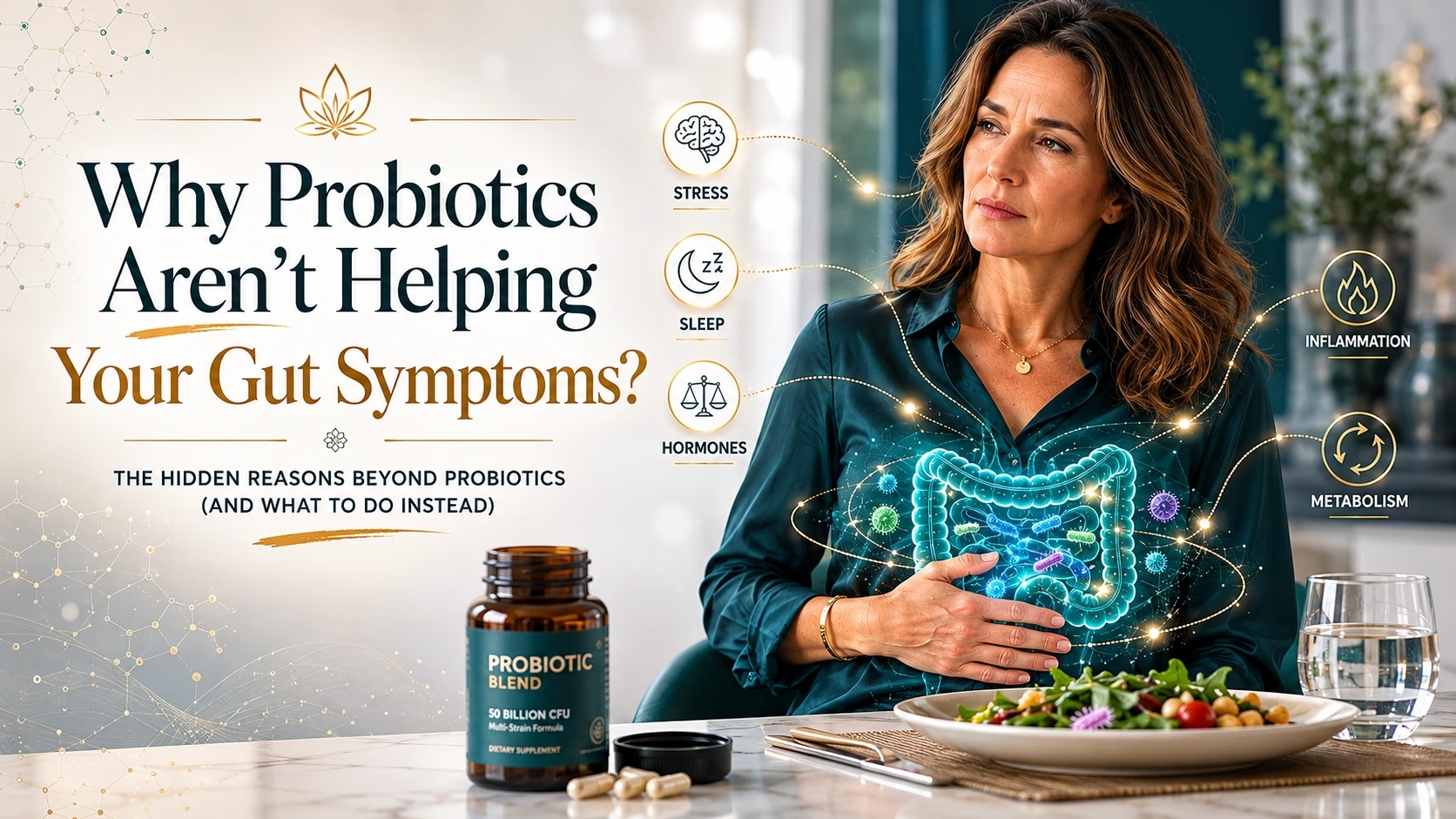
Why Probiotics Aren’t Helping Your Gut Symptoms is a question we hear almost every week at Eternal Vitality in Orlando, Florida.
You’ve switched brands.
You’ve purchased the expensive refrigerated probiotics.
You’ve taken the ones recommended by friends, social media influencers, and even healthcare providers.
Yet you’re still bloated after meals.
Still uncomfortable.
Still wondering why nothing seems to work.
Here’s the uncomfortable truth:
The reason probiotics aren’t helping may be because probiotics were never the real solution.
That statement surprises many people.
After all, probiotics are often marketed as the answer to bloating, irregular digestion, gas, constipation, diarrhea, and nearly every other digestive complaint. But in clinical practice, we repeatedly see patients whose symptoms persist despite taking probiotics consistently for months or even years.
The problem is not necessarily the probiotic.
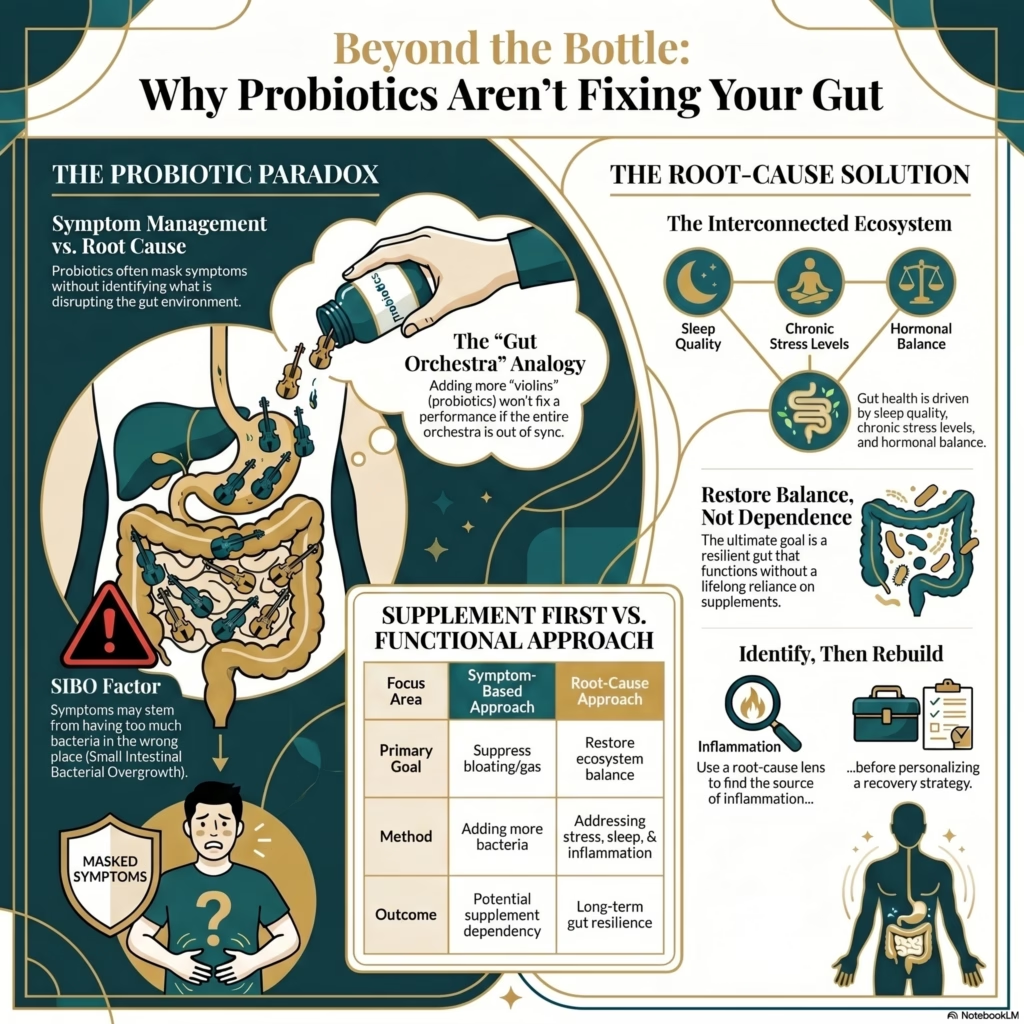
The problem is that probiotics are often being used to manage symptoms instead of identifying what is disrupting the gut environment in the first place.
When that underlying issue remains unresolved, the symptoms usually return.
Table of Contents
Why Aren’t Probiotics Fixing Your Gut Symptoms?
One of the biggest misconceptions in digestive health is the belief that gut symptoms automatically mean you need more beneficial bacteria.
Sometimes that is true.
Often, it is not.
Your digestive system is not simply a collection of bacteria. It is a highly interconnected ecosystem that communicates continuously with your immune system, metabolism, hormones, nervous system, and brain.
When that ecosystem becomes disrupted, symptoms develop.
The mistake many people make is assuming that adding bacteria automatically restores balance.
But what if the real problem isn’t a lack of bacteria at all?
What if your bloating is being driven by inflammation?
What if poor sleep is disrupting your microbiome?
What if chronic stress is altering digestion before food even reaches your stomach?
What if your hormones are contributing to the symptoms you’re experiencing?
These are the questions that are often missed.
Gut Symptoms Are Clues, Not Diagnoses
One of the first things I explain to patients is that symptoms are clues.
They are not root causes.
Bloating after meals.
Gas.
Constipation.
Loose stools.
Food sensitivities.
These symptoms can all develop from very different underlying issues.
I’ve lost count of how many patients have walked into our clinic carrying bags full of probiotics, digestive powders, and gut supplements.
Many have spent hundreds of dollars trying to fix a problem that was never caused by a lack of probiotics.
Research suggests that approximately 10% to 15% of adults worldwide experience symptoms consistent with irritable bowel syndrome. Yet IBS itself is not a root cause. It is simply a label describing a collection of symptoms.
The important question is why those symptoms developed.
Without that answer, treatment often becomes guesswork.
Could Your Gut Symptoms Be Coming From Something Other Than Bacteria?
One of the most surprising conversations I have with patients goes something like this:
“I’ve been taking probiotics for two years.”
“Have they helped?”
“Not really.”
Sometimes the reason is simple.
The patient isn’t lacking bacteria.
They may already have too much bacteria in the wrong place.
This is something we frequently see in individuals struggling with Small Intestinal Bacterial Overgrowth, commonly known as SIBO.
In these situations, adding more bacteria may not address the underlying imbalance.
The goal is not always adding more.
Sometimes the goal is restoring proper balance and function.
A Real-World Scenario
Consider a patient we’ll call Sarah.
Sarah came to our office frustrated and exhausted. She experienced bloating after nearly every meal and had tried multiple probiotics over a two-year period.
Each new supplement created hope.
Each one promised better digestion.
Each one delivered disappointment.
When we looked deeper, a different picture emerged.
Sarah was sleeping poorly.
Her stress levels were consistently elevated.
She skipped meals during busy workdays and relied heavily on convenience foods when she finally had time to eat.
Her gut symptoms were real.
But the gut wasn’t acting alone.
The digestive system was responding to signals from multiple systems throughout her body.
Once those contributing factors were addressed, her symptoms began improving without the endless search for a better probiotic.
While every patient is different, this pattern is remarkably common.
How Are Gut Health, Stress, Sleep, And Hormones Connected?
A useful way to think about gut health is like an orchestra.
Your microbiome is one section of instruments.
Hormones are another.
Sleep has its own section.
Stress physiology has one.
Metabolism has one.
Recovery has one.
Now imagine half the musicians are out of sync.
Adding more violins does not fix the performance.
The problem isn’t the violins.
The problem is that the entire orchestra needs coordination.
This is exactly what happens when people focus exclusively on probiotics while ignoring the factors that may be disrupting the gut environment.
A Clinical Perspective
After working with hundreds of patients struggling with digestive symptoms, I’ve noticed something interesting.
Most people assume their symptoms are caused by a deficiency.
Not enough probiotics.
Not enough supplements.
Not enough digestive support.
But more often, the problem is excess.
Excess inflammation.
Excess stress.
Excess bacterial growth in the wrong location.
Excess immune activation.
Excess disruption to the gut environment.
Until those factors are addressed, adding more to the system rarely creates lasting change.
This is one reason we believe gut health should be approached through a root-cause lens rather than a symptom-management lens.
At Eternal Vitality, our Vital Gut Rebuild™ philosophy focuses on identifying what is disrupting the gut ecosystem before building a personalized strategy to restore balance.
The goal is not lifelong dependency on supplements.
The goal is creating an environment where your body can function the way it was designed to function.
Long-Term Gut Health Requires More Than Supplements
One of the most misunderstood concepts in digestive health is maintenance.
Many people believe they will need probiotics forever.
In reality, once the gut environment becomes healthier and more resilient, many individuals can maintain their progress through consistent nutrition, healthy lifestyle habits, quality sleep, and effective stress management.
Results vary from person to person.
However, the ultimate goal should always be restoring function rather than creating dependence.
A healthy gut should be adaptable.
It should support nutrient absorption, energy production, immune function, and overall vitality.
Most importantly, it should allow you to enjoy life without constantly worrying about what happens after every meal.
Conclusion & Next Step
Why Probiotics Aren’t Helping Your Gut Symptoms often comes down to a simple reality.
Probiotics may help manage symptoms, but they do not always address the reason those symptoms developed.
If you’ve been taking probiotics for months and still feel bloated after every meal, consider the possibility that your gut isn’t asking for another supplement.
It may be asking for answers.
The goal is not to become dependent on probiotics forever.
The goal is to create an environment where your gut can function the way it was designed to.
Because lasting digestive health isn’t built by chasing symptoms.
It’s built by understanding why those symptoms appeared in the first place.
Learn more about this service on our website.
Frequently Asked Questions
Why am I bloated after every meal even though I take probiotics?
Bloating can result from many factors including food sensitivities, stress, poor digestion, inflammation, hormone imbalances, or bacterial overgrowth. Probiotics may not address the underlying cause.
Can probiotics make gut symptoms worse?
Some individuals experience increased bloating or discomfort, especially if they have bacterial overgrowth or specific digestive imbalances.
How do I know if I actually need probiotics?
The answer depends on your symptoms, health history, and gut environment. More probiotics are not always better.
Can stress really affect my digestion?
Yes. Chronic stress can influence gut motility, inflammation, digestive function, and microbiome balance.
Should I take probiotics forever?
Not necessarily. Many people can maintain healthy digestion through nutrition and lifestyle habits once underlying imbalances have been addressed.
Is testing important before starting a gut protocol?
Testing can provide valuable information about potential imbalances and may help guide a more personalized strategy.
Eternal Vitality
4361 Hunters Park Ln
Orlando, FL 32837
(407) 710-1840