


Why men lose interest in sex despite normal testosterone levels is best understood by recognizing that low libido with normal testosterone is not always a testosterone problem.
Testosterone matters. However, sexual desire also depends on metabolism, circulation, sleep, stress physiology, medications, mental health, and relationship health.
At Eternal Vitality in Orlando, Florida, we often meet men who cannot explain what changed. They simply know their interest in sex is lower.
The mistake is assuming another testosterone increase must be the answer. Sometimes testosterone is already adequate, while another part of the sexual health system needs attention.
Table of Contents
Why Can Low Libido With Normal Testosterone Still Happen?
Low libido with normal testosterone seems contradictory because testosterone is strongly associated with male sexual health.
However, the Endocrine Society recommends diagnosing testosterone deficiency only when symptoms occur with consistently low, accurately measured testosterone levels. Symptoms alone do not establish testosterone deficiency.
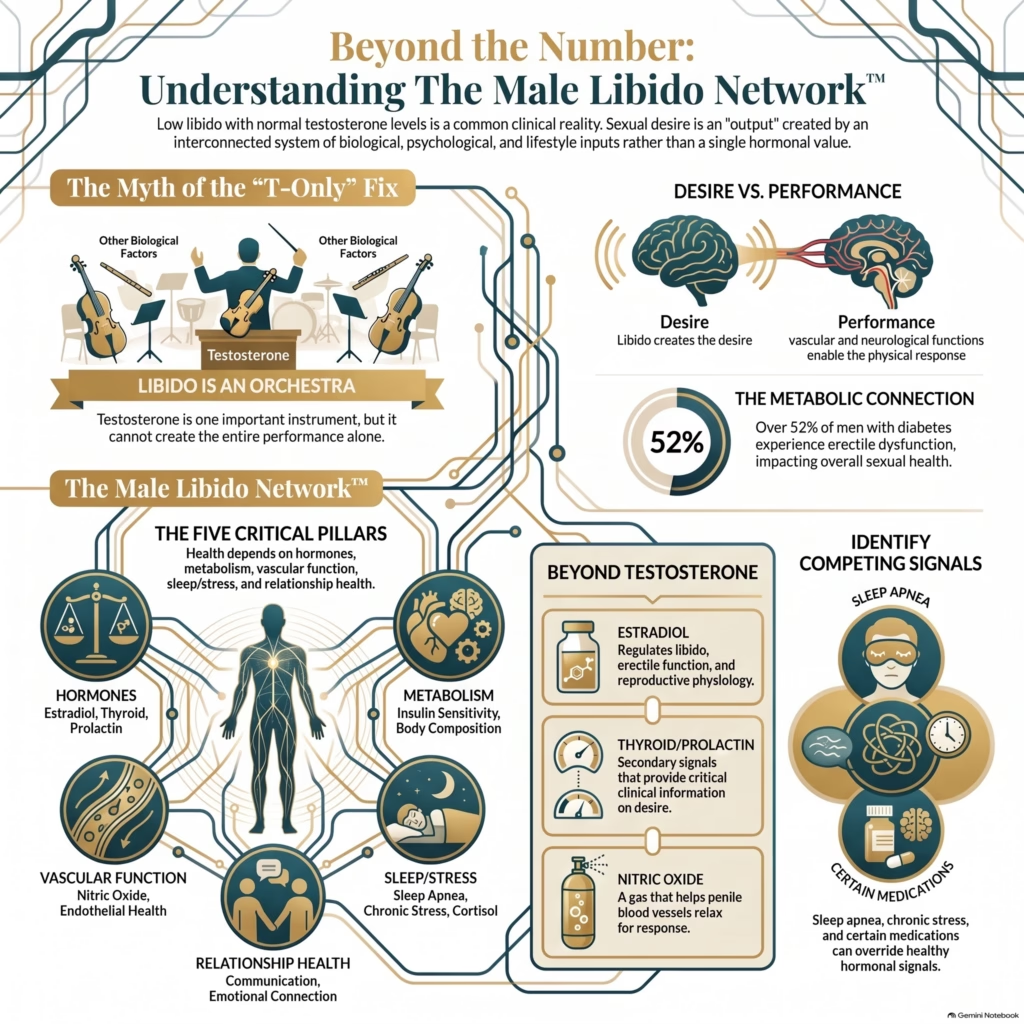
Think of male libido like an orchestra. Testosterone is an important instrument, but it cannot create the entire performance by itself.
At Eternal Vitality, a useful educational model is The Male Libido Network™. It includes five connected areas: hormonal signaling, metabolic health, vascular function, sleep and stress physiology, and psychological or relationship health.
Testosterone Is Only One Signal
The first five pieces matter because sexual desire begins with communication between several systems.
Hormonal signaling includes more than testosterone. Estradiol, thyroid hormones, and prolactin can also provide important clinical information.
Estradiol deserves special attention. Men need estrogen too. Research describes estradiol as playing roles in male libido, erectile function, and reproductive physiology.
This does not mean every estradiol result should be treated. Evidence does not support automatically lowering estradiol during testosterone therapy simply because a laboratory value rises.
That leads to an important principle: hormone optimization should not become a contest to maximize testosterone while minimizing estrogen.
The goal is understanding symptoms within the complete hormonal and clinical picture.
What Should Be Checked When Low Libido With Normal Testosterone Continues?
Low libido with normal testosterone deserves a broader question than, “How can we increase testosterone?”
A better question is, “Which part of the sexual health system is limiting the response?”
One useful starting point is separating desire from performance. Does a man rarely think about sex, or does he want sex but avoid it because erections have become unreliable?
Those are different problems, although they can eventually overlap.
A Clinical Perspective Reveals Hidden Barriers
In our clinical experience, men usually do not arrive asking about estradiol, thyroid function, insulin resistance, sleep, or vascular health.
They say, “My libido is gone.”
Consider a de-identified 52-year-old man who continued experiencing low libido after his testosterone had been addressed.
Looking deeper revealed poor sleep, insulin resistance, and problems with erection quality. Testosterone was part of his picture, but it was not the entire picture.
Erections depend partly on nitric oxide signaling. Nitric oxide helps penile blood vessels relax, supporting the increased blood flow required for an erection.
This distinction matters because libido and erections are not identical. Libido creates desire. Vascular and neurological function help the body respond to that desire.
Metabolic health can influence that response. In a meta-analysis of 145 studies involving 88,577 men with diabetes, erectile dysfunction was estimated to affect 52.5 percent.
That statistic concerns diabetes and erectile dysfunction, not libido itself. However, it shows why sexual health cannot be separated from metabolic and vascular health.
How Do Sleep, Stress, Medications, and Relationships Affect Low Libido With Normal Testosterone?
Low libido with normal testosterone can also develop when the brain and body receive competing signals.
Poor sleep is one example. Sleep affects energy, mood, glucose regulation, recovery, and sexual function.
A 2026 systematic review found erectile dysfunction was common in the studied populations with obstructive sleep apnea. Greater sleep apnea severity was also associated with worse erectile-function scores.
This does not prove sleep apnea causes every sexual problem. It does show why persistent snoring, daytime sleepiness, and unrefreshing sleep should not automatically be dismissed.
Chronic stress and anxiety add another layer. Sexual interest can become harder to access when the brain remains focused on work, conflict, fear, or performance.
Sexual Health Improves Through Whole-Body Evaluation
Medications should also be reviewed rather than overlooked.
A systematic review of 41 studies found antidepressant therapy was associated with increased rates of decreased libido, erectile dysfunction, and ejaculatory problems compared with placebo.
That does not mean antidepressants should be stopped. Depression itself can affect sexual function, and medication changes should always involve the prescribing clinician.
Relationships deserve equal attention. Emotional distance, unresolved conflict, attraction changes, sexual routine, or previous erectile difficulties can influence desire.
This does not make low libido imaginary.
Imagine a man who experiences several unreliable erections. He begins anticipating another difficult experience. Sex gradually becomes associated with pressure instead of pleasure.
He starts avoiding intimacy. His partner notices. Tension increases. Eventually, he describes the entire problem as low libido.
The original problem may have involved vascular function, while anxiety and relationship tension later became additional inputs.
The body does not divide sexual health into separate departments.
Hormones influence metabolism. Metabolism influences vascular health. Sleep affects recovery and glucose regulation. Stress affects attention and desire. Erectile difficulties can affect confidence and relationships.
This interconnected approach also reflects Eternal Vitality’s broader pillars of hormones, metabolism, sleep, stress, gut health, nutrition, and peptide support when clinically appropriate.
The Eternal Vitality Takeaway
Libido is not a testosterone number. It is an output created by several biological, psychological, and relationship inputs.
When testosterone is normal but libido remains low, forcing testosterone higher may miss the real limiting factor.
The better goal is finding which part of The Male Libido Network™ deserves closer attention.
Conclusion & Next Step
Low libido with normal testosterone often requires looking beyond testosterone rather than automatically increasing it.
A thoughtful evaluation may consider hormone balance, estradiol, thyroid function, prolactin, metabolic health, erectile function, sleep, stress, medications, anxiety, and relationships.
Start by separating desire from performance. Then ask what changed around the time the problem began, including sleep, medications, health, stress, erections, and relationship dynamics.
Results vary because the limiting factor is different for every man. A comprehensive evaluation can help identify which questions deserve priority rather than ordering every possible test.
For men in Orlando, Eternal Vitality uses discovery, diagnostics, and individualized planning to understand the broader health picture before considering appropriate options.
Book a Vitality Discovery Session
This information is educational only and is not intended to diagnose or treat a medical condition.
Frequently Asked Questions
Why is my sex drive low when my testosterone is normal?
Testosterone is only one input. Sleep, stress, medications, metabolic health, thyroid function, other hormones, erections, mood, and relationships may influence desire.
The next step is usually understanding the broader pattern rather than assuming testosterone must go higher.
Can estradiol affect male libido?
Yes, estradiol participates in normal male sexual physiology. Research suggests it has roles in libido and erectile function.
Its significance should be interpreted within the complete clinical picture rather than from one number alone.
Can insulin resistance affect sexual health?
Metabolic dysfunction can coexist with vascular problems that affect erectile function. Diabetes, for example, has a strong association with erectile dysfunction.
Insulin resistance does not automatically explain low libido, but metabolic health may deserve consideration when symptoms persist.
Can medications lower libido even when testosterone is normal?
Yes. Some medications can affect desire, erections, orgasm, or ejaculation.
Psychiatric medications are one important example, but treatment should never be stopped or changed without discussing it with the prescribing clinician.
What should I ask my doctor if testosterone is normal but libido is low?
Ask whether the evaluation should extend beyond testosterone.
Depending on your history, useful areas may include other hormones, metabolic and vascular health, sleep, medications, erectile function, mental health, stress, and relationship factors.
Eternal Vitality
4361 Hunters Park Ln
Orlando, FL 32837
(407) 710-1840