


Why Healthy Foods Trigger Digestive Symptoms becomes an important question when digestive symptoms continue despite eating nutritious foods.
You may choose vegetables, fruit, yogurt, whole grains, and plenty of protein. Yet you still experience bloating after eating, gas, discomfort, or unpredictable bowel movements.
At Eternal Vitality in Orlando, Florida, we often see patients blame gluten or dairy without clear evidence. Others keep removing foods because they cannot understand why they still feel bad.
A healthy food can trigger symptoms without being unhealthy for you. Sometimes the reaction tells us more about your digestive environment than the food itself.
Why Do Healthy Foods Cause Digestive Symptoms and Bloating After Eating?
Healthy foods still require digestive work. Your body must break food down, absorb nutrients, move waste, and manage bacterial fermentation.
Fiber provides a useful example. Humans cannot completely digest many fibers. Instead, bacteria within the gut microbiome ferment them.
This fermentation produces compounds called short-chain fatty acids, which help support the intestinal environment. Fermentation also produces gas that may contribute to bloating.
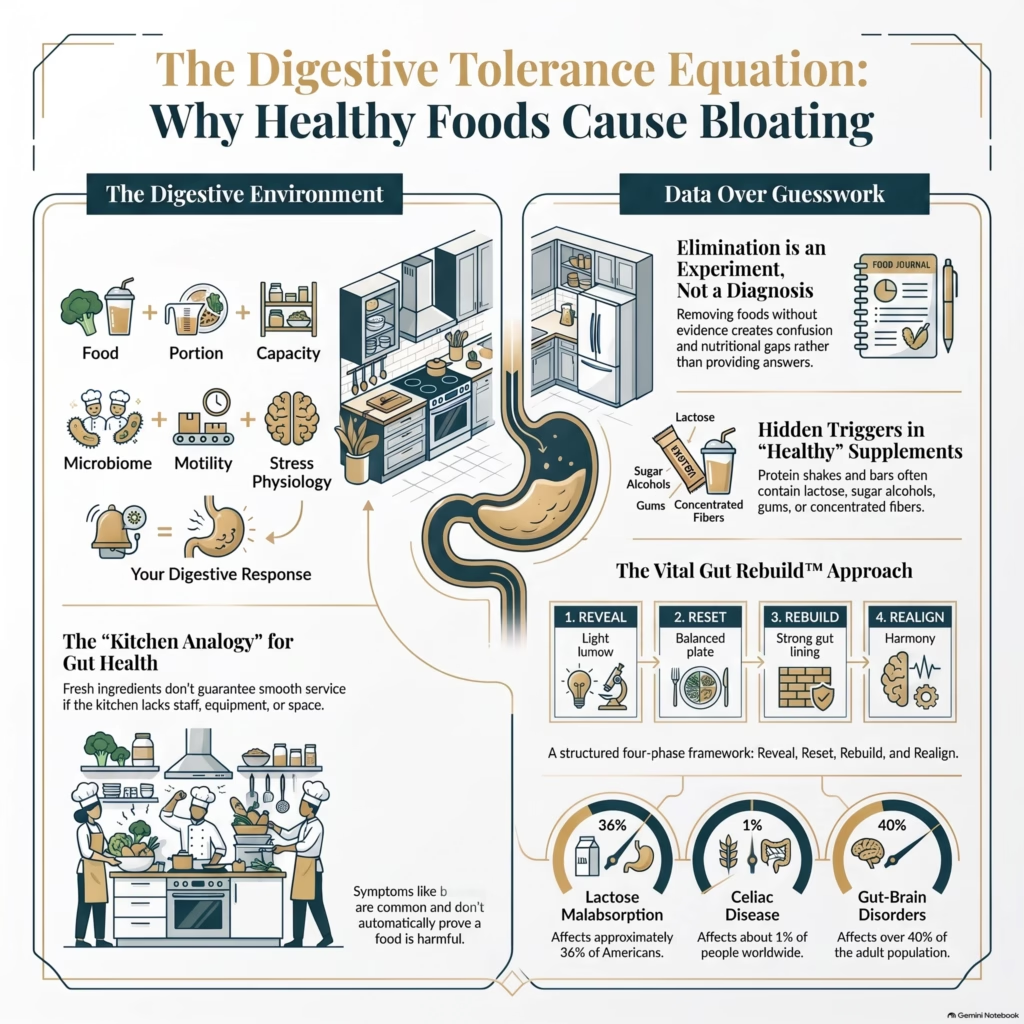
Digestive symptoms are surprisingly common. International research suggests more than 40 percent of adults meet criteria for at least one disorder of gut-brain interaction.
That matters because bloating after eating does not automatically prove a food is harmful. Motility, intestinal sensitivity, fermentation, and stress physiology can influence what you feel.
Table of Contents
Your Digestive Environment Shapes Food Tolerance
A useful way to understand digestive health is to imagine a restaurant kitchen.
Fresh ingredients do not guarantee smooth service. The kitchen still needs enough staff, equipment, space, and time to handle everything arriving.
Your digestive system works similarly.
At Eternal Vitality, we can think of this as the Digestive Tolerance Equation™:
Food + Portion + Digestive Capacity + Gut Microbiome + Motility + Stress Physiology = Your Digestive Response
Consider broccoli, onions, beans, avocado, and a large protein shake. Every item can fit within a nutritious diet.
Together, however, they create a larger digestive workload. Several ingredients may ferment, while the meal’s size can influence how comfortably it moves through digestion.
This also explains why foods you tolerated previously may suddenly seem problematic.
Illness, antibiotics, medications, constipation, dietary changes, poor sleep, and prolonged stress can change the digestive environment. Food tolerance is not always fixed.
The food may not have changed. The environment receiving the food may have changed.
Should Digestive Symptoms Lead to Food Sensitivity Testing or Eliminating Gluten and Dairy?
Many patients with digestive symptoms start by removing gluten or dairy. Sometimes those foods are relevant. Sometimes they are innocent bystanders.
Celiac disease, milk allergy, and lactose intolerance are real conditions. However, they are biologically different and require different forms of evaluation.
Celiac disease affects about one percent of people worldwide. Lactose malabsorption is considerably more common and affects about 36 percent of Americans.
Yet lactose malabsorption does not always produce symptoms. This illustrates why a biological finding and a person’s actual food tolerance are not necessarily identical.
Removing Foods Without Evidence Creates Confusion
Consider a composite patient we will call Michelle.
Michelle exercised regularly and considered her diet exceptionally healthy. She ate lean protein, vegetables, yogurt, fruit, protein shakes, and very few processed foods.
Yet she developed frequent bloating after eating.
She blamed dairy and removed it. Her digestive symptoms continued.
Next came gluten. Then eggs, oats, beans, and several vegetables.
Within months, Michelle had an impressive list of foods she could not eat. What she still did not have was an explanation.
She was also consuming several protein shakes, protein bars, and oversized protein portions each day.
That detail matters.
Protein supports muscle, metabolism, recovery, and healthy aging. However, more protein does not automatically create better digestive health.
Protein powders and bars may contain lactose, sugar alcohols, gums, inulin, or concentrated fibers. These ingredients can cause digestive symptoms in some people.
Extremely high protein intake may also change the overall architecture of the diet. It can crowd out plant variety, fiber sources, and other foods supporting the gut microbiome.
The lesson is not that protein causes digestive problems.
More of a healthy nutrient is not automatically healthier for your digestive system.
Michelle’s story demonstrates another important principle:
Removing a food is an experiment. It is not automatically a diagnosis.
What if gluten was never the problem?
That question can be far more useful than eliminating another food.
How Can Gut Health Testing Identify the Cause of Digestive Symptoms?
Persistent digestive symptoms deserve a structured investigation rather than endless dietary guessing.
One person may experience bloating after eating because certain carbohydrates ferment rapidly. Another may have constipation that allows gas and stool to accumulate.
Someone else may need evaluation for lactose intolerance, celiac disease, medication effects, or another medical condition.
Gut health testing becomes valuable when it helps answer a specific question rather than promising one universal explanation.
A Clinical Perspective: Data Creates Direction
One pattern we frequently observe is that patients arrive with more restrictions than useful data.
They have stopped gluten, dairy, sugar, and several vegetables. They have purchased probiotics, digestive enzymes, powders, cleanses, or supplements.
Yet their original question remains unanswered:
Why do I still feel bad?
At Eternal Vitality, our Vital Gut Rebuild™ approach provides a structured framework through four phases: Reveal, Reset, Rebuild, and Realign.
The process begins with investigation. GI mapping, selected food sensitivity evaluation, symptom history, and nutritional patterns may provide different pieces of the digestive picture.
Those findings can then help guide targeted strategies and thoughtful food reintroduction rather than indefinite restriction.
GI mapping may provide information about selected microorganisms and digestive markers. Food sensitivity testing requires even more careful interpretation.
Certain commercially available IgG food sensitivity tests have important limitations. IgG antibodies can reflect exposure to a food and do not independently prove that food causes symptoms.
This distinction protects patients from unnecessary restriction.
A laboratory result should generate a clinical question, not automatically create a permanent food restriction.
Useful digestive health testing connects laboratory findings with symptoms, bowel patterns, nutrition, medications, medical history, sleep, and stress physiology.
The body does not organize itself into separate departments.
Poor sleep affects recovery and metabolism. Stress physiology can alter gut-brain signaling and intestinal movement.
Hormone balance, nutrition, metabolism, and gut health can also influence one another. This whole-body perspective reflects Eternal Vitality’s focus on personalized diagnostics and individualized care.
Testing should reduce guessing, not create more foods to fear.
Conclusion & Next Step
Digestive symptoms after healthy foods do not automatically mean those foods are unhealthy. Gut health testing may help clarify why symptoms continue despite thoughtful nutrition.
A reaction may reflect food quantity, fermentation, food intolerance, constipation, gut microbiome activity, motility, or stress physiology.
Before eliminating another food, try this simple approach:
- Change one variable at a time. Removing several foods together makes identifying the true trigger harder.
- Record the portion. Half a serving and three servings can create very different digestive responses.
- Track symptom timing. Note whether discomfort begins immediately or several hours later.
- Track bowel patterns and meal combinations. Constipation and large mixed meals can change how foods feel.
- Look for repeated patterns. One uncomfortable meal provides less information than a consistent response over time.
Persistent or worsening digestive symptoms deserve appropriate medical evaluation. Blood in the stool, unexplained weight loss, severe pain, anemia, fever, or persistent vomiting require medical attention.
The Eternal Vitality Takeaway: A food reaction does not always tell you what is wrong with the food. Sometimes it reveals what deserves investigation within the digestive environment. Understanding should guide restriction, not the other way around.
For patients in Orlando who have already changed their diets but still lack answers, a structured digestive evaluation may provide clearer direction.
Book a Vitality Discovery Session to explore Eternal Vitality’s personalized approach to digestive health.
Frequently Asked Questions
Why am I bloated even though I eat healthy?
Healthy foods can contain fiber and fermentable carbohydrates that increase gas production during digestion.
Portion size, constipation, gut sensitivity, food combinations, and intestinal motility can also influence bloating after eating.
Why do vegetables make me bloated?
Some vegetables contain carbohydrates that gut bacteria readily ferment.
Preparation and portion size matter too. A smaller cooked serving may be tolerated differently from a large raw salad.
Can eating too much protein cause digestive problems?
It may contribute for some people, especially when large amounts come from shakes or bars containing gums, lactose, or sugar alcohols.
Very high protein intake can also change meal balance and reduce dietary variety. Individual tolerance varies.
Why can I suddenly not tolerate foods I used to eat?
Digestive capacity can change with illness, medications, antibiotics, constipation, stress, sleep, and dietary patterns.
A new reaction therefore does not automatically mean you have developed a permanent food intolerance.
What tests can help identify digestive problems?
Testing depends on symptoms and medical history. Appropriate evaluation may include conventional medical testing, GI mapping, or selected digestive health testing.
No single test explains every digestive symptom. Results are most useful when interpreted alongside your symptoms, history, nutrition, and bowel patterns.
Eternal Vitality
4361 Hunters Park Ln
Orlando, FL 32837
(407) 710-1840