


Why Weight Loss Gets Harder Every Time You Diet
Your body isn’t working against you. It’s adapting to protect you.
If your first diet worked but your fifth one didn’t, you’re not imagining things.
At Eternal Vitality in Orlando, Florida, one of the most common things we hear is, “I’ve tried everything.” Many patients have counted calories, eliminated entire food groups, followed popular diets, exercised harder than ever, or taken weight loss medications. Some lost a significant amount of weight the first time they tried. Yet with each new attempt, progress became slower, plateaus lasted longer, and maintaining weight loss felt nearly impossible.
It’s easy to blame yourself.
Maybe you think you aren’t disciplined enough.
Maybe you believe you’re eating too much or exercising too little.
But what if your body isn’t resisting weight loss at all?
What if it’s doing exactly what it was designed to do?
One of the biggest misconceptions in weight loss is the idea that your metabolism suddenly becomes “broken.” In reality, the human body is incredibly adaptive. Every time you go through a cycle of aggressive calorie restriction, weight loss, weight regain, and another diet, your body learns how to conserve energy more efficiently.
That adaptation helped our ancestors survive periods of famine.
Today, it can make losing weight feel frustratingly difficult.
The encouraging news is that adaptation is not the same as permanent damage.
Understanding that difference changes the conversation from “What’s wrong with me?” to “What is my body trying to tell me?”
That question opens the door to a much better strategy.
TL;DR
If you only have two minutes, here’s what this article will teach you:
- Repeated dieting often leads to muscle loss, which lowers your resting metabolic rate.
- Your body adapts to prolonged calorie restriction by becoming more energy efficient, a process known as metabolic adaptation.
- Insulin resistance, chronic inflammation, poor gut health, inadequate sleep, and hormone imbalance can all contribute to weight loss plateaus.
- Weight loss medications can be valuable tools, but they do not automatically correct every biological barrier to fat loss.
- Sustainable weight loss comes from rebuilding muscle, restoring metabolic health, supporting hormone balance, and improving gut health rather than simply eating less.
The goal isn’t to fight your body. The goal is to understand it.
Who This Guide Is For
This guide is for you if:
- You’ve lost weight before but struggle to lose it again.
- Every new diet seems less effective than the last.
- You’ve hit a plateau despite eating less and exercising more.
- You’ve lost weight on a GLP-1 medication but are no longer making progress.
- You’ve been told to “just eat less” but suspect there’s more to the story.
- You want to understand the science behind sustainable weight loss instead of chasing another quick fix.
If any of those sound familiar, you’re not alone. More importantly, there are biological reasons why this happens, and understanding them is the first step toward breaking the cycle.
Table of Contents
The Dieting Myth That Keeps People Stuck
Most weight loss advice begins and ends with a simple equation:
Eat fewer calories than you burn.
While that’s scientifically true, it’s also incomplete.
Imagine trying to explain how a car works by saying, “Just press the gas pedal.”
Technically, you’re not wrong.
But you’ve ignored the engine, transmission, fuel system, and every other part that determines whether the car actually moves.
Your metabolism works the same way.
Calories matter.
But they’re only one piece of a much larger system that includes muscle mass, insulin sensitivity, hormones, gut health, sleep quality, stress physiology, inflammation, nutrition, and daily movement.
When one of those systems begins to struggle, the others often follow.
This explains why two people can eat the same number of calories and experience completely different results.
One person may lose body fat while preserving muscle.
Another may become hungrier, lose muscle, plateau, and eventually regain the weight.
The difference isn’t always motivation.
Often, it’s biology.
One of the most important lessons we teach patients is this:
Weight loss isn’t simply about creating a calorie deficit. It’s about creating a body that’s willing to release stored fat while protecting the muscle and metabolism that keep you healthy.
That shift in thinking changes everything.
Because once you stop asking, “How can I eat less?”, you can start asking a much more useful question:
“Why has my body become resistant to losing fat?”
The Metabolic Resistance Cycle
Over the years, we’ve noticed a consistent pattern in patients who struggle with long-term weight loss.
Rarely is there just one problem.
Instead, several biological changes quietly build on one another until losing weight becomes much harder than it used to be.
We call this The Metabolic Resistance Cycle.
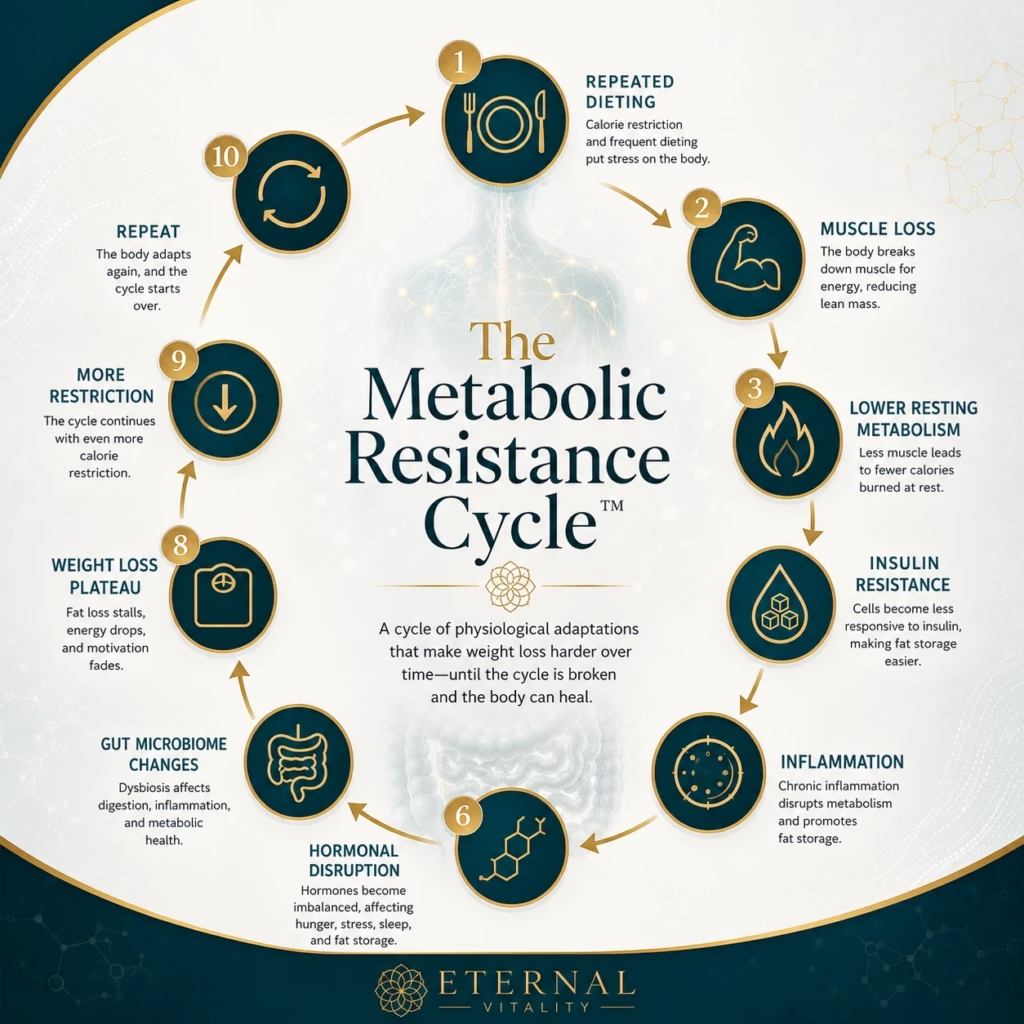
The important thing to understand is that this cycle rarely begins with hormones.
It rarely begins with poor motivation.
And it rarely begins because someone lacks willpower.
More often, it starts with repeated attempts to lose weight as quickly as possible.
Each round of aggressive dieting may solve one problem while quietly creating another. Over time, those changes accumulate until your body becomes increasingly efficient at conserving energy instead of using it.
The good news is that every step in this cycle can also point us toward a solution.
The rest of this guide will walk through each stage, explain why it happens, and show how rebuilding your metabolism is very different from simply trying to lose more weight.
Why Your First Diet Worked Better Than Your Fifth
One of the most common questions we hear is surprisingly simple:
“Why did my first diet work so well, but now nothing seems to work?”
The answer has very little to do with motivation.
It has everything to do with adaptation.
When you first reduce calories, your body has several sources of stored energy it can use. Fat is one of them. Glycogen, the stored form of carbohydrate, is another. Some muscle tissue may also be broken down if your body believes energy is scarce.
At first, the scale responds quickly.
That early success is encouraging, but it can also create the impression that eating less is always the answer.
Unfortunately, your body doesn’t continue responding the same way forever.
As weeks become months, your brain begins recognizing a familiar pattern.
Food has become less available.
Whether that’s because you’re intentionally dieting or stranded on a deserted island doesn’t matter to your biology.
Your brain’s first priority is survival.
So it starts making adjustments that conserve energy.
Those adjustments helped humans survive famine thousands of years ago.
Today, they often explain why repeated dieting becomes increasingly frustrating.
This process is known as metabolic adaptation, and understanding it may be the single most important step toward breaking the cycle.
Your metabolism isn’t failing. It’s becoming more efficient.
That may sound like good news.
Unfortunately, efficiency isn’t always helpful when your goal is fat loss.
Your Body Starts Protecting Its Most Valuable Resource
When people think about metabolism, they usually think about calories.
Your body thinks about survival.
One of the quickest ways to conserve energy is by reducing muscle.
Muscle is incredibly valuable.
It helps you move.
It protects your joints.
It stores glucose after meals.
It improves insulin sensitivity.
It supports healthy aging.
It also requires energy every hour of every day.
From your brain’s perspective, maintaining large amounts of muscle during a famine doesn’t make much sense.
So if calories stay low long enough, your body may begin sacrificing lean tissue to conserve energy.
This is why two people can lose the same twenty pounds and have completely different outcomes.
One loses mostly body fat while preserving muscle.
The other loses a significant amount of muscle along with fat.
The scale celebrates both.
Their metabolisms tell very different stories.
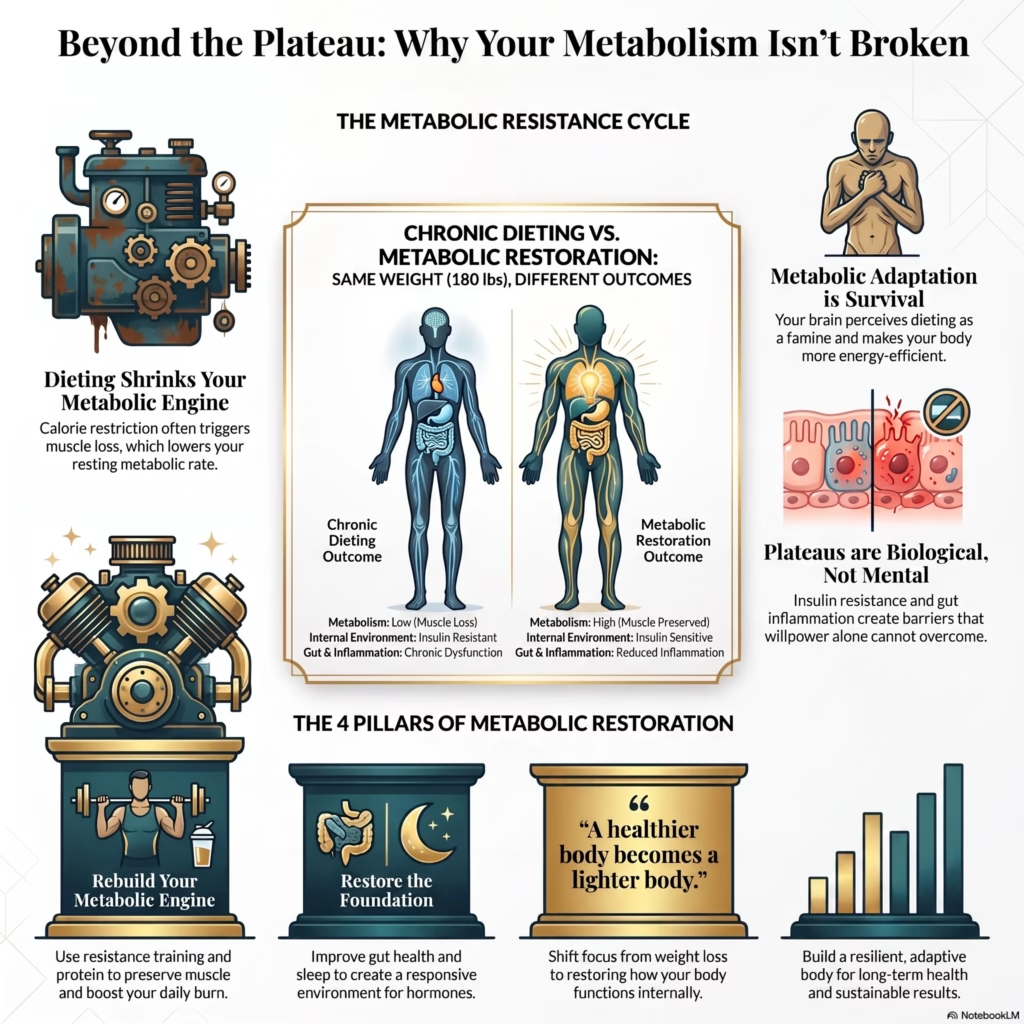
One of the simplest ways to picture this is to imagine the engine in your car.
The larger the engine, the more fuel it uses.
The smaller the engine becomes, the less fuel it needs.
Your muscles are your metabolic engine.
Every pound of lean muscle helps determine how many calories your body naturally burns throughout the day. Losing that engine may make future weight loss much harder than the first attempt.
Muscle Loss Changes More Than Your Metabolism
Here’s where the story becomes even more interesting.
Most people think muscle only matters for strength.
Muscle plays an important role in controlling blood sugar.
After you eat, glucose enters your bloodstream.
Healthy muscle acts like a sponge, pulling much of that glucose into cells where it can be stored and later used for energy.
When muscle mass decreases, your body loses part of its ability to manage blood sugar efficiently.
Now the pancreas has to work harder.
It responds by producing more insulin.
At first, this works well.
Eventually, however, the body’s cells stop responding as effectively.
This is called insulin resistance.
Think of insulin as a key.
Its job is to unlock the door so glucose can enter the cell.
With insulin resistance, the locks become rusty.
The pancreas keeps making more keys, hoping enough of them will eventually open the door.
For a while, that works.
Eventually, however, higher insulin levels make it increasingly difficult for the body to release stored fat.
This is one reason people often feel like they’re doing everything right but still can’t lose weight.
The problem isn’t necessarily that they’re eating too much.
It’s that their biology has changed.
Research Spotlight
Nearly 40% of adults in the United States are estimated to have insulin resistance, many without knowing it. Because it often develops gradually, people may experience changes in weight, energy, and metabolism long before blood sugar becomes abnormal.
The Missing Link Most Weight Loss Plans Never Address
At this point, many people assume hormones must be the problem.
Sometimes they are.
But here’s what we commonly see in practice.
Hormones are often responding to the environment they’re living in rather than creating the problem themselves.
Imagine an orchestra.
Each instrument may be perfectly tuned.
If the conductor cannot coordinate them, however, the music still sounds chaotic.
Hormones work the same way.
Insulin communicates with cortisol.
Cortisol influences thyroid function.
Sleep affects growth hormone.
Gut health helps regulate estrogen metabolism.
Inflammation influences how cells respond to nearly every hormone in the body.
Looking at one hormone in isolation is like blaming the violin for an orchestra that sounds out of tune.
This is why we sometimes meet patients whose laboratory values are only mildly abnormal, yet they feel exhausted, gain weight easily, struggle with cravings, and cannot understand why previous strategies stopped working.
The missing piece often isn’t the hormone itself. It’s the environment surrounding it.
Stress, Sleep, and the Signals Your Body Receives
Your body doesn’t only respond to food.
It also responds to stress.
Poor sleep, chronic psychological stress, overtraining, and prolonged calorie restriction all send similar messages to the brain.
Resources are limited.
Recovery becomes more difficult.
Cortisol rises.
Higher cortisol isn’t inherently bad.
It’s an essential survival hormone.
The problem occurs when your body spends weeks or months receiving the same signal.
Over time, elevated stress hormones may influence appetite, insulin sensitivity, food cravings, recovery, and body composition.
Now imagine someone who’s eating very little, sleeping poorly, juggling work and family responsibilities, and trying to exercise every day.
They’re working incredibly hard.
Yet many of the signals reaching their brain suggest survival rather than abundance.
It’s no wonder progress slows.
This is one reason we encourage patients to think beyond calories alone.
Your metabolism responds to every signal your body receives, not just the food on your plate.
Why Gut Health May Be the Foundation
This brings us to perhaps the most misunderstood part of the entire story.
Gut health.
Many people think of the digestive system as nothing more than a place where food is broken down.
It’s one of the body’s busiest communication centers.
Trillions of bacteria help regulate inflammation, nutrient absorption, immune function, metabolism, and hormone processing.
When that ecosystem becomes disrupted, the effects often reach far beyond digestion.
Think of your gut like the soil in a garden.
Healthy soil allows plants to flourish.
Poor soil makes growth difficult, no matter how much water or fertilizer you add.
Your metabolism works in much the same way.
If chronic stress, poor nutrition, repeated antibiotics, inflammation, or years of dieting have disrupted the gut microbiome, your body may struggle to absorb nutrients, regulate inflammation, and maintain healthy hormonal communication.
The result isn’t simply bloating.
It may be a metabolism that has lost much of its flexibility.
Which brings us to one of the most memorable patient stories we’ve encountered.
A story that perfectly illustrates why looking deeper often changes everything.
What We Commonly See in Practice
One of the hardest conversations we have with patients isn’t about nutrition or exercise.
It’s convincing them that they haven’t failed.
By the time many people walk through our doors, they’ve spent years blaming themselves.
They’ve tried commercial diet programs, counted calories, cut carbohydrates, skipped meals, joined gyms, hired trainers, and sometimes even started weight loss medications.
When the weight eventually stops coming off, most reach the same conclusion.
“I must not be trying hard enough.”
In our experience, that’s rarely the real problem.
More often, we find a body that has gradually adapted to years of restrictive dieting, increasing stress, muscle loss, poor sleep, chronic inflammation, hormonal changes, or declining gut health.
Rarely is there one dramatic cause.
Instead, we uncover several small barriers that have quietly accumulated over time until the body no longer responds the way it once did.
That’s why one of the first questions we ask isn’t,
“What diet are you following?”
It’s,
“What has changed in your biology?”
That simple shift often changes everything.
Instead of chasing another diet, we begin looking for the barriers preventing the body from responding normally.
Because once you identify the barriers, you can begin removing them.
When the Medication Wasn’t the Real Problem
One patient perfectly illustrates why this way of thinking matters.
She was thirty-one years old.
Eighteen months earlier, she’d started a GLP-1 medication through another clinic.
Like many people, she experienced exciting results during the first several months.
The weight came off steadily.
Her clothes fit differently.
Friends noticed.
She finally felt like she had found something that worked.
Then, almost without warning, progress stopped.
Weeks turned into months.
She continued taking her medication exactly as prescribed.
She was eating less than she had in years.
She was exercising consistently.
She was doing everything she had been told to do.
Yet the scale refused to move.
Eventually, the weight slowly began creeping back.
When she came to see us, she wasn’t looking for another explanation.
She was looking for another medication.
She assumed the first one had simply stopped working.
More importantly, she believed she had somehow failed.
Unfortunately, we hear that story far too often.
So instead of immediately discussing medications, we asked a different question.
Why did her body stop responding?
That question completely changed the direction of her evaluation.
Rather than focusing only on calories or appetite, we looked at the systems that regulate metabolism.
How healthy was her digestive system?
Were signs of chronic inflammation affecting insulin sensitivity?
Had changes in her gut microbiome begun influencing hormone balance?
Was she preserving enough muscle to support a healthy metabolic rate?
As we gathered more information, a different picture emerged.
Her digestive health had gradually declined.
Evidence suggested ongoing gut dysfunction and inflammation.
Those changes appeared to be contributing to metabolic resistance while also affecting hormonal communication throughout her body.
The medication had successfully reduced her appetite.
It had never addressed the biological environment that was becoming less responsive over time.
Instead of simply increasing the medication or switching to another one, we focused on rebuilding the foundation.
We worked to improve gut health, reduce inflammation, support healthy hormone function, preserve lean muscle, and restore normal metabolic flexibility.
The changes weren’t overnight.
Real physiology rarely is.
But as her internal environment improved, her body began responding differently.
The weight started coming off again.
Eventually, she no longer needed the GLP-1 medication.
The most rewarding part of her story isn’t the number of pounds she lost.
It’s what happened afterward.
Coworkers began asking what she was doing differently.
Most expected to hear the name of a new medication.
Instead, her answer surprised them.
“We stopped chasing the symptoms and finally figured out what was getting in my body’s way.”
That sentence captures one of the biggest lessons in this article.
The obstacle isn’t always a lack of willpower.
Sometimes it’s a biological barrier that simply hasn’t been identified yet.
Why This Story Matters
It would be easy to read this story and conclude that gut health was the entire answer.
It wasn’t.
The lesson is much bigger than that.
Weight loss rarely depends on one system.
It depends on how multiple systems work together.
Muscle influences insulin sensitivity.
Insulin influences fat storage.
The gut influences inflammation.
Inflammation affects hormonal communication.
Sleep and stress influence all of them.
When one system struggles, the others often compensate.
Eventually, those small changes become large enough that another diet or another medication simply isn’t enough.
That’s why lasting weight management often requires looking beyond the scale and understanding the biology underneath it.
From Weight Loss to Metabolic Restoration
By now, you can probably see why another restrictive diet isn’t always the answer.
If repeated dieting contributed to muscle loss…
If muscle loss contributed to insulin resistance…
If insulin resistance contributed to inflammation…
If inflammation affected hormonal communication…
Then asking your body to simply “eat less” is unlikely to solve the whole problem.
Instead of thinking about weight loss, I encourage patients to think about metabolic restoration.
That may sound like a subtle difference, but it completely changes the goal.
Weight loss focuses on making the number on the scale smaller.
Metabolic restoration focuses on helping your body function the way it was designed to.
When that happens, healthy weight loss often becomes one of the natural outcomes.
One of the phrases we frequently share with patients is this:
Your goal isn’t to become lighter. It’s to become healthier. A healthier body often becomes a lighter body.
That shift in perspective reduces frustration because the focus moves away from chasing rapid results and toward rebuilding the systems that make long-term success possible.
The Four Pillars of Sustainable Fat Loss
Rather than asking, “What diet should I follow next?”, we encourage patients to ask a different question:
“What does my body need to function better?”
Although every person is different, most successful long-term weight loss strategies share four common foundations.
Pillar One: Rebuild Your Metabolic Engine
Your metabolism is influenced by many factors, but one of the most important is lean muscle mass.
Every pound of muscle you preserve helps your body burn energy, regulate blood sugar, maintain physical function, and support healthy aging.
Unfortunately, many diets unintentionally sacrifice muscle in the pursuit of rapid weight loss.
That’s why preserving muscle should be considered just as important as losing fat.
Resistance training becomes especially valuable here.
Many people view lifting weights as something reserved for athletes or bodybuilders.
In reality, it is one of the most effective ways to tell your body:
“This muscle is still needed.”
Combined with adequate protein intake, resistance training helps preserve the very tissue that keeps your metabolism resilient.
Pillar Two: Improve Metabolic Flexibility
Healthy metabolism isn’t simply about burning calories.
It’s about using energy efficiently.
A metabolically flexible body can transition between using carbohydrates and fat depending on what is available.
Years of restrictive dieting, inactivity, poor sleep, chronic stress, and insulin resistance may reduce that flexibility.
The goal isn’t to force your body into one fuel source forever.
The goal is helping your body become healthy enough to use both efficiently.
This is one reason we discourage extreme nutritional approaches that eliminate entire food groups without addressing the underlying biology. The healthiest metabolism is often the most adaptable one.
Pillar Three: Create an Environment Where Hormones Can Work
Patients often ask us,
“How do I fix my hormones?”
The question itself assumes hormones operate independently.
They don’t.
Hormones respond to the environment in which they function.
Imagine trying to have a conversation in a crowded room where everyone is shouting.
The problem isn’t your hearing.
It’s the environment.
Hormones face similar challenges.
Chronic inflammation.
Poor sleep.
Elevated stress hormones.
Insulin resistance.
Nutrient deficiencies.
Gut dysfunction.
Each of these can interfere with hormonal signaling.
Supporting hormone health often means improving the environment surrounding the hormones themselves.
That’s why successful treatment plans rarely focus on a single laboratory value.
They focus on restoring balance across multiple systems.
Pillar Four: Restore the Foundation
If muscle is the engine…
Then the gut is the foundation.
A healthy digestive system does far more than digest food.
It helps regulate inflammation.
Supports nutrient absorption.
Influences immune function.
Communicates with the brain.
Participates in hormone metabolism.
When the gut isn’t functioning well, many of the systems we’ve discussed throughout this article become more difficult to optimize.
This doesn’t mean every weight problem begins in the gut.
It does mean the gut should never be overlooked.
Sometimes restoring digestive health becomes the missing piece that allows everything else to work more effectively.
What Lasting Success Really Looks Like
One of the biggest mistakes people make is defining success by a single number.
The scale.
The scale measures body weight.
It does not measure:
- Increased strength.
- Better sleep.
- Improved insulin sensitivity.
- Healthier body composition.
- Reduced inflammation.
- Better digestion.
- Improved energy.
- Greater confidence.
Those improvements often happen before dramatic changes in body weight.
They’re also the changes that make long-term weight management possible.
Imagine two people who both weigh 180 pounds.
One reached that weight through years of restrictive dieting and repeated weight regain.
The other reached it while building muscle, improving sleep, restoring gut health, reducing inflammation, and improving insulin sensitivity.
The scale says they’re identical.
Their biology tells a very different story. That’s why we encourage patients to measure progress by more than body weight alone.
Final Thoughts
Imagine two people standing on the same scale.
One reached that weight through years of restrictive dieting, repeated weight regain, and constant frustration.
The other reached it by preserving muscle, improving sleep, restoring gut health, reducing inflammation, and supporting healthy hormone function.
The scale says they’re identical.
Their biology tells a completely different story.
That is the central lesson of this article.
Your body is not broken. It is adapting.
Every time you diet, your body learns from the environment you create. If calories remain too low for too long, muscle is lost, stress increases, inflammation can build, and metabolism becomes more efficient at conserving energy. These adaptations were designed to help humans survive famine, not modern weight loss.
The encouraging news is that adaptation is not the same as permanent damage.
By rebuilding muscle, improving metabolic health, supporting hormone balance, restoring gut function, and creating sustainable habits, you can begin teaching your body a different lesson. Instead of constantly preparing for scarcity, it can begin functioning in an environment that supports health, resilience, and lasting vitality.
Weight loss is not simply about eating less. It’s about creating a healthier body that naturally manages weight more effectively.
Because when you stop fighting your biology and start understanding it, lasting change becomes much more achievable.
The Eternal Vitality Takeaway
Your body is not broken. It is adapting.
Every restrictive diet teaches your body something. The question is whether it’s learning to survive or learning to thrive.
Sustainable weight loss isn’t about finding the next perfect diet. It’s about identifying and removing the biological barriers that have quietly accumulated over time.
Weight loss is the outcome. Metabolic restoration is the goal.
Frequently Asked Questions
Can I rebuild my metabolism after years of dieting?
For many people, yes. While repeated dieting can lead to metabolic adaptation, your metabolism is remarkably resilient. Building lean muscle, improving nutrition, restoring gut health, addressing insulin resistance, improving sleep, and correcting underlying hormonal imbalances may all help improve metabolic function over time. Every person is different, but adaptation is often more reversible than many people realize.
Is my metabolism permanently damaged from years of dieting?
For most people, no. Repeated dieting can make weight loss more difficult because the body adapts to conserve energy, but that is different from permanent damage. Many of these adaptations may improve with a comprehensive approach that supports muscle, metabolism, hormones, and overall health.
Why did my first diet work so much better than my recent ones?
Your first diet often creates a larger calorie deficit in a body that has not yet adapted to repeated restriction. Over time, muscle loss, metabolic adaptation, insulin resistance, hormonal changes, and lifestyle factors can all make future weight loss more challenging.
Can improving gut health really affect weight loss?
It may. The gut microbiome influences inflammation, nutrient absorption, insulin sensitivity, and hormone metabolism. While improving gut health is not a magic solution, it can remove one of several biological barriers that may be contributing to weight loss resistance.
Should everyone take a GLP-1 medication?
Not necessarily. GLP-1 medications can be valuable tools for appropriate candidates, but they work best as part of a comprehensive strategy that also addresses nutrition, resistance training, muscle preservation, sleep, and the underlying factors contributing to metabolic health.
Why is resistance training so important during weight loss?
Resistance training helps preserve and build lean muscle mass. Maintaining muscle supports resting metabolic rate, improves insulin sensitivity, and promotes healthier body composition. Protecting muscle during weight loss may also help reduce the metabolic slowdown that often occurs with repeated dieting.
Ready to Understand What’s Holding You Back?
If you’ve spent years trying different diets without lasting success, it may be time to stop asking, “What diet should I try next?” and start asking, “What barriers are preventing my body from responding?”
At Eternal Vitality in Orlando, Florida, we believe education comes before treatment. Our goal is to help you understand how your metabolism, hormones, gut health, muscle, sleep, and lifestyle work together so you can make informed decisions about your health.
If you’re ready to learn more, Book a Vitality Discovery Session. Together, we’ll evaluate the factors that may be influencing your metabolism and develop a personalized strategy based on your unique biology rather than another one-size-fits-all approach.
4361 Hunters Park Ln
Orlando, FL 32837
(407) 710-1840