


What causes a Wired but tired feeling? If you have a wired but tired feeling, you know how frustrating it can be. Your body feels exhausted, yet your brain seems unwilling to shut down.
You may struggle through the afternoon, only to feel more alert when bedtime arrives. Or you fall asleep quickly, then wake repeatedly and never feel fully restored.
At Eternal Vitality in Orlando, Florida, we rarely view this as simply a cortisol problem. Sleep, hormones, gut health, nutrition, stress physiology, medications, and daily habits can all influence how well your body recovers.
One of the most overlooked pieces is gut health. The gut communicates with the brain, immune system, and stress-response system in ways we are only beginning to understand.
Table of Contents
What Causes a Wired But Tired Feeling Besides Cortisol?
Cortisol gets blamed for almost everything related to stress and poor sleep.
But cortisol is not the enemy.
You need cortisol to wake up, regulate energy, maintain blood pressure, and respond appropriately to stress. The problem may be the signals telling your stress system to remain active.
That leads to a more useful question.
Instead of asking how to lower cortisol, ask why your body believes it needs to stay alert.
Your stress response may be reacting to something deeper
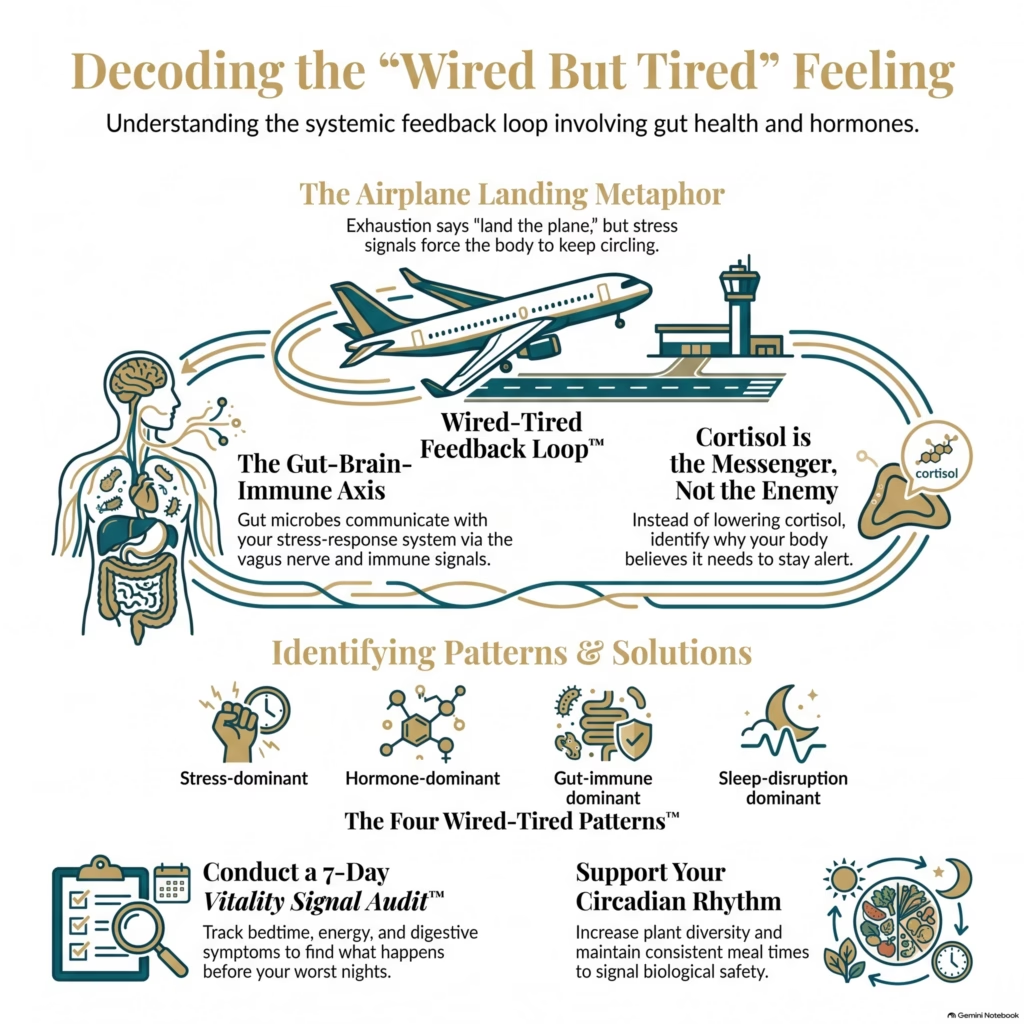
Think about sleep like landing an airplane.
Being exhausted tells the plane it is time to land. But hot flashes, digestive discomfort, racing thoughts, blood sugar changes, or other stress signals may keep telling the plane to circle.
Your body is tired. Your biology has not received a clear signal that it is safe to recover.
This is what we call the Wired-Tired Feedback Loop™.
Poor sleep can increase physiological stress. That stress may affect hormones, metabolism, immune activity, and the intestinal environment.
Those changes may then make restorative sleep more difficult.
Cortisol may be the messenger, not the original problem.
That is why simply trying to suppress cortisol with supplements may miss what is driving the problem.
Can Gut Health Contribute to a Wired But Tired Feeling?
Yes, gut health may contribute to a wired but tired feeling, although we should be careful about claiming direct cause and effect.
Your digestive tract contains trillions of microorganisms. Together, they form an ecosystem called the gut microbiome.
These microbes do much more than help digest food. They interact with your immune system, metabolism, intestinal barrier, hormones, and nervous system.
Researchers often describe this communication network as the microbiota-gut-brain axis. In clinical practice, I find it helpful to think even more broadly about the gut-brain-immune-HPA axis.
A recent meta-analysis involving more than 9,000 participants found differences in microbial diversity and bacterial composition among people with insomnia. This does not prove that those differences caused their insomnia.
However, it gives us another reason to stop thinking about sleep as something that happens only inside the brain.
Gut-brain communication is more complicated than serotonin
You may have heard that most serotonin is produced in the gut.
That statement is often misunderstood.
Serotonin produced in the digestive tract does not simply travel into your brain and make you calm, happy, or sleepy.
The connection is much more interesting.
Gut microbes can influence tryptophan metabolism and pathways involving serotonin, GABA, dopamine, and glutamate. They also produce metabolites that interact with immune and metabolic pathways.
The gut communicates with the nervous system through immune signals, microbial metabolites, endocrine pathways, and the vagus nerve.
Think of these systems as having an ongoing conversation:
Gut environment → microbial and immune signals → vagal and HPA communication → brain and stress signaling → sleep and recovery
And the conversation goes both ways.
Poor sleep may also influence inflammation, intestinal permeability, and the microbiome. This creates the potential for a feedback loop rather than one isolated problem.
Your gut does not put you to sleep. It may help shape the biological environment in which sleep occurs.
The Four Wired-Tired Patterns™
Not everyone who feels wired and tired has the same underlying pattern.
In practice, I find it helpful to think about four broad patterns.
Stress-dominant: Your mind stays busy at bedtime. Work, family responsibilities, or constant stimulation make switching off difficult.
Hormone-dominant: Poor sleep appears alongside hot flashes, menstrual changes, declining libido, mood changes, or other perimenopausal symptoms.
Gut-immune dominant: Sleep problems occur alongside bloating, constipation, food reactions, reflux, or other digestive concerns.
Sleep-disruption dominant: Loud snoring, gasping, restless legs, frequent awakenings, or severe daytime sleepiness suggest another sleep problem may need investigation.
Many patients do not fit neatly into one category.
That is the point.
Several systems can be contributing at the same time.
What Can Help a Wired But Tired Feeling Instead of Masking It?
One of the patterns I see most often is symptom chasing.
Someone cannot sleep, so they add a sleep aid. They wake exhausted, so they drink more caffeine. Then they try supplements designed to lower cortisol.
Sometimes these approaches provide temporary relief.
But they do not necessarily answer the most important question: Why is this happening?
One patient’s sleep problem told a much bigger story
A 42-year-old woman came to us primarily because she was exhausted and could not sleep well.
She was experiencing perimenopausal symptoms, including hot flashes and declining libido. Her sleep bothered her most.
She could get through her days, but she never felt truly recovered. Like many people in this situation, she had relied on a sleep aid because sleeping without help had become increasingly difficult.
If we had stopped at her sleep complaint, we would have missed much of the story.
Her hormone evaluation showed low progesterone, estradiol, and testosterone. That mattered, particularly because changing reproductive hormones can influence temperature regulation, mood, libido, and sleep during perimenopause.
But she was also telling us something else.
She had bloating, constipation, food reactions, and symptoms associated with histamine sensitivity.
Those symptoms led us to look more closely at her digestive health.
GI-MAP testing identified bacterial overgrowth, dysbiosis, low beneficial bacteria, inflammation, and findings consistent with impaired intestinal barrier function, often called “leaky gut.”
Now her symptoms began to look less like several unrelated problems.
They looked like interconnected signals.
We addressed her hormonal imbalance while also working through our Vital Gut Rebuild™ approach. That included removing identified food irritants, addressing bacterial overgrowth, supporting the intestinal lining, and rebuilding a healthier microbial environment.
We also improved her nutrition and established a more consistent sleep routine.
Over approximately four weeks, something important began to change.
She started sleeping through the night more consistently. She woke feeling more refreshed. Her need for sleep aids changed, and she naturally found herself relying less on caffeine during the day.
Was repairing her gut the single reason her sleep improved?
We cannot say that.
Her hormones, nutrition, gut health, sleep routine, and other lifestyle factors were addressed together. That is precisely what makes the case valuable.
We did not need to decide that one system was solely responsible. We needed to recognize that several systems were feeding into the same problem.
One plausible part of that picture involves the gut-brain-immune-HPA axis.
Bacterial overgrowth, dysbiosis, intestinal inflammation, and impaired barrier function may alter microbial metabolites and immune signaling. Those signals can interact with vagal pathways and the body’s stress-response system.
Improving the intestinal environment may therefore change some of the biological signals reaching that larger network.
Current research supports connections among sleep, the microbiome, inflammation, intestinal permeability, and HPA-axis activity. It does not prove that treating dysbiosis cures insomnia.
That distinction matters.
The lesson is not that every sleep problem starts in the gut. The lesson is that the symptom keeping you awake may be only one chapter of a much larger story.
Three gut-supportive steps you can try
You do not need specialized testing to begin supporting basic gut and circadian health.
1. Give your gut more plant diversity. Gradually include vegetables, fruits, legumes, nuts, seeds, and other fiber-rich whole foods you tolerate.
Fiber provides fuel for many beneficial gut microbes. If you have significant bloating or constipation, increase fiber carefully rather than making a dramatic change.
2. Create consistency around meals. Your digestive system and microbiome follow daily rhythms too.
Try eating at reasonably consistent times and avoid routinely making your largest meal late at night. Meal timing interacts with circadian and metabolic biology.
3. Pay attention to digestive clues. Do not dismiss persistent bloating, constipation, reflux, diarrhea, or food reactions because your biggest problem is sleep.
Track whether digestive symptoms and bad nights seem to occur together. A pattern does not prove causation, but it can provide useful information.
A Clinical Perspective
When someone tells me they feel wired but tired, I do not immediately think, “We need to lower cortisol.”
I want to know why their body is having trouble shifting into recovery.
Are hormones changing? Is sleep being disrupted by hot flashes? Are digestive symptoms creating another source of physiological stress?
What about nutrition, medications, caffeine, circadian rhythm, metabolism, and the actual quality of their sleep?
Gut health is often the missing part of this conversation.
This does not mean everyone with insomnia needs extensive microbiome testing. It means we should stop treating digestive symptoms as unrelated simply because someone came in complaining about sleep.
That systems-based philosophy is central to how Eternal Vitality approaches hormones, gut health, metabolism, sleep, stress physiology, and recovery.
Eternal Vitality Takeaway: Feeling wired but tired may be your body’s way of telling you that several systems are struggling to communicate effectively. Instead of chasing cortisol alone, look for what may be keeping your body from receiving a clear signal to recover.
Conclusion & Next Step
A wired but tired feeling is rarely explained by one laboratory number. Sleep, hormones, gut health, stress physiology, medications, metabolism, and lifestyle can overlap.
Before adding another supplement, spend one week becoming curious about your pattern.
Use a simple 7-Day Vitality Signal Audit™. Track bedtime, awakenings, morning energy, caffeine, meals, digestive symptoms, exercise, stress, and hormone-related symptoms.
Then ask yourself one question: What consistently happened before my worst nights?
Persistent insomnia, severe daytime sleepiness, loud snoring, gasping during sleep, significant palpitations, or unexplained health changes deserve medical evaluation.
For those in Orlando who want to understand the bigger picture behind sleep, hormones, gut health, and recovery, Book a Vitality Discovery Session.
Frequently Asked Questions
Why am I tired all day but wide awake at night?
Stress, circadian disruption, hormone changes, caffeine, medications, digestive discomfort, and sleep disorders can contribute. Several factors may be present at once.
Does feeling wired but tired mean I have adrenal fatigue?
No. Feeling exhausted but overstimulated does not establish an adrenal disorder. It is more useful to investigate what may be disrupting sleep and stress physiology.
Can leaky gut affect sleep?
Research connects insomnia with intestinal permeability, inflammation, and microbiome changes. However, evidence does not prove that increased intestinal permeability directly causes insomnia.
Can perimenopause make me exhausted but unable to sleep?
Yes. Changing reproductive hormones, hot flashes, mood changes, and other factors can disrupt sleep during perimenopause. Other contributors may occur at the same time.
How can I tell whether my gut is affecting my sleep?
There is no single symptom or test that proves your gut causes poor sleep. Digestive symptoms occurring alongside sleep problems can be useful clues worth discussing with a clinician.
Eternal Vitality
4361 Hunters Park Ln
Orlando, FL 32837
(407) 710-1840